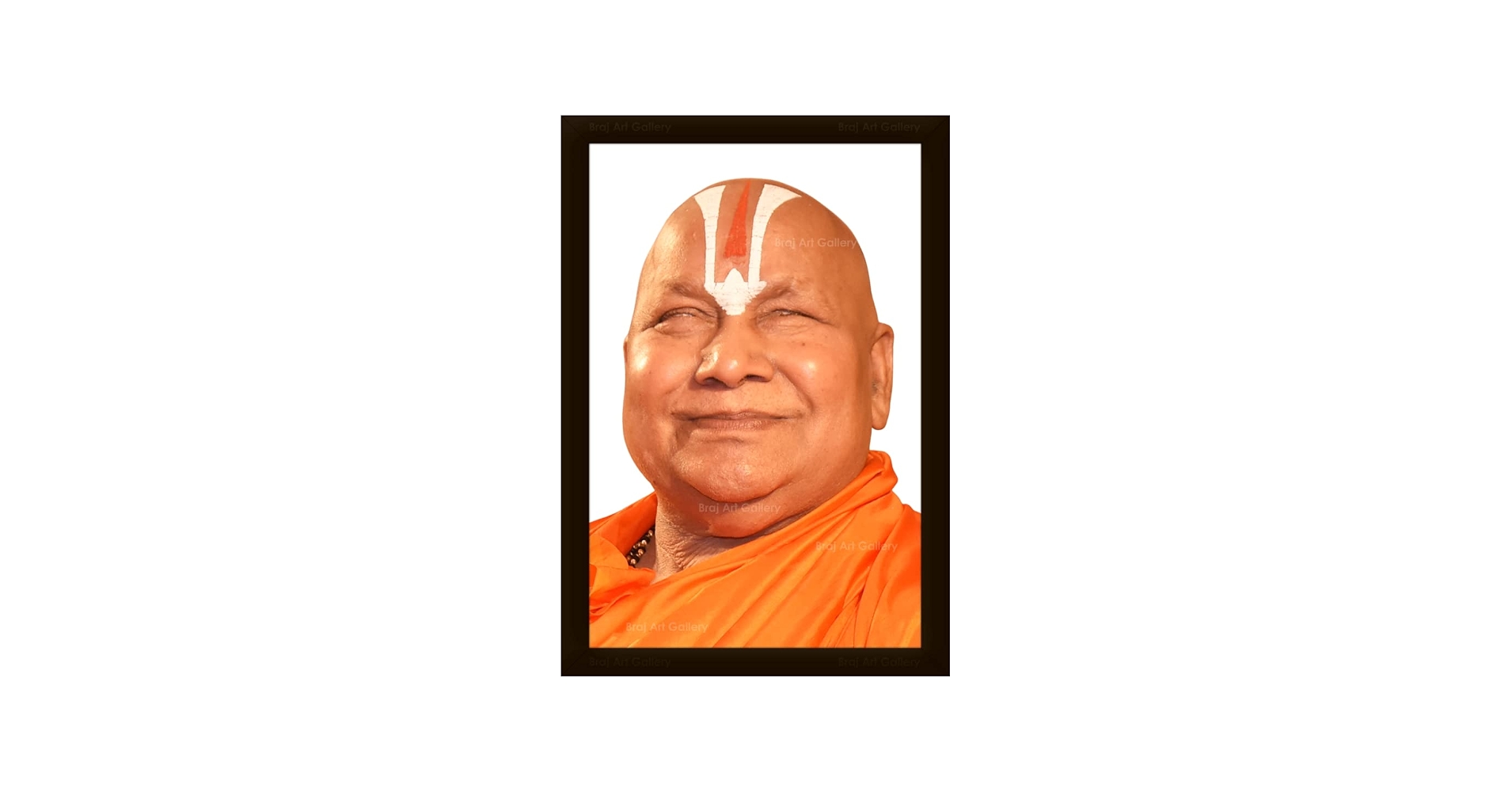
Rambhadracharya
 India
IndiaHindu spiritual leader•Sanskrit scholar•poet•educator
Also known as: Swami Rambhadracharya, Jagadguru Rambhadracharya, Giridhar Misra, Jagadguru Ramanandacharya Swami Rambhadracharya
Birthday
January 14, 1950
Birth Sign
Capricorn
Birthplace
Shandikhurd, Jaunpur district, Uttar Pradesh, India
Age
76 years old
About
Swami Rambhadracharya, born Giridhar Mishra on January 14, 1950, is an Indian Hindu spiritual leader, Sanskrit scholar, and polymath. He is one of the four incumbent Jagadguru Ramanandacharyas, a position of supreme spiritual authority in the Ramananda Sampradaya, which he has held since 1988. Based in Chitrakoot, he founded Tulsi Peeth, a religious and social service institution, and established the Jagadguru Rambhadracharya Handicapped University, the world's first university exclusively for disabled students. His life's work has earned him the Padma Vibhushan, India's second-highest civilian honor.
Blind since infancy, Rambhadracharya never used Braille, relying instead on extraordinary memory and auditory learning. He speaks 22 languages and has authored over 240 books, including definitive commentaries on sacred texts. As a Katha artist, his discourses on the Ramayana and Bhagavata are broadcast on television channels like Shubh TV and Sanskar TV, reaching audiences across India and abroad. He remains a leading voice in the Vishva Hindu Parishad and a champion for the disabled, blending spiritual authority with social activism.
Early Life & Background
Giridhar Mishra was born into a Saryupareen Brahmin family in the village of Shandikhurd in Jaunpur district, Uttar Pradesh. At about two months of age, he lost his eyesight to an eye infection. Despite this, he showed a prodigious memory from early childhood, memorizing texts through auditory learning alone, never resorting to Braille.
He completed his primary education at a local village school, where teachers quickly recognized his remarkable abilities. He studied Sanskrit grammar, poetry, and scripture under several teachers, absorbing knowledge through listening. He went on to earn multiple advanced degrees, including MA, PhD, and D.Litt in Sanskrit from Sampurnanand Sanskrit University in Varanasi.
At age 17, Giridhar was initiated into the Ramananda Sampradaya, a Vaishnava monastic order, and took sannyasa, receiving the name Rambhadracharya. This marked the beginning of his life as a renunciant, dedicated to scholarship and devotion. A pivotal moment came in 1988 when, at 38, he was formally installed as the Jagadguru Ramanandacharya, one of only four such incumbents in the tradition.
Career Growth
Rambhadracharya's breakthrough came with his installation as Jagadguru Ramanandacharya in 1988. Since then, he has founded Tulsi Peeth in Chitrakoot, a religious and social service institution named after Tulsidas. In 2001, he established the Jagadguru Rambhadracharya Handicapped University, the world's first university exclusively for disabled students, offering graduate and postgraduate programs to four types of disabilities.
He played a key role in the Ram Janmabhoomi movement, serving as a litigant in the legal case that culminated in the construction of the Ram Temple at Ayodhya. His scholarship includes a Hindi commentary on Tulsidas's Ramcharitmanas, considered definitive, and a Sanskrit verse commentary on Panini's Ashtadhyayi, a monumental achievement.
His katha performances are broadcast on Shubh TV and Sanskar TV, and he has appeared in discussions with other spiritual leaders like Baba Bageshwar and Premanand Maharaj. In 2026, he presided over the ninth convocation of his university, where 2,417 degrees and 141 gold medals were awarded, with Defence Minister Rajnath Singh in attendance.
Career Timeline
Public Image & Style
Rambhadracharya is revered as a scholar-saint who overcame blindness through extraordinary intellect and devotion. He is known for his eloquent Sanskrit and Hindi discourses, his scholarly rigor, and his advocacy for disabled persons. His public image is that of a polymath and a compassionate leader, often seen in saffron robes.
His content, whether in katha performances, television broadcasts, or university convocations, is characterized by erudition, devotional fervor, and social messaging. He is frequently featured alongside other prominent spiritual leaders such as Baba Bageshwar, Premanand Maharaj, and Aniruddhacharya. His official Instagram page uses the hashtag #jagadgururambhadrachryajimaharajji.
Fame & Fandom (iFAMOUS Rankings)
Global attention for Swami Rambhadracharya spans religious discourse, digital media consumption, and geopolitical commentary across the Indian subcontinent and beyond. His influence is quantified by authoritative placement in the iFANN Global Fame Rankings, which track visibility across global media coverage and cultural signals. He holds the position of the 91st most famous person in Religious Leaders, a standing he maintains from the previous assessment cycle. This ranking reflects his sustained presence as a polymathic scholar and spiritual authority who commands a massive following through institutional channels rather than transient viral moments.
The community surrounding him operates without a singular formalized name like those found in pop culture; instead, followers identify primarily as shishyas or bhaktas within an organization anchored by the Chitrakoot Ashram and the Jagadguru Rambhadracharya Handicapped University. Engagement is highly structured around official digital platforms, including a YouTube channel with over 1.6 million subscribers and a dedicated application for streaming discourses. The fanbase actively participates in charitable advocacy for disabled students and engages deeply with the swami's political commentary on national issues, such as the Ram Temple ceremonies and inter-ashram dynamics. While viral misinformation occasionally circulates among these devotees, the core interaction remains centered on verified content consumption and physical attendance at convocations.
Interesting Facts and Legends
Rambhadracharya never utilized Braille despite being blind since infancy, relying entirely on auditory memorization to master vast texts. He is a polyglot capable of speaking 22 languages and spontaneously composing poetry in Bhojpuri, Sanskrit, and Hindi. His personal motto, displayed on his official website, declares: 'Humanity is my temple, I am the humble worshipper. Disabled are my Supreme God, I am their compassion-seeker.' As one of only four living Jagadguru Ramanandacharyas, he holds supreme authority within the Ramananda Sampradaya. His scholarly contributions include a monumental verse commentary on Panini's Ashtadhyayi, four epic poems, and more than 50 academic papers.
Recent years have seen several viral incidents enter the lore of his following. In mid-2026, he sparked widespread debate by suggesting that Pakistan-occupied Kashmir would have been integrated into India had a specific military operation continued longer. Earlier that year, his characterization of Bollywood star Shah Rukh Khan as a 'traitor' following a cricket team signing ignited intense discussion among supporters. These moments highlight how his theological interpretations often intersect with contemporary politics, drawing both fervent support and sharp criticism from the public sphere.
Notable Quotes
“Humanity is my temple, I am the humble worshipper. Disabled are my Supreme God, I am their compassion-seeker.”
“PoK would be in India had Op Sindoor lasted 2 more days.”
Family & Personal Life
Rambhadracharya was born into a Saryupareen Brahmin family in Shandikhurd, Jaunpur district. His parents were devout, and their household was steeped in religious practice. As a sannyasi, he took vows of celibacy and renunciation at age 17, so he has no spouse or children. His family today is his monastic order and the thousands of students and devotees who look to him as a guide. He lives in Chitrakoot, where his institutions are based.
Notable Connections
Rambhadracharya has publicly defended Uttar Pradesh Chief Minister Yogi Adityanath and has had disagreements with spiritual leader Swami Avimukteshwaranand Saraswati. He has appeared in discussions with fellow spiritual leaders Baba Bageshwar, Premanand Maharaj, and Aniruddhacharya. Defence Minister Rajnath Singh addressed the ninth convocation of his university, and he has also commented on remarks by RSS chief Mohan Bhagwat.
Relationships & Dating History
As a lifelong celibate monk in the Ramananda Sampradaya, Rambhadracharya has never been in a romantic relationship. He took sannyasa at age 17, renouncing worldly life. His 'relationship' is with his spiritual order and his devotees. As of 2026, he remains unmarried and dedicated to his monastic vows.
Salary, Net Worth In 2026
$10 Million
iFANN Editorial Team estimate
As a renunciant monk, Rambhadracharya owns no personal property. His financial standing is intrinsically linked to the institutions he founded, which operate through a combination of donations and government grants. Tulsi Peeth and the Jagadguru Rambhadracharya Divyang State University receive state funding, while the university also relies on public contributions to provide free education to disabled students. Per iFANN's editorial analysis, his estimated net worth stands at $10 Million as of 2026, reflecting the assets and donations managed by his organizations. Any figures beyond this total remain speculative, given his commitment to voluntary poverty and the dedication of all resources to his spiritual and social missions.
Awards Won (32)
Rambhadracharya received the Padma Vibhushan, India's second-highest civilian award, in recognition of his contributions to spirituality, scholarship, and social service. He has also received multiple honorary doctorates for his Sanskrit scholarship.
2020 · Civilian Honor
Lifetime achievement
2023 · 2023. Jnanpith Award, awarded by Bharatiya Jnanpith, presented by Draupadi Murmu, President of India.
2021 · 2021. Sahitya Akademi Fellowship, awarded by the Sahitya Akademi.
2015 · 2015. Vishwa Bharati Award, awarded by the Government of Uttar Pradesh.
2013 · 2013. Purvanchal Ratna.
2011 · 2011. Devbhumi Award, awarded by the Government of Himachal Pradesh, Shimla. Presented by Kurian Joseph, then Chief Justice of the Himachal Pradesh High Court.
2011 · 2011. Tulsi Award, awarded by Morari Bapu on the eve of Tulsi Jayanti, anniversary of the birth of Tulsidas.
2007 · 2007. Goswami Tulsidas Samarchan Samman, awarded by the Tulsi Research Institute, Allahabad. Presented by Ramesh Chandra Lahoti, former Chief Justice of India.
2007 · 2007. Vachaspati Award, awarded by the K. K. Birla Foundation, New Delhi, for the epic Śrībhārgavarāghavīyam. It carried a prize money of one lakh rupees. Presented by Shilendra Kumar Singh, then Governor of Rajasthan.
2006 · 2006. Banabhatta Award, awarded by Madhya Pradesh Sanskrit Board, Bhopal, for the epic Śrībhārgavarāghavīyam.
2006 · 2006. Shrivani Alankaran, awarded by the Jaydayal Dalmiya Shri Vani Trust for the epic Śrībhārgavarāghavīyam. Presented by Somnath Chatterjee, then Speaker of the Lok Sabha.
2005 · 2005. Sahitya Akademi Award in Sanskrit for the epic Śrībhārgavarāghavīyam.
2004 · 2004. Awadh Ratna, by the Awadh Vikas Parishad, Allahabad.
2004 · 2004. President's Certificate of Honour or Badarayana Puraskar. Presented by A. P. J. Abdul Kalam, then President of India.
2003 · 2003. Ativishishta Puraskar, by the Uttar Pradesh Sanskrit Samsthana, Lucknow.
2003 · 2003. Bhaurao Deoras Award, awarded by the Bhaurao Deoras Seva Nyas, Lucknow. He was given citations, traditional dresses and an award of Rs 58,000. Awarded at a simple function organised at the Saraswati Kunj in Nirala Nagar on March 17.
2003 · 2003. Diwaliben Mehta Award for Progress in Religion, awarded by the Diwaliben Mehta Charitable Trust, Mumbai. Presented by P. N. Bhagwati, former Chief Justice of India.
2003 · 2003. Rajshekhar Samman, awarded by the Madhya Pradesh Sanskrit Academy, Bhopal, for the Śrīrāghavakṛpābhāṣyam commentary on the Prasthānatrayī.
2000 · 2000. Vishishta Puraskar, awarded by the Uttar Pradesh Sanskrit Sansthan, Lucknow.
1999 · 1999. Kaviraj Vidya Narayan Shastri Archana-Samman Award, awarded by the Kaviraj Vidya Narayan Shastri Archana-Samman Committee, Bhagalpur, Bihar, for contributions to the Sanskrit language.
1976 · 1976. Gold medal for standing first in all-India Sanskrit debate competition. Presented by Marri Chenna Reddy, then Governor of Uttar Pradesh.
1976 · 1976. Cancellor's Gold Medal, awarded by the Sampurnanand Sanskrit University, Varanasi.
1976 · 1976. Seven gold medals, Acharya (Master of Arts) examination, awarded by the Sampurnanand Sanskrit University, Varanasi.
1974 · 1974. Five gold medals at the Akhil Bharatiya Sanskrit Adhiveshan (All India Sanskrit Conference), New Delhi. Presented by Indira Gandhi, then Prime Minister of India.
1974 · 1974. Gold Medal, Shastri (Bachelor of Arts) examination, awarded by the Sampurnanand Sanskrit University, Varanasi.
Known For
Jagadguru Ramanandacharya
1988 · Spiritual leader
Jagadguru Rambhadracharya Handicapped University
2001 · Founder
Ramcharitmanas commentary
0 · Author
Keywords
Sources
Quick Facts
- Profession
- Hindu spiritual leader, Sanskrit scholar, poet, educator
- Born
- January 14, 1950
- Birthplace
- Shandikhurd, Jaunpur district, Uttar Pradesh, India
- Gender
- Male
- Birth Sign
- Capricorn
- Languages Spoken
- 22 languages
- Books Authored
- Over 240
Personal Details
- Full Name
- Giridhar Mishra
- Education
- Sampurnanand Sanskrit University, Varanasi (MA, PhD, D.Litt in Sanskrit)
Frequently Asked Questions
Is Rambhadracharya blind?
What is Rambhadracharya's net worth?
How old is Rambhadracharya?
Does Rambhadracharya have a wife?
How many languages does Rambhadracharya speak?
Social Media
Join the community
fans discussing