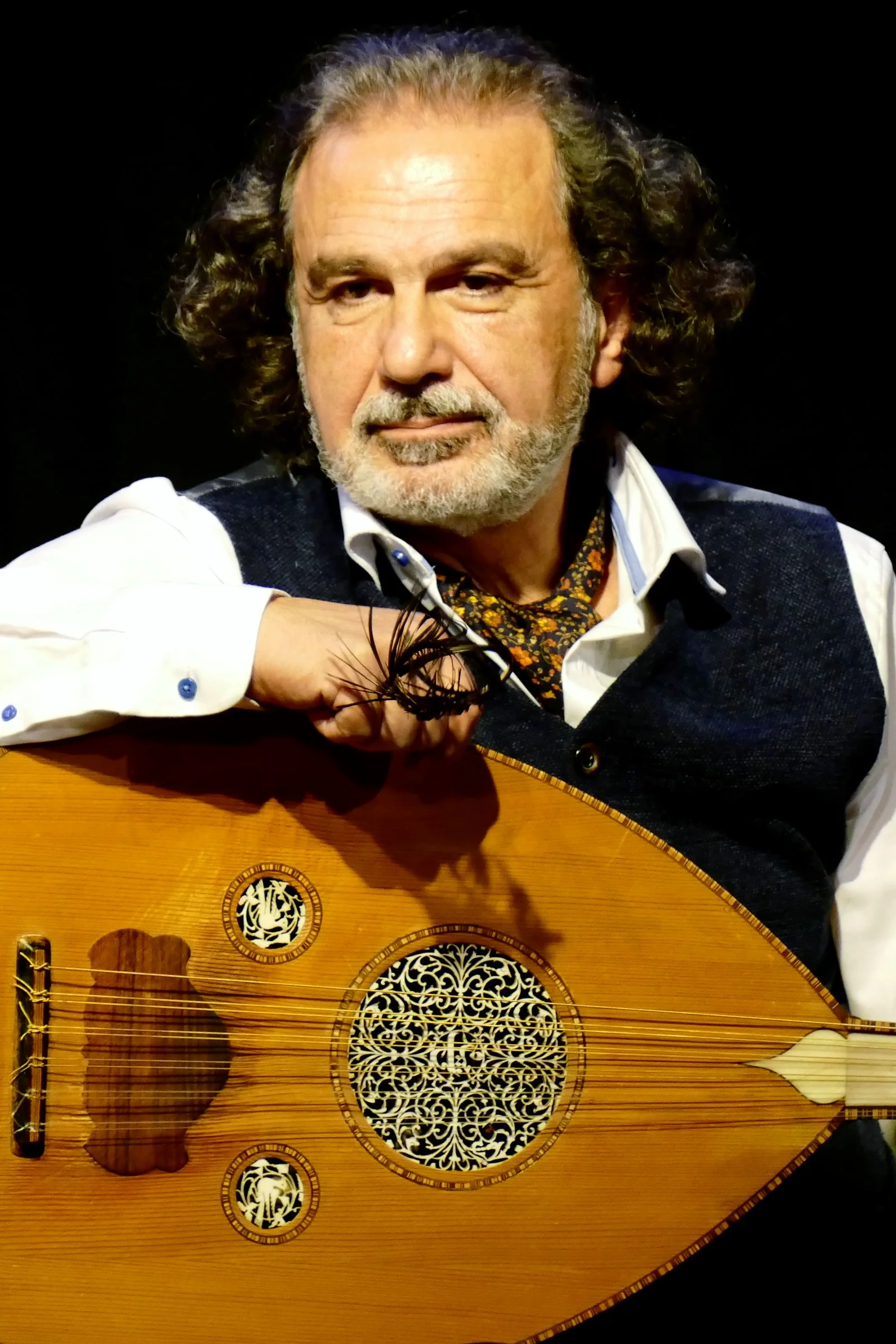
Rabih Abou-Khalil
 Lebanon
composer•oud virtuoso•jazz musician
Birthday
August 17, 1957
Birth Sign
Leo
Birthplace
Beirut, Lebanon
Age
69 years old
About
Rabih Abou-Khalil is a Lebanese-German composer and oud virtuoso, celebrated for his groundbreaking fusion of traditional Arabic musical forms with jazz, classical, and diverse global influences. His unique artistic approach creates a distinctive sonic landscape that captivates audiences worldwide, bridging disparate cultural expressions through intricate melodic structures and rhythmic patterns. He maintains a robust presence in the global music circuit, regularly performing at international festivals and releasing new material. Abou-Khalil continues to engage a dedicated fanbase through his mastery of the oud and his ongoing exploration of musical boundaries. His work is often described as "Oriental jazz," a term that encapsulates his innovative blend of Middle Eastern and Western musical traditions. With a career spanning several decades, he has become a significant figure in contemporary world music and jazz.
Early Life & Background
Rabih Abou-Khalil was born into a family in Beirut, Lebanon, during a period of significant cultural vibrancy in the city. He spent his childhood and youth in Beirut during the 1960s and 1970s, a period he often recalls as formative for his musical identity. This vibrant, cosmopolitan environment, rich with diverse cultural influences, deeply shaped his artistic perspective from an early age. He began his musical journey by learning the oud in Beirut, dedicating himself to mastering the complex traditions of Arabic music. His formal education also took place in his home city, providing a strong academic foundation. The cultural openness and relative stability of Beirut during his formative years allowed him to develop a deep appreciation for both local and international sounds. However, the onset and escalation of the Lebanese Civil War cast a long shadow over the city. By 1978, with the conflict intensifying and daily life becoming increasingly challenging, Abou-Khalil made the difficult but necessary decision to leave his homeland. He relocated to Munich, Germany, a move that marked a profound turning point. This departure from war-torn Lebanon was not merely a physical relocation but a catalyst for his artistic evolution, pushing him to integrate his traditional Middle Eastern heritage with European musical forms and ultimately inspiring the unique fusion that would define his career. He began learning the oud in Beirut and pursued his education there before moving to Germany.
Career Growth
After his move to Germany, Rabih Abou-Khalil quickly began to shape a distinctive musical identity, merging his deep knowledge of the oud with the expansive possibilities of jazz improvisation. His career breakthrough arrived with the release of his album Nafas in 1988, which immediately drew attention to his innovative sound. This was swiftly followed by Blue Camel in 1992, a critically lauded recording that cemented his place as a leading figure in what became known as "Oriental jazz." Throughout the 1990s and 2000s, Abou-Khalil maintained a prolific output, consistently releasing albums that pushed musical boundaries and garnered international recognition. Projects like Yara (1998) and Morton's Foot (2003) further demonstrated his skill in weaving complex rhythmic patterns with compelling melodies. He continued to evolve his sound with releases such as Hungry People in 2012, showcasing his enduring creativity. After a seven-year hiatus from studio recordings, he made a strong return in 2019 with The Flood and the Fate of the Fish, an album that was met with enthusiasm by fans and critics alike. His most recent offering, the Pretty Album, arrived in 2023, adding another significant work to his extensive discography. Abou-Khalil remains a vibrant presence on the global stage, frequently performing at major festivals and venues. He made a notable appearance at the Jazz in the Park Festival in Cluj-Napoca in June 2026 and has upcoming engagements, including Christmas Jazz 2025 in Estonia, affirming his ongoing artistic activity and relevance. His work has been featured in film and television, and he has collaborated with a diverse range of musicians, including Yo-Yo Ma and The Silk Road Ensemble.
Career Timeline
Public Image & Style
Rabih Abou-Khalil projects a thoughtful and deeply artistic public image, centered around his mastery of the oud and his innovative musical fusions. His performances are known for their intensity and intricate arrangements, captivating audiences who appreciate the blend of ancient traditions with modern improvisation. Fans connect with his ability to bridge cultures through sound, seeing him as a musical ambassador. On social media, particularly his "ShavedOud" Facebook page and Instagram account (@rabihaboukhalil), he shares updates on his concert dates and occasional glimpses into his artistic process. His online presence is direct and focused on his music, reflecting a commitment to his craft rather than personal celebrity. He maintains a quiet dignity, letting his complex and evocative compositions speak for themselves. He is known for his calm and contemplative demeanor during interviews, preferring to let his music do most of the talking. His album covers often feature striking, minimalist artwork, reflecting the sophisticated nature of his compositions.
Fame & Fandom (iFAMOUS Rankings)
Rabih Abou-Khalil commands a following defined not by frenzied crowds or viral spectacles, but by the quiet reverence of jazz purists and world music scholars. His audience consists of listeners who seek the intricate dialogue between the oud's ancient resonance and modern improvisation rather than celebrity spectacle. There is no organized fanbase with a formal name, nor are there documented rituals like birthday billboards or subway ad campaigns. Instead, his supporters connect through shared appreciation for his role as a cultural bridge, engaging with updates on his Facebook page under the handle @ShavedOud and his Instagram account where he shares personal interests like chili peppers alongside concert announcements. While his social media interaction remains modest compared to pop icons, it reflects a dedicated niche that values artistic integrity over mass-market hype. This lack of a mobilized cult following underscores his status as a respected musician whose legacy is built on musical innovation rather than fan-driven disruption. Despite this intimate connection, his reach extends globally through major festivals like the Festival International de Jazz de Montréal and Jazz à Vienne. According to iFANN's Global Fame Engine evaluation conducted in August 2026, Rabih Abou-Khalil does not currently hold a placement in the published rankings, including the Global Top 1,000 or any Top-100 scope list. He is evaluated as present but unranked within the current scope of the engine's data.
Interesting Facts and Legends
Rabih Abou-Khalil is affectionately known as the "Shaved Oud" on his Facebook page, a playful moniker referencing his instrument of choice. He has long championed collaboration between East and West, often citing Western composers like Bach as key influences despite his deep roots in Arabic tradition. His Spotify profile shows approximately 30,666 monthly listeners, reflecting a steady global interest. It is noted that he performed in Freiburg, Germany, in late 2025. Born in Beirut on August 17, 1957, Abou-Khalil is celebrated for albums like *Blue Camel* (1992) and *Nafas* (1988), which remain staples for fans of fusion music. His 2023 release, the *Health Album*, further cemented his reputation for blending traditional folk with contemporary sounds. While no specific viral incidents define his career, his consistent presence at international festivals serves as a reflection of his enduring appeal. The narrative surrounding him focuses on his professional achievements and ability to merge Arab and Western traditions over decades, creating a unique sonic landscape without relying on dramatic anecdotes or folklore.
Family & Personal Life
Rabih Abou-Khalil has maintained a private stance on his immediate family, including any siblings or his own marital status and children. His upbringing in Beirut undoubtedly shaped his early exposure to music and the arts. This discretion extends to his current living situation, as he prefers to keep his personal household out of the public discourse. His focus remains squarely on his musical career and artistic expression, with his family life being a private aspect of his existence. Information regarding his family, romantic relationships, and children is not readily available in public sources.
Notable Connections
Rabih Abou-Khalil has collaborated with many artists across different genres, reflecting his eclectic musical vision. He is often associated with the broader "world jazz" movement, sharing stages and creative spaces with musicians who also blend global sounds. Notable connections include his work with cellist Yo-Yo Ma and The Silk Road Ensemble, demonstrating his reach into classical and cross-cultural projects. Other artists like Yazz Ahmed and Michel Godard also operate in spheres that resonate with Abou-Khalil's fusion style, contributing to a vibrant global music community.
Relationships & Dating History
Rabih Abou-Khalil has maintained a remarkably private approach to his personal life throughout his extensive career, particularly concerning his romantic relationships. Public records and media coverage offer very limited, if any, details about his dating history, marriages, or long-term partnerships. This consistent discretion sets him apart from many public figures, as he has deliberately kept these aspects of his life shielded from public scrutiny. There are no widely reported relationships, high-profile romances, or marital unions documented in his biographies, interviews, or any news archives spanning his decades in music. The absence of such information indicates a clear boundary he has established between his artistic persona and his private world. Consequently, details regarding any past or present partners, including their names, the specific timelines of any relationships, or whether he has children, are simply not available in the public domain. This enduring commitment to privacy means that, as of 2026, Rabih Abou-Khalil's relationship status remains officially unknown, underscoring his preference for his musical contributions to be the sole focus of his public identity.
Salary, Net Worth In 2026
$5 Million
iFANN Editorial Team estimate
Rabih Abou-Khalil's financial standing reflects an enduring and multifaceted career as a composer, virtuoso oud player, and performing artist. Income flows from consistent album sales across his extensive discography, royalties from compositions, and significant performance fees from international tours and festival appearances. Over more than four decades, his distinctive blend of traditional Arabic music with jazz and classical elements has cultivated a dedicated global audience, enabling steady earning potential. Beyond direct musical endeavors, Abou-Khalil earns from licensing compositions for film and television, expanding the commercial reach of his work. His sustained activity, marked by regular releases and a demanding touring schedule, underscores a career built on artistic integrity. While precise figures for individual contracts remain private, the longevity and international scope suggest a solid foundation. Per iFANN's editorial analysis, Rabih Abou-Khalil's estimated net worth stands at $5 Million as of 2026, a valuation representing his sustained success and influence within the specialized world music and jazz genres.
Awards & Accolades
Keywords
Sources
Quick Facts
- Profession
- composer, oud virtuoso, jazz musician
- Born
- August 17, 1957
- Birthplace
- Beirut, Lebanon
- Gender
- Male
- Birth Sign
- Leo
- Nationality
- Lebanese, German
Frequently Asked Questions
What is Rabih Abou-Khalil's musical style?
Where was Rabih Abou-Khalil born and raised?
What instrument is Rabih Abou-Khalil famous for playing?
Is Rabih Abou-Khalil still performing in 2026?
What are some of Rabih Abou-Khalil's notable albums?
Social Media
Join the community
fans discussing