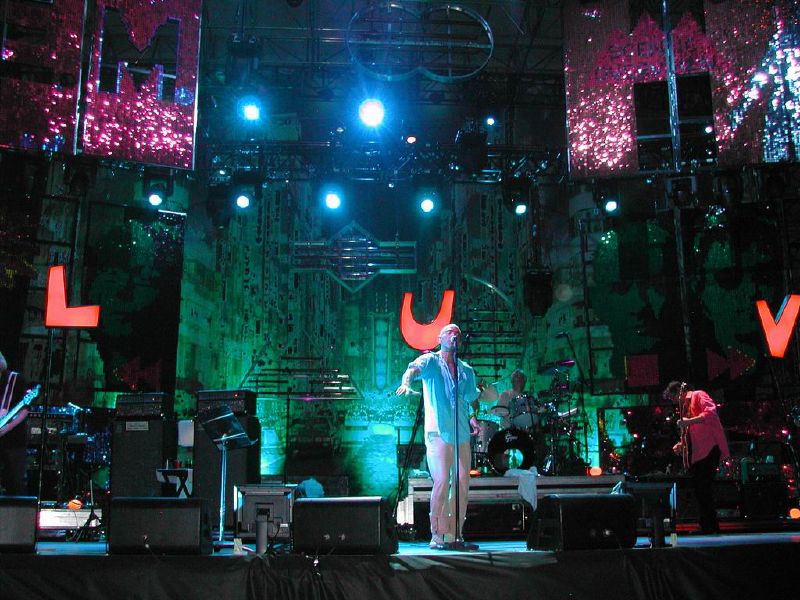
R.E.M.
 United States
The pioneers of alternative rock who turned college radio into a global phenomenon.
REM
Fandom
4
Members
About
R.E.M. remains a defining force in American music history, known for bridging the gap between underground college rock and global superstardom without compromising their artistic identity. The band consisted of four members who developed their chemistry organically during their time at the University of Georgia, avoiding the rigid structures common in modern pop groups. Their signature sound relied on Peter Buck's arpeggiated guitar work, which created a shimmering texture often described as "jangle," paired with Michael Stipe's enigmatic vocal delivery and abstract lyrical themes.
By the late 1980s, they had become one of the biggest acts in the world, headlining arenas and stadiums while maintaining a reputation for political activism and environmental awareness. Their success paved the way for countless alternative bands that followed, including Nirvana and Pavement, who cited R.E.M. as a primary influence. Even after Bill Berry left in 1997 due to health concerns, the remaining trio continued to tour and record, adapting their sound to electronic textures and acoustic introspection before calling it quits in 2011.
Formation Story
The story of R.E.M. begins in the autumn of 1979 when Michael Stipe, a student at the University of Georgia, met Peter Buck in an English class. They bonded over a shared love of obscure British punk bands and American folk-rock, eventually forming a duo that would become the core of the group. By early 1980, they had recruited Mike Mills, a fellow student and former member of a local band called The Nightcrawlers, to play bass. The final piece fell into place when they invited Bill Berry, a drummer from a nearby high school, to join their jam sessions.
Their first official performance took place at a friend's birthday party in April 1980, playing a set of covers and a few original songs. Unlike many modern groups, they did not undergo formal auditions or attend training camps; instead, they honed their craft through late-night rehearsals in Athens and frequent gigs at local venues like the 40 Watt Club. Their debut single, "Radio Free Europe," released in 1981 on the independent label Hib-Tone, captured the attention of college radio DJs who were hungry for something new. This grassroots support led to their signing with I.R.S. Records and the release of their first EP, Chronic Town, in 1982.
Their breakthrough came with the 1983 album Murmur, which received immediate critical acclaim for its unique production and mysterious lyrics. Over the next decade, they released a steady stream of albums, each pushing their sound further while maintaining their distinct identity. The band's rise was not overnight but built on years of grinding tours and word-of-mouth promotion among college students, proving that a band could achieve massive success without relying on traditional radio formats or major label marketing campaigns.
Members
Former Members
Musical Style
R.E.M.'s musical evolution spanned three distinct eras, each marked by different production techniques and thematic focuses. Their early work, defined by the albums Murmur through Document, featured a raw, energetic sound rooted in post-punk and folk traditions. Peter Buck's guitar playing utilized heavy reverb and open chords to create a bright, ringing tone that became synonymous with the "jangle pop" subgenre. Michael Stipe's vocals were often buried in the mix, delivering cryptic, impressionistic lyrics that listeners interpreted in various ways.
The mid-to-late eighties saw the band transition toward a more polished, radio-friendly sound under the production of Scott Litt. Albums like Green and Out of Time incorporated elements of country, soul, and folk, resulting in hits like "Losing My Religion" and "Everybody Hurts." This era emphasized melodic hooks and clearer vocal mixes while retaining the band's commitment to social and political commentary. The later period, particularly after Bill Berry's departure, experimented with electronic textures on Up and returned to acoustic roots on Reveal. Their final albums, Accelerate and Collapse into Now, stripped away much of the studio polish to deliver a direct, high-energy rock sound reminiscent of their early days.
Discography
| Title | Year |
|---|---|
| Collapse into Now | 2011 |
| Accelerate | 2008 |
| Around the Sun | 2004 |
| Reveal | 2001 |
| Up | 1998 |
| New Adventures in Hi-Fi | 1996 |
| Monster | 1994 |
| Automatic for the People | 1992 |
| Out of Time | 1991 |
| Green | 1988 |
| Document | 1987 |
| Lifes Rich Pageant | 1986 |
| Fables of the Reconstruction | 1985 |
| Reckoning | 1984 |
| Murmur | 1983 |
| Chronic Town | 1982 |
Tours
Collapse into Now Tour
2011 · 53 shows
Accelerate Tour
2008 · 48 shows
Around the Sun Tour
2004 · 42 shows
Reveal Tour
2001 · 55 shows
Tour of the Americas
1996 · 60 shows
Monster Tour
1994 · 58 shows
Out of Time Tour
1991 · 75 shows
Green Tour
1988 · 65 shows
Cultural Impact
R.E.M. played a pivotal role in bringing alternative rock into the mainstream consciousness during the 1980s and 1990s. Before their success, college radio was largely ignored by major labels and mainstream media, yet R.E.M. proved that this niche audience could be translated into global sales. Their ability to maintain artistic integrity while achieving commercial success inspired a generation of musicians to pursue independent paths without sacrificing their creative vision.
Beyond music, the band was known for their strong stance on political and environmental issues. They frequently performed at benefit concerts and used their platform to advocate for causes ranging from nuclear disarmament to animal rights. Their influence extended to fashion and lifestyle, with their casual, unpretentious style becoming a hallmark of the alternative scene. The band's induction into the Rock and Roll Hall of Fame in 2007 and subsequent honors, including the Songwriters Hall of Fame in 2024, cemented their legacy as one of the most important groups in American music history.
Fandom Culture
Fans of R.E.M., often referred to simply as REM fans, have maintained a loyal following since the band's early days. The fandom is known for its dedication to the band's deeper cuts and live performances, with collectors seeking out rare bootlegs and vinyl pressings from their I.R.S. Records era. The color yellow has become associated with the group, often worn by fans at concerts or displayed at tribute events. Fans celebrate the band's longevity and consistency, organizing watch parties for their album releases and commemorating significant anniversaries of their discography.
Awards Won (95)
R.E.M. won 24 Grammy Awards throughout their career, including Best Alternative Music Album for Out of Time and Automatic for the People. They also received multiple MTV Video Music Awards for "Losing My Religion" and "Everybody Hurts," along with honors from the Brit Awards, NME Awards, and Billboard Music Awards. Their recognition extends beyond music awards, with inductions into the Rock and Roll Hall of Fame, Songwriters Hall of Fame, and Kennedy Center Honors.
Best Rock Song
for: Hollow Man
Best Rock Song
for: Animal
Best Rock Song
for: Electrolite
Best Rock Song
for: E-Bow the Letter
Best Rock Song
for: Strange Currencies
Best Rock Song
for: Bang and Blame
Best Rock Song
for: What's the Frequency, Kenneth?
Best Rock Song
for: Everybody Hurts
Best Rock Song
for: Man on the Moon
Best Alternative Music Album
for: Automatic for the People
Milestones
Release of debut album Murmur
Breakthrough hit "The One I Love" reaches top 10
Release of Out of Time, featuring "Losing My Religion"
Signing of $80 million contract with Warner Bros.
Induction into Rock and Roll Hall of Fame
Amicable disbandment of the group
Induction into Songwriters Hall of Fame
Trivia
Keywords
Sources
Quick Facts
- Type
- Rock Band
- Formed
- April 5, 1980
- Origin
- Athens, Georgia
- Label
- Hib-Tone, I.R.S. Records, Warner Bros. Records, New West Records
- Genres
- Alternative Rock, College Rock, Jangle Pop, Folk Rock
- Disbanded
- September 21, 2011
- Total Sales
- Over 90 million albums worldwide
- Fan Color
- Yellow
Group Info
- Fandom
- REM
- Formed
- April 5, 1980
- Debut
- August 1981
- Debut Song
- Radio Free Europe
- Origin
- Athens, Georgia, United States
- Company
- I.R.S. Records, Warner Bros. Records, Concord Records
- Label
- Hib-Tone, I.R.S. Records, Warner Bros. Records, New West Records
- Fan Color
- Yellow
- Status
- Disbanded (September 21, 2011)
Also Known As
Join the community
fans discussing