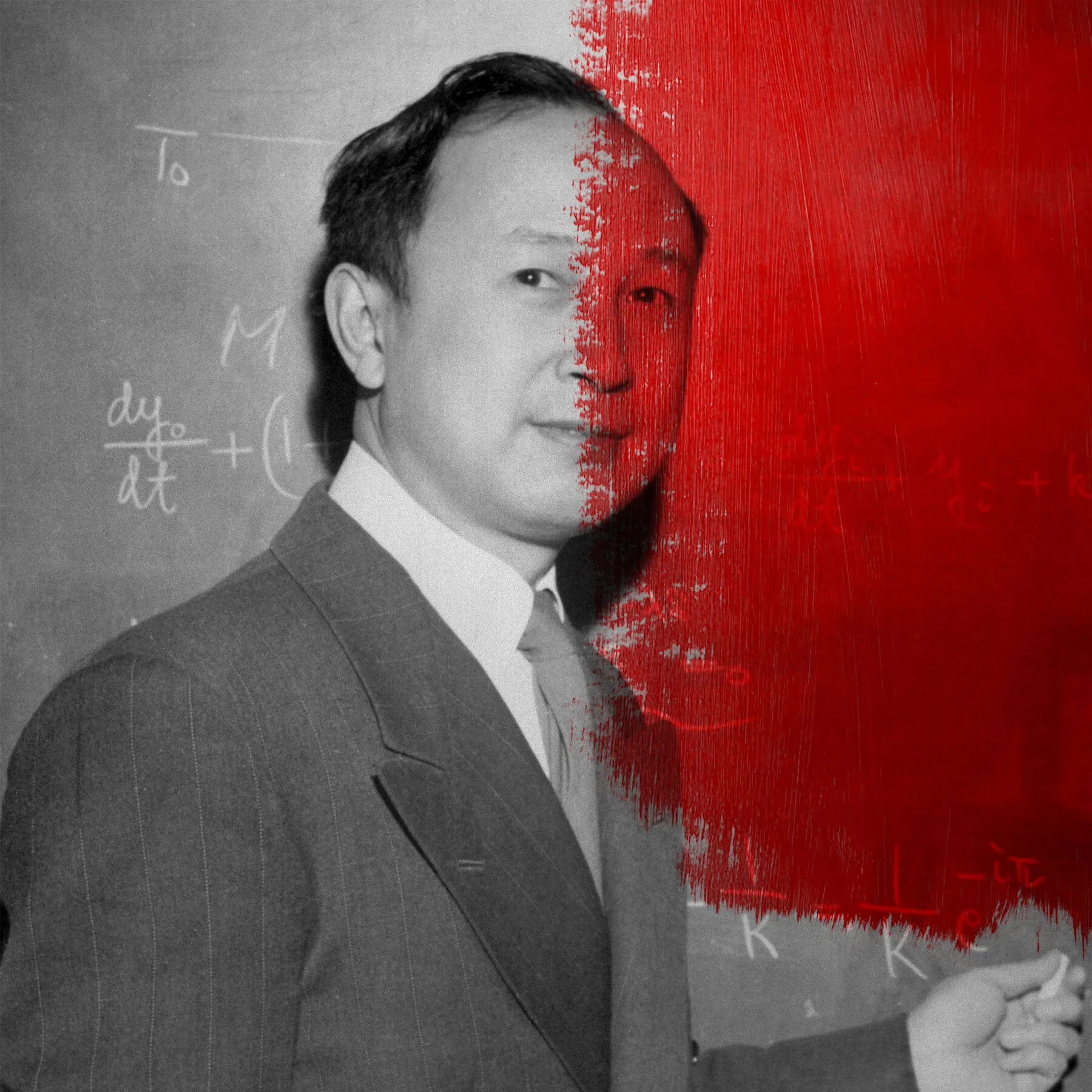
Qian Xuesen
 China
ChinaAerospace engineer•cyberneticist•university teacher
Also known as: Tsien Hsue-shen, King of Rocketry
Birthday
December 11, 1911
Birth Sign
Sagittarius
Birthplace
Shanghai County, China
Age
Died at 97
Height
5 ft 7 in (170 cm)
About
Qian Xuesen was a Chinese aerospace engineer and cyberneticist, widely regarded as the "Father of Chinese Rocketry." Born in Shanghai in 1911, he became one of America's leading rocket scientists before being deported during the Red Scare. In China, he built the nation's missile and space programs, shaping its defense and scientific infrastructure. He died in 2009 at age 97, leaving a legacy that spans two superpowers.
Today, Qian is remembered as a national hero in China, celebrated for his role in the Two Bombs, One Satellite initiative. His work laid the foundation for China's space exploration, and his name is synonymous with scientific patriotism. In the United States, his story serves as a cautionary tale about the costs of McCarthyism, and his co-founding of JPL remains a key part of American space history.
Qian's influence extends beyond rocketry; he pioneered engineering cybernetics and contributed to systems thinking. His life has inspired books, plays, and policy debates, reflecting his enduring relevance in both scientific and political spheres.
Early Life & Background
Qian Xuesen was born into a distinguished intellectual family in Shanghai. His father, Qian Junfu, was a government official, and his mother, Zhang Lanjuan, came from a scholarly background. The family traced its roots to Hangzhou, and Qian grew up surrounded by books and learning. He was a cousin of engineer Hsue-Chu Tsien and a cousin of the father of Roger Y. Tsien, the 2008 Nobel laureate in Chemistry.
Qian attended National Chiao Tung University in Shanghai, graduating in 1934 with a degree in mechanical engineering. His academic brilliance earned him a Boxer Indemnity Scholarship, which funded his move to the United States in 1935. He studied at MIT, obtaining a master's in aeronautical engineering in 1936, then moved to Caltech to work under Theodore von Kármán, a legendary figure in aerodynamics. Qian earned his doctorate in 1939, impressing von Kármán with his mathematical rigor and innovative thinking.
At Caltech, Qian became part of a tight-knit group of rocket enthusiasts, including Frank Malina and Jack Parsons. Their experiments in the desert sometimes ended in explosions, but they laid the groundwork for modern rocketry. In 1936, Qian co-founded the Jet Propulsion Laboratory, a decision that would have profound implications for American space exploration. His early research focused on compressible flow, high-speed flight, and rocket propulsion, establishing him as a rising star in aerospace science.
During World War II, Qian's expertise was in high demand. He worked on the Manhattan Project and served as a consultant to the U.S. Department of War, eventually holding the rank of colonel. By 1945, he was a key figure in American military research, and his reputation continued to grow. He became a full professor at MIT in 1947 and at Caltech in 1949, cementing his status as one of the foremost rocket scientists of his generation.
Career Growth
Qian's American career came to an abrupt halt in 1950 when he was accused of Communist sympathies. Despite no evidence, his security clearance was revoked, and he spent five years under house arrest. His deportation in 1955, exchanged for American POWs, was a turning point in the Cold War. He arrived in China via Hong Kong, ready to apply his knowledge to a new nation.
In China, Qian quickly became the architect of the country's missile and space programs. He led the Dongfeng ballistic missile program and played a pivotal role in the Two Bombs, One Satellite initiative, which produced China's first atomic bomb in 1964, hydrogen bomb in 1967, and satellite in 1970. His leadership transformed China's defense capabilities and laid the groundwork for its modern space agency, CNSA.
Beyond missiles, Qian influenced Chinese science policy. He was elected to the Chinese Academy of Sciences in 1957 and later served as Vice Chairman of the CPPCC National Committee from 1987 to 1998. He championed systems engineering and cybernetics, applying these ideas to fields as diverse as robotics and economic planning. His vision helped shape China's scientific establishment for decades.
Qian's later years were marked by recognition and reflection. He retired from active leadership in the 1990s but remained a symbol of scientific achievement. His death in 2009 prompted national mourning, and his legacy continues to inspire Chinese scientists. In 2026, his story gained renewed attention through the play "Ascent," which explores his life and the founding of JPL.
Career Timeline
Public Image & Style
Qian Xuesen's public image is that of a tragic genius turned national savior. In the United States, he is remembered as a brilliant scientist whose career was unjustly cut short by McCarthyism. His story has been featured in documentaries and plays, often highlighting the irony of America handing a rival superpower one of its greatest minds.
In China, Qian is revered as a founding father of the space program. His face appears on stamps, and his name adorns research institutes and a major award. The "Qian Xuesen Question", whether China can produce its own world-class scientists, has become a touchstone for discussions about Chinese science policy.
Qian's personal style was understated; he dressed conservatively and spoke with precision. His public appearances were rare, but when he spoke, people listened. He cultivated an image of selfless dedication, prioritizing national progress over personal gain.
His legacy has been contested in the West, with some viewing him as a security risk and others as a victim of injustice. This duality makes his story a rich subject for exploration, as evidenced by the 2026 play "Ascent" and ongoing media coverage.
Fame & Fandom (iFAMOUS Rankings)
Qian Xuesen commands a legacy defined not by the fervor of a pop culture fanbase but by the enduring reverence of nations and institutions. There is no formal fandom name for his followers, nor do fans gather under a specific collective title to organize chart pushes or birthday tributes; instead, his audience consists of historians, students, and citizens who view him through the lens of state-sanctioned heroism and academic achievement. While modern media productions like the play *Ascent* have sparked renewed interest in his deportation narrative, these engagements remain within the realm of public discourse rather than fan rituals. Regarding his standing in global consciousness, iFANN's August 2026 evaluation has determined that Qian Xuesen does not currently hold a placement in the published rankings (Global Top 1,000 or a Top-100 scope list). This status reflects his position as a pivotal figure in the history of aerospace engineering and a symbol of Cold War scientific rivalry. The absence of a numeric rank in the primary tier underscores that while his name is synonymous with Chinese national pride, his fame operates on a different axis than contemporary celebrities whose visibility is driven by viral moments and commercial consumption. His reputation rests on verified historical events: the founding of JPL, the development of China's missile programs, and his five-year detention during the Red Scare. These narratives are retold in textbooks and documentaries, ensuring his relevance without the need for the metrics that define modern stardom.
Interesting Facts and Legends
Qian Xuesen was a voracious reader who finished several books weekly, covering subjects from physics to philosophy, and possessed a photographic memory capable of recalling complex equations effortlessly. During his house arrest, he taught mathematics and physics to his children using everyday objects as teaching aids. He authored a textbook on engineering cybernetics published in 1954, which became a standard reference work. His personal library, now donated to the Chinese Academy of Sciences, contains over 30,000 volumes, many annotated in his own hand, reflecting his avid collection of rare scientific works. A modest man, he preferred working behind the scenes and rarely gave interviews, allowing his achievements to speak for themselves. His favorite saying, often quoted in Chinese media, was "Science has no national boundaries, but scientists do." Beyond these facts, historical lore surrounds his role as the architect of China's space program, specifically the successful launch of the *Dongfanghong I* satellite in 1970. Another enduring story details the high-stakes negotiation of his release from US detention in 1955, a moment frequently framed as the point where America lost a genius and China gained one. Recent cultural reinterpretations, such as the 2026 production of the play *Ascent*, continue to dramatize these pivotal moments for new generations.
Notable Quotes
“I would rather go back to China than stay in America without my rights.”
“I will help build China's missile and space program to protect our nation.”
“Science has no national boundaries, but scientists do.”
“We must catch up with the West in science and technology.”
Family & Personal Life
Qian married Jiang Ying, a noted singer and voice teacher, in 1947. The couple had met through their families, who were close friends. Jiang Ying was the daughter of Jiang Baili, a prominent military strategist, and her musical career added a cultural dimension to Qian's scientific life.
They had two children: a son, Qian Yonggang, and a daughter, Qian Yongzhen. The family lived under house arrest in the United States from 1950 to 1955, a period that tested their resilience. After moving to China, they settled in Beijing, where Jiang Ying continued her career as a professor at the Central Conservatory of Music.
Qian's family life was marked by a strong sense of duty. His children pursued academic careers, with his grandson Qian Hong becoming a mathematician. In 2025, Qian Hong left the United States to return to China, continuing the family's scientific legacy and reversing the brain drain that had once affected his grandfather.
Notable Connections
Qian Xuesen's career was shaped by his collaboration with Theodore von Kármán at Caltech, who mentored him and co-founded JPL with him. His wife, Jiang Ying, was a renowned singer and voice teacher, and their partnership was a cornerstone of his personal life. He was also connected to the scientific Tsien family, which included engineer Hsue-Chu Tsien and Nobel laureate Roger Y. Tsien.
Relationships & Dating History
Qian Xuesen's personal life was remarkably stable, centered on his marriage to Jiang Ying. They married in 1947, and their union lasted until his death in 2009, spanning over six decades. The couple met through their families, who were close friends, and their relationship was built on mutual respect and shared values.
Jiang Ying, a talented singer and voice teacher, supported Qian through the difficult years of house arrest and his transition to China. Their partnership was a source of strength, and they raised two children together. There are no records of any other romantic relationships in Qian's life; his devotion to Jiang Ying was unwavering.
As of 2026, Qian is deceased, and Jiang Ying passed away in 2012. Their marriage remains a model of companionship and dedication, remembered fondly in biographies and retrospectives.
- MarriedJiang Ying1947 - 2009Married for 62 years until Qian's death; she was a singer and voice teacher.
Death & Aftermath
Died
October 31, 2009 (aged 97)
Death Place
Beijing, China
Cause of Death
Lung cancer
Qian Xuesen died on October 31, 2009, in Beijing, China. The official cause of death was reported as lung cancer, a determination confirmed by his family and the Chinese Academy of Sciences based on his long-standing severe illness rather than a forensic autopsy or inquest. By late 2009, his health had declined significantly following decades of service, and he passed away without any disputed accounts regarding the circumstances of his final days. State media outlets including Xinhua News Agency and CCTV issued immediate obituaries, while President Hu Jintao and other high-ranking officials sent wreaths to honor the man widely eulogized as the architect of China's nuclear, missile, and space programs.
A state-sponsored funeral service followed shortly after his passing, attended by senior Communist Party leaders and representatives from the military and scientific community before he was cremated. His ashes were interred at the Babaoshan Revolutionary Cemetery, a burial ground reserved for distinguished national figures. In the years following his death, the Qian Xuesen Laboratory for Earth System Science was established at Peking University, and a statue was erected at the China Academy of Launch Vehicle Technology, while his intellectual property remained under the management of the state and his family.
Net Worth (Estate Value)
$10 Million
iFANN Editorial Team estimate
Qian Xuesen, serving as a government scientist, did not accumulate personal wealth comparable to entrepreneurs. His work relied on state funding, and he maintained a modest lifestyle, prioritizing national service over financial gain. At the time of his death in 2009, his estate was valued at a modest sum, reflecting his dedication to public service. Since his passing, Qian's estate has benefited from posthumous honors and royalties from his published works, including his influential textbook on engineering cybernetics. The Chinese government established the Qian Xuesen Award, which carries a monetary prize, though the estate's income remains limited. Per iFANN's editorial analysis, as of 2026, his net worth is estimated at $10 million, largely derived from intellectual property and commemorative projects. His legacy, however, is priceless in a cultural sense. He is honored with monuments, museums, and a prominent role in Chinese textbooks, ensuring his name endures. The estate's financial value serves as a footnote to his monumental contributions to science and national security.
Awards Won (2)
Qian Xuesen was elected to the Chinese Academy of Sciences in 1957, a mark of his scientific eminence. He also received the Two Bombs, One Satellite Meritorious Award in 1999, recognizing his contributions to national defense. Posthumously, he has been honored with the Qian Xuesen Award, named in his memory, and a star named after him.
1999 · National Defense
China's missile and space programs
1957 · Academic Honor
Scientific achievements
Known For
Two Bombs, One Satellite
1960s-1970s · Key architect
Dongfeng ballistic missile program
1960s · Leader
Jet Propulsion Laboratory
1936 · Co-founder
Engineering Cybernetics
1954 · Author
Keywords
Sources
Quick Facts
- Profession
- Aerospace engineer, cyberneticist, university teacher
- Born
- December 11, 1911
- Birthplace
- Shanghai County, China
- Died
- October 31, 2009
- Death Place
- Chinese PLA General Hospital, Beijing
- Gender
- Male
- Spouse
- Jiang Ying
- Children
- Qian Yonggang, Qian Yongzhen
- Education
- National Chiao Tung University, MIT, Caltech
Personal Details
- Full Name
- Qian Xuesen
- Height
- 5 ft 7 in (170 cm)
- Spouse
- Jiang Ying
- Children
- Qian Yonggang, Qian Yongzhen
- Education
- National Chiao Tung University (B.S., 1934), MIT (M.S., 1936), Caltech (Ph.D., 1939)
Frequently Asked Questions
What did Qian Xuesen do?
Why was Qian Xuesen deported?
What is Qian Xuesen's net worth?
Did Qian Xuesen have children?
How old was Qian Xuesen when he died?
Similar People
Join the community
fans discussing