Overview
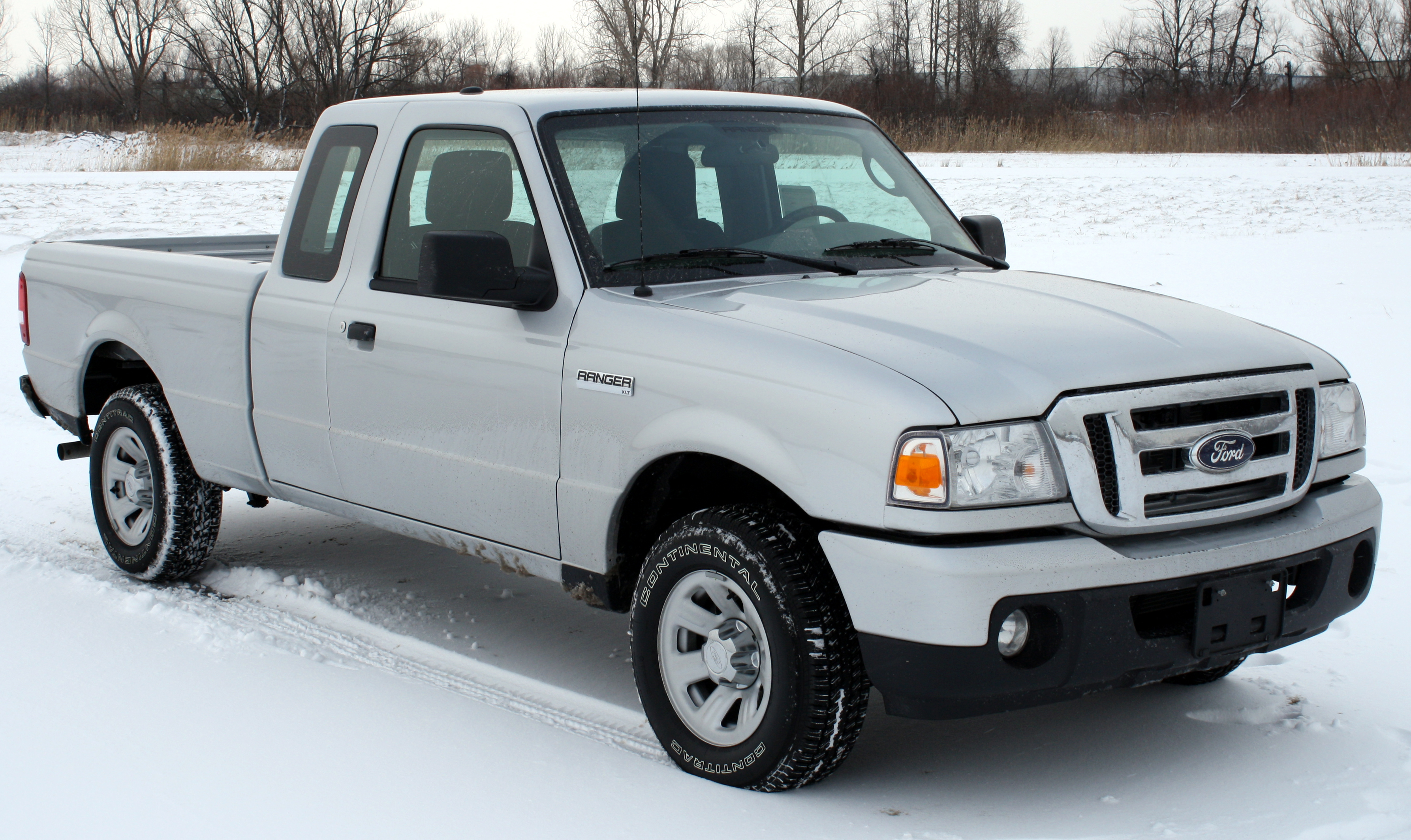
The Ford Ranger has been a staple of the American pickup truck market since its debut in early 1982 for the 1983 model year. Developed as a replacement for the Mazda-sourced Ford Courier, the Ranger quickly became a top contender in the compact truck segment. Over five generations, it has been manufactured across multiple Ford plants in the United States, including Louisville Assembly in Kentucky, Edison Assembly in New Jersey, and Twin Cities Assembly in Minnesota, where the final 2012 Ranger rolled off the line. Production also expanded to South America in 1998, with Ford of Argentina building the Ranger at its General Pacheco plant. The current fourth-generation model, introduced for the 2019 model year after a seven-year hiatus in North America, is built at Wayne Stamping & Assembly in Michigan. This iteration is derived from the global Ford Ranger, adapted to meet North American design requirements, marking the first mid-size Ranger sold in the region.
Throughout its history, the Ranger has been a fierce rival to the Chevrolet S-10 and its successor, the Chevrolet Colorado, as well as their GMC counterparts. From 1987 to 2004, the Ranger held the title of best-selling compact truck in the United States. However, from 2012 to 2018, Ford retired the Ranger nameplate in North America to focus on its full-size F-Series pickups. The Ranger's return in 2019 was met with strong sales, appealing to buyers seeking a smaller, more maneuverable truck without sacrificing capability. The model line has consistently offered a range of engines, cab configurations, and trim levels, from workhorse base models to off-road-focused FX4 and Tremor packages.
The Ranger's reputation for durability and practicality has made it a popular choice for both commercial and personal use. Its compact size and maneuverability, combined with respectable towing and payload capacities, have endeared it to urban drivers and outdoor enthusiasts alike. Over the decades, the Ranger has evolved from a simple, utilitarian vehicle into a more refined and technologically advanced truck, while still retaining its rugged character.
Key Features
- Available 2.7L twin-turbo V6 with 315 hp and 400 lb-ft of torque
- Raptor-exclusive 3.0L twin-turbo V6 producing 405 hp and 430 lb-ft
- 10-speed automatic transmission standard on all engines
- Maximum towing of 7,500 lbs with trailer tow package
- Maximum payload up to 1,788 lbs (2.3L 4x2 models)
- SYNC 4A infotainment with 10-inch or 12-inch touchscreen
- Wireless Apple CarPlay and Android Auto
- FordPass Connect with over-the-air updates
- Pre-Collision Assist with Automatic Emergency Braking
- Lane-Keeping System and auto high-beam headlamps
- FX4 Off-Road Package with off-road tuned shocks, bash plate, electronic-locking rear differential, Trail Control
- Advanced Towing Package with Trailer Brake Controller and Pro Trailer Backup Assist
- Available 10-speaker B&O Sound System by Bang & Olufsen
- Raptor features: zone lighting, LED bed lighting, 360-degree camera, 120V/400W power outlet
Specifications
| Engine Options | 2.3L I-4 (270 hp, 310 lb-ft), 2.7L twin-turbo V6 (315 hp, 400 lb-ft), 3.0L twin-turbo V6 (405 hp, 430 lb-ft) |
| Transmission | 10-speed automatic |
| Drivetrain | Rear-wheel drive or four-wheel drive |
| Towing Capacity | Up to 7,500 lbs with trailer tow package |
| Payload Capacity | Up to 1,788 lbs (2.3L 4x2); 1,373 lbs (Raptor) |
| Fuel Economy (2.3L 4x2) | 21 city / 25 highway / 23 combined mpg |
| Fuel Economy (2.7L V6 4x4) | 18 city / 23 highway / 20 combined mpg |
| Fuel Economy (Raptor) | 16 city / 18 highway / 17 combined mpg |
| Wheelbase | 128.7 in |
| Length | 210.6 in |
| Width | 75.5 in |
| Height | 74.4 in |
| Curb Weight | 4,581–4,745 lbs |
| 0–60 mph | 6.2 seconds (XLT 4x4 V6) |
| Braking 70–0 mph | 190 ft |
| Skidpad | 0.71 g |
Pros & Cons
Pros
- • Strong towing and payload for mid-size class
- • Refined interior with quality materials
- • Advanced technology and standard safety features
- • Excellent fuel economy with 2.3L engine
- • Raptor variant offers exceptional off-road performance
Cons
- • Base price higher than some competitors
- • Raptor fuel economy is low (16/18 mpg)
- • Limited to SuperCrew cab with 5-foot bed only
- • Some rivals offer more off-road packages
Frequently Asked Questions
How much does a Ford Ranger cost?
Is the Ford Ranger worth it?
Ford Ranger vs Toyota Tacoma — which is better?
What is the Ford Ranger release date for 2026?
What are the Ford Ranger specs for towing and payload?
Keywords
Sources
Product Info
- Brand
- Ford
- Manufacturer
- Ford Motor Company
- Category
- off-road vehicle
- Availability
- Available
- Best-selling compact truck
- 1987–2004 in the United States
- Peak sales year
- 1997 with 298,796 units
- Current generation introduced
- 2019 model year
- Assembly plant
- Wayne Stamping & Assembly, Michigan (current)
Where to Buy
Join the community
fans discussing