Overview
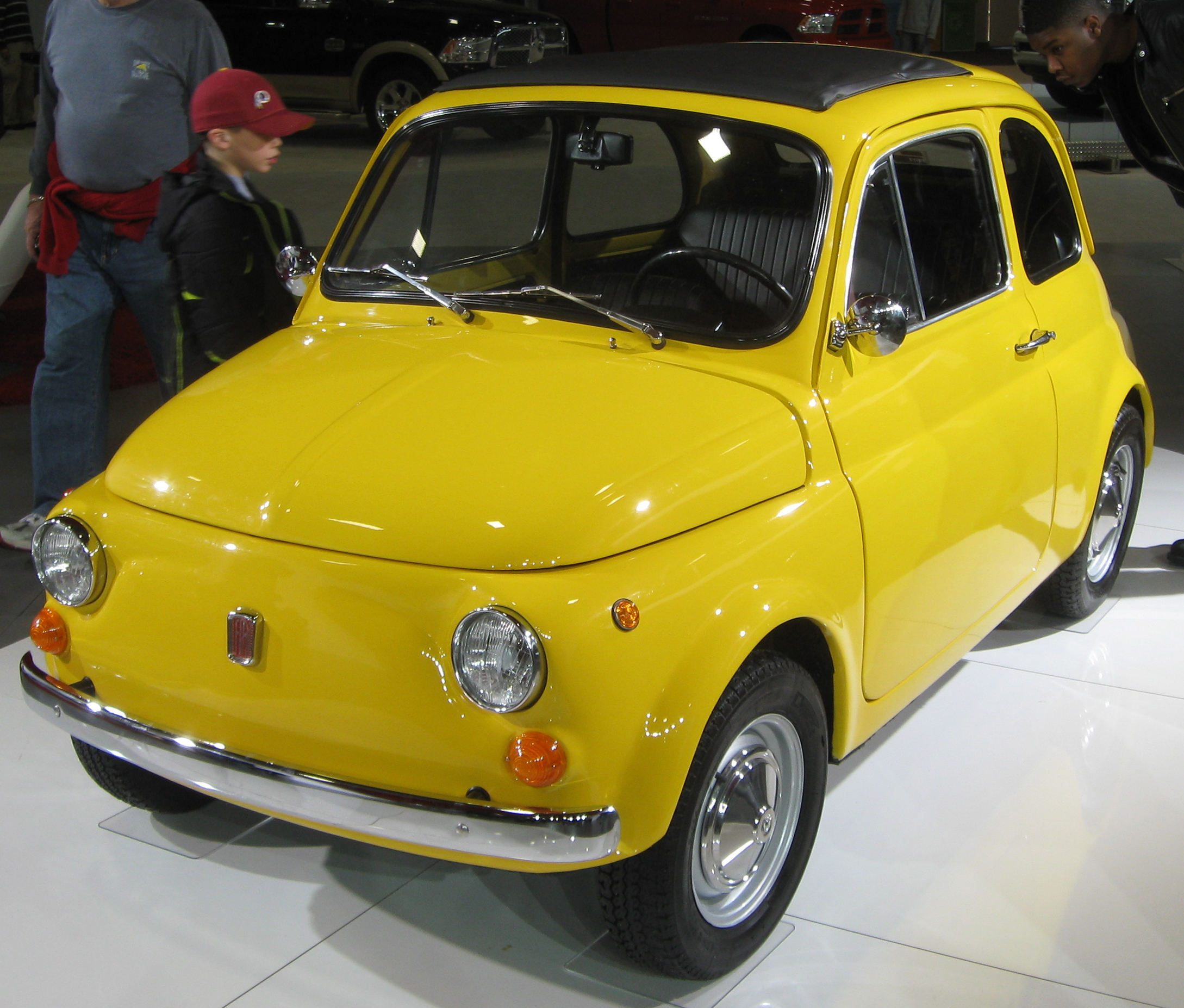
The Fiat 500, affectionately known as the Cinquecento, arrived in 1957 as Fiat's answer to affordable urban mobility. More than just a car, it quickly became a symbol of Italian style and post-war optimism. Designed by Dante Giacosa, this tiny, rear-engined vehicle was engineered for practicality and economy, measuring just under three meters long. It replaced the earlier 500 "Topolino" and offered a fresh take on the small car, prioritizing efficiency and ease of use in crowded European cities.
The original Nuova 500, launched in July 1957, was a two-door semi-convertible, though later versions would include saloon, panel van, and estate body styles. Its 479cc two-cylinder air-cooled engine, though modest, was perfectly suited for its intended purpose. The car's innovative design and its role in democratizing personal transportation earned Dante Giacosa a Compasso d'Oro industrial design prize in 1959, a significant recognition for an automotive product. The Fiat 500 wasn't just transportation; it was a statement of design and a cultural touchstone that resonated across Italy and beyond.
Fast forward to 2007, and Fiat revived the nameplate with a modern interpretation that captured the original's spirit while adding contemporary technology. The new 500 quickly became a global hit, with over 1 million units sold in more than 110 countries by 2015. In the U.S., it arrived for the 2011 model year, offering a turbocharged 1.4-liter engine that made it the most affordable turbo car in America at the time. The modern 500 retained the iconic egg-shaped silhouette, but added modern amenities like touchscreen infotainment, multiple airbags, and extensive personalization options. It even spawned performance variants like the Abarth and electric versions like the 500e, ensuring the nameplate stays relevant in a changing automotive landscape.
Key Features
- Distinctive retro design inspired by the 1957 original
- Turbocharged engine with impressive fuel economy
- Compact dimensions for easy city parking and maneuvering
- Extensive personalization options with over 500,000 combinations
- Available as hatchback, convertible (500C), and high-performance Abarth
- Advanced safety features including multiple airbags and stability control
- Award-winning design with more than 80 international honors
Specifications
| Engine (modern U.S.) | 1.4L MultiAir Turbo Inline-4 |
| Horsepower | 135 hp |
| Torque | 150 lb-ft |
| Transmission | 5-speed manual or 6-speed automatic |
| Fuel Economy (EPA combined) | 30 mpg |
| Length | 3.57 m |
| Width | 1.63 m |
| Height | 1.49 m |
| Wheelbase | 2.31 m |
Pros & Cons
Pros
- • Fun and agile handling
- • Excellent fuel economy
- • Charming retro styling with modern tech
- • Affordable entry price, especially used
- • Strong personalization options
Cons
- • Cramped rear seats and limited cargo space
- • Noisy cabin and choppy ride
- • Small turning radius for its size
- • Reliability concerns and difficulty finding mechanics
- • Discontinued in the U.S. after 2019
Frequently Asked Questions
Is the Fiat 500 worth it?
How reliable is a Fiat 500?
Fiat 500 vs. Mini Cooper: which is better?
What is the Fiat 500 price?
Is the Fiat 500 discontinued?
Keywords
Sources
Product Info
- Brand
- Fiat
- Category
- city car
- Released
- 2007
- Price
- $16,245
- Availability
- Discontinued
- Manufacturer
- Fiat
- Original Launch
- July 1957
- Modern Launch
- 2007
- U.S. Debut
- 2011
- Units Sold (Original)
- Over 4 million
- Units Sold (Modern)
- Over 1 million
- Designer
- Dante Giacosa
- Compasso d'Oro
- 1959
Join the community
fans discussing