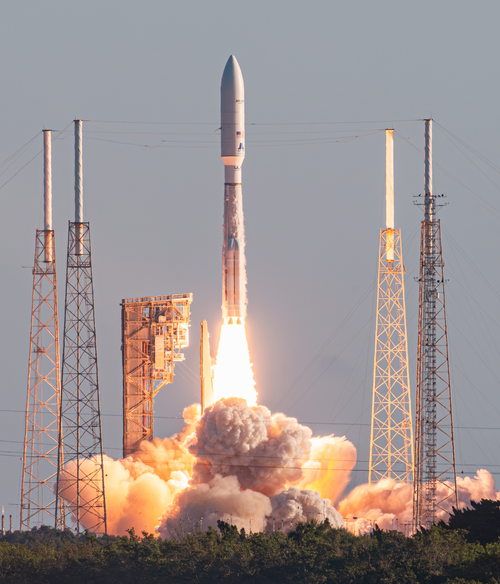
Amazon Leo
by Amazon
"High-speed satellite internet for the world's most remote places"
Overview
By November 2025, Amazon officially dropped the working title Project Kuiper to launch Amazon Leo, a commercial low Earth orbit satellite constellation designed to bring broadband internet to underserved regions. The rebranding marked a strategic pivot from development to full-scale operation, aiming to compete directly with SpaceX's Starlink by offering connectivity to maritime vessels, mobile devices, and rural communities worldwide.
The infrastructure relies on a massive network of satellites built by Amazon and its subsidiary Kuiper Systems. As of October 2026, the company had manufactured its 1,000th satellite and prepared for a global rollout scheduled for the end of that year. This production milestone supports a goal of launching up to 5,105 satellites to provide messaging, data, and emergency services directly to compatible smartphones without requiring additional hardware.
Technical operations utilize AWS cloud infrastructure for ground station management, ensuring resilient global networks with minimized latency compared to traditional geostationary satellites. While basic texting and emergency services work via standard LTE/5G phones equipped with compatible modems, high-speed broadband generally requires a dedicated user terminal similar to existing dish-based systems.
Key Features
- Direct-to-device smartphone connectivity for texts and emergency calls
- Low-latency broadband internet for remote areas
- Integration with Amazon Prime subscriptions
- Global coverage including maritime and mobile applications
- Military-grade secure communications capability
Specifications
| Orbit Type | Low Earth Orbit (LEO) |
| Total Satellites Planned | 5,105 |
| Satellites Built (Oct 2026) | 1,000 |
| Launch Partner | Arianespace |
| Direct-to-Device Support | Yes (Text/Emergency) |
| Infrastructure | AWS Cloud |
Pros & Cons
Pros
- • Direct-to-device feature eliminates need for dishes for basic connectivity
- • Competitive pricing strategy through Amazon Prime bundling
- • Rapid manufacturing progress with over 1,000 satellites built
- • Strong partnerships with Arianespace for launch capacity
Cons
- • Full commercial availability delayed until late 2026
- • Hardware costs for high-speed terminals remain unconfirmed
- • Entering a market already dominated by established competitors
- • Limited public details on specific subscription tiers
Frequently Asked Questions
Is Amazon Leo available today?
How does Amazon Leo compare to Starlink?
What is the price of an Amazon Leo subscription?
Does Amazon Leo work without a dish?
When will Amazon Leo launch?
Keywords
Sources
Product Info
- Brand
- Amazon
- Category
- Satellite Internet Service
- Released
- Late 2026
- Availability
- Pre-order
- Rebrand Date
- November 2025
- German Investment Pledge
- €16 billion ($17 billion) in 2027
- First Major Production Batch
- 1,000 satellites completed by October 2026
- Key Launch Partner
- Arianespace (Ariane 64)
- Enterprise Partner (Sep 2026)
- AT&T Business
- Maritime Partner
- Satlink
- Military Demonstration
- U.S. Army
Where to Buy
Join the community
fans discussing