 Japan
“Princess Tutu combines the elegance of ballet with the emotional weight of a fairy tale, creating a narrative that resonates on multiple levels.”
Variety Staff
Variety
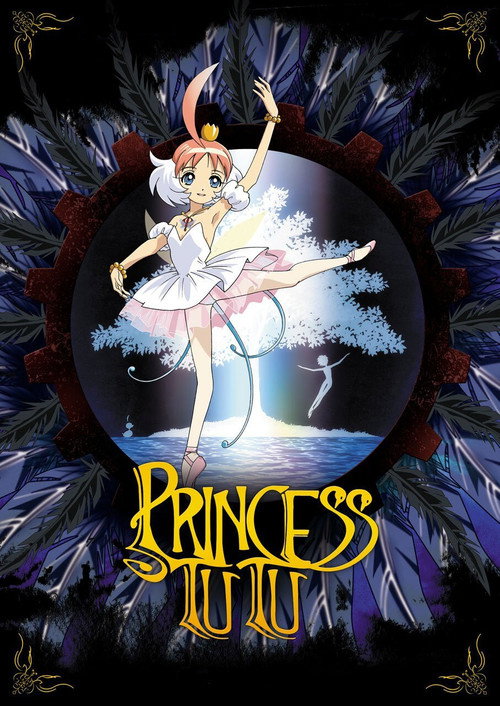
A clumsy duck named Ahiru finds herself transformed into a human girl after saving a statue of a prince from a raven. This magical shift brings her face-to-face with Mytho, a brooding student who has lost his heart and memories due to a tragic accident. To help him recover, a small blue bird named Fakir gives Ahiru a pendant that allows her to become Princess Tutu, a graceful ballerina who collects fragments of Mytho's shattered soul through dance.
The series unfolds at the Kominato Arts Academy, where Ahiru struggles to balance her secret mission with her new life as a ballet student. Her path crosses with Rue, Mytho's childhood friend, whose fear of losing him twists her into the dark antagonist Princess Kraehe. As the trio dances against time, they uncover the truth: their lives are scripted by an eccentric author named Drosselmeyer, and every step they take is part of a story destined for tragedy.
Stream
Availability and pricing can change. Confirm on the provider's site before purchasing.
At the heart of this narrative lies a unique fusion of classical ballet and fairy tale magic set in the quiet town of Kominato. The story kicks off when a kind-hearted duck named Ahiru intervenes to stop a raven from destroying a swan statue. In doing so, she meets Mytho, a handsome but emotionally hollow student who cannot remember his past or feel any emotion. A mysterious blue bird named Fakir reveals that Mytho's heart was shattered centuries ago, leaving him incomplete. To fix this, Fakir transforms Ahiru into a human girl and gives her a magical amulet. When she wears it and performs specific ballet moves, she becomes Princess Tutu, a character capable of collecting shards of Mytho's heart scattered across the town.
Each performance by Princess Tutu heals a piece of Mytho, bringing him closer to wholeness but also forcing him to confront painful memories he had buried. The central tension arises because restoring his heart might make him suffer again. Meanwhile, Ahiru navigates her double life as Duck, a clumsy student trying to learn ballet, and Tutu, an elegant dancer who must hide her identity. She falls deeply in love with Mytho, unaware that their connection is dictated by a pre-written script created by the enigmatic Drosselmeyer.
The conflict escalates when Rue, Mytho's girlfriend, begins to doubt her own worth and fears losing him. These negative emotions allow the dark forces of the story to corrupt her, transforming her into Princess Kraehe. Unlike Tutu, who uses dance to heal, Kraehe uses her powers to destroy the heart fragments and keep Mytho heartless. Their rivalry becomes a battle between hope and despair, representing the struggle to define one's own fate versus accepting a predetermined ending written by an author who seems to enjoy watching his characters suffer.
As the episodes progress, the mystery surrounding Drosselmeyer deepens. The characters realize they are living inside a book, and their attempts to change their destinies often lead to further complications. Supporting figures like Edel, a gentle giantess who is actually a fragment of the original story, and Uzura, a mischievous spirit, add layers to the world. The animation style emphasizes fluidity and grace, mirroring the ballet movements that drive the plot forward. By the final stretch, the stakes reach a breaking point as the characters must decide whether to accept the tragic ending Drosselmeyer wrote or find a way to rewrite the story itself.
The series maintains a delicate balance between lighthearted school life and darker philosophical explorations of free will. It challenges viewers to consider the nature of love and sacrifice while questioning the power of storytelling. The journey culminates in a confrontation with the author himself, forcing the characters to make a choice that will determine not just their happiness, but the very existence of their world. The narrative arc builds steadily toward a climax where the boundaries between fiction and reality blur completely.
Princess Tutu Opening
Critical Consensus
Critics praise Princess Tutu for its sophisticated blend of ballet and magical girl tropes, noting how it elevates the genre with its exploration of fate and sacrifice. The series stands out for balancing whimsical charm with profound philosophical questions about the power of art.
“Princess Tutu combines the elegance of ballet with the emotional weight of a fairy tale, creating a narrative that resonates on multiple levels.”
Variety Staff
Variety
“With its clever writing and stunning visuals, Princess Tutu offers a fresh take on the magical girl genre, challenging viewers to think deeper about the nature of stories.”
Manohla Dargis
The New York Times
“The series' exploration of love, loss, and redemption is handled with such care and nuance that it becomes a truly memorable experience for audiences of all ages.”
Todd McCarthy
Hollywood Reporter
Nanae Kato
Ahiru / Princess Tutu (voice)
Takahiro Sakurai
Fakir (voice)
Naoki Yanagi
Mytho (voice)
Nana Mizuki
Rue / Princess Kraehe (voice)
Akiko Hiramatsu
Edel (voice)
Erino Hazuki
Uzura (voice)
Director
Junichi Sato
Writer
Michiko Yokote
Composer
Kaoru Wada
Producer
Masahiro Okubo
Tokyo Anime Award (2003)
Best Animation: Won
Animage Grand Prix (2003)
Best TV Series: Won
Seiyu Awards (2004)
Best Supporting Actress: Nominated
Join the community
fans discussing