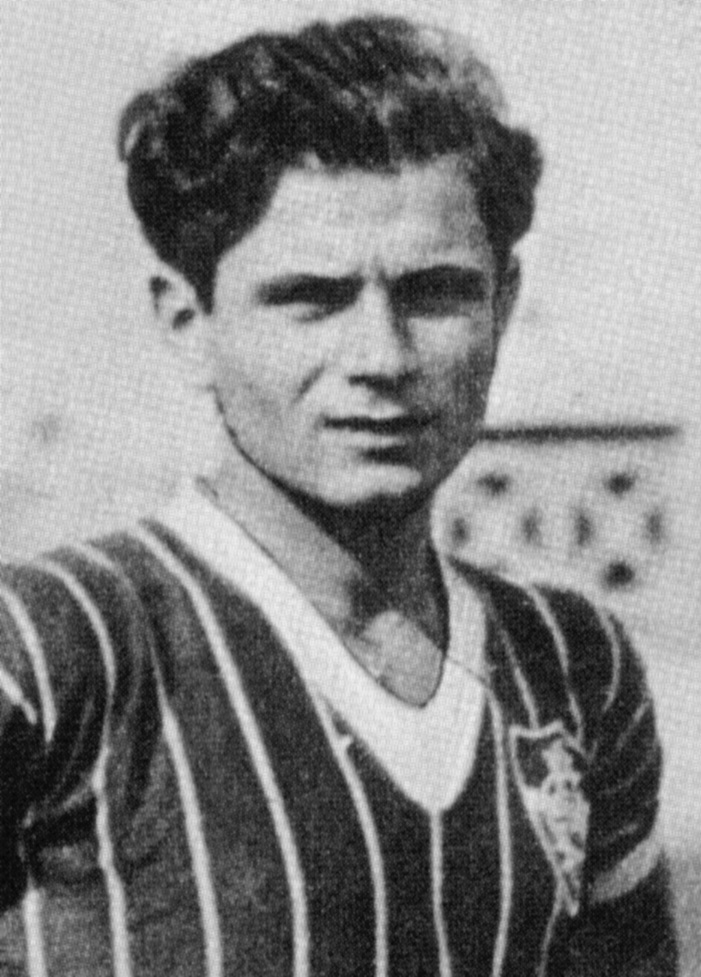
Preguinho
 Germany
association football player•volleyball player•beach volleyball player
Also known as: João Coelho Neto
Birthday
February 8, 1905
Birth Sign
Aquarius
Birthplace
Rio de Janeiro, Brazil
Age
Died at 74
Height
5 ft 9½ in (1.76 m)
About
Preguinho, born João Coelho Neto, was a Brazilian footballer remembered as the first captain and first goal scorer for Brazil at a FIFA World Cup. Playing his entire senior career for Fluminense, he scored 184 goals across all competitions and helped the club win multiple trophies. His versatility extended beyond football: he competed in at least ten sports, including volleyball and swimming. Preguinho remains a symbol of early Brazilian football and a one-club legend, honored with a statue by Fluminense.
Early Life & Background
Preguinho's father, writer Coelho Neto, registered his unborn son as a Fluminense member while his mother was still pregnant. Growing up in Rio de Janeiro, he was immersed in both literature and athletics. His nickname came from a childhood incident: at age five, his father threw him into a pool, and he sank like a nail (prego). Despite that, he became an excellent swimmer and competed in multiple sports before focusing on football. He made his senior debut for Fluminense in 1925.
Career Growth
Preguinho played for Fluminense from 1925 to 1938, making 174 league appearances and scoring 129 league goals. He captained Brazil at the inaugural 1930 FIFA World Cup in Uruguay. In Brazil's first match against Yugoslavia on July 14, 1930, he scored Brazil's first-ever World Cup goal. He added two more goals in a 4-0 win over Bolivia. Brazil's squad was weakened by a dispute between Rio and São Paulo federations, but Preguinho led the team with distinction. He retired in 1938 after a 14-year career with Fluminense.
Career Timeline
Public Image & Style
Preguinho is remembered as a pioneering figure in Brazilian football history, celebrated for his loyalty to Fluminense and his role in Brazil's first World Cup campaign. His versatility as a ten-sport athlete adds to his legend. Fans and historians view him as a symbol of the romantic era of Brazilian football. He is honored with a statue at Fluminense and continues to be featured in FIFA retrospectives. No official fandom name is documented.
Fame & Fandom (iFAMOUS Rankings)
The statue at Fluminense stands as a silent reflection of a man who once carried the weight of a nation's first World Cup dream. Preguinho remains an icon of early Brazilian football, yet in the vast machinery of modern fame metrics, he currently holds no placement in the published Global Top 1,000 or any Top-100 scope list. The iFANN Global Fame Engine evaluated his standing in August 2026 and determined that while his historical footprint is massive, he does not currently register a specific numeric rank among the world's most famous living or recently deceased figures. This absence reflects the nature of his legacy: preserved in institutional reverence rather than active, algorithmic consumption signals worldwide. There is no formal name for his fanbase, nor are there organized campaigns or digital rituals driving his visibility today. His audience exists primarily through the lens of historians and club loyalists who remember the ten-sport athlete who scored Brazil's opening goal in 1930. While the global stage moves on to new stars, Preguinho's story persists in the quiet corners of sports history, honored by Fluminense but lacking the structured fandom found with contemporary celebrities. He is a figure of the past, remembered for his loyalty and versatility, but his name does not currently appear in the rankings that track current global attention.
Interesting Facts and Legends
Preguinho was registered as a Fluminense member before he was even born, a detail that underscores his deep roots in the club. His father, Coelho Neto, coined Rio de Janeiro's nickname "A Cidade Maravilhosa." During the 1930 World Cup, Brazil's team carried a Uruguayan flag in their opening match to win crowd support, a strategic move during the tournament where Preguinho scored four goals in three appearances. A television documentary about his life was produced by Carlos Niemeyer for Canal 100. Beyond football, he competed in at least ten sports, including beach volleyball, winning championships in eight of them. One legendary moment from his career occurred on July 20, 1930, when he scored the first goal of the game for Brazil against Bolivia, a victory that ended 4-0 and marked the first time a Brazilian player scored in a World Cup tournament. This event serves as the primary story told to newcomers about his legendary status. Historical interviews from 1977 detail his deep connection to the club's origins, reinforcing his role as a guardian of the club's history.
Notable Quotes
“I loved Fluminense for as long as I can remember. I couldn't speak properly and Fluminense was in my soul, my heart and my body.”
Family & Personal Life
Preguinho was the son of renowned writer Coelho Neto and his wife Maria. His father was a member of Rio's literary elite and an early fan of Fluminense. Preguinho had an elder brother, Mano, who was expected to pursue literature. Preguinho married and had children, though details remain private. He lived in Rio de Janeiro throughout his life.
Notable Connections
Relationships & Dating History
Public records on Preguinho's romantic relationships are scarce. He was married and had children, though his wife's name and marriage dates are not widely documented. He died on October 1, 1979, in Rio de Janeiro. As of 2026, he is deceased; his marital status at death was married.
- MarriedPreguinho was married and had children, but details are not publicly documented.
Death & Aftermath
Died
October 1, 1979 (aged 74)
Death Place
Rio de Janeiro, Brazil
Cause of Death
Unknown
Fluminense Football Club honored the man who scored Brazil's first World Cup goal, cementing his status as an eighth all-time top scorer and one of its greatest idols long after the final whistle. Tributes emerged retrospectively in documentaries celebrating the legacy of João Coelho Neto, known universally as Preguinho, rather than through immediate fan vigils or chart surges that the limited media infrastructure of 1979 could not support. The athlete passed away on October 1, 1979, in Rio de Janeiro at the age of 74, marking the end of a life lived entirely within the city where he played his entire senior career for Fluminense.
His final public appearance occurred two years prior during a historic interview at the club's Laranjeiras stadium, where he discussed the institution's history before vanishing from the public eye until his death. Funeral details, including the burial site and notable attendees, were never made public, and no official program or eulogy text has been released to the general public. Posthumously, he remains celebrated for competing successfully in eight different sports modalities, earning him the title of "the greatest athlete in the world" in certain historical accounts.
Net Worth (Estate Value)
Awards Won (1)
Preguinho's career predates modern football awards. He won the Torneio Início and six additional trophies with Fluminense. Individual awards like the Ballon d'Or did not exist during his era.
00Club
Fluminense
Known For
First Brazilian to score in a FIFA World Cup
1930 · Forward
Captain of Brazil at 1930 World Cup
1930 · Captain
One-club career with Fluminense
1925–1938 · Striker
Keywords
Sources
Quick Facts
- Profession
- association football player, volleyball player, beach volleyball player
- Born
- +1905-02-08
- Birthplace
- Rio de Janeiro
- Died
- +1979-10-01
- Death Place
- Rio de Janeiro
- Gender
- Male
- Birth Sign
- Aquarius
Personal Details
- Full Name
- João Coelho Neto
- Height
- 5 ft 9½ in (1.76 m)
- Education
- Local schools in Rio de Janeiro
Frequently Asked Questions
How did Preguinho get his nickname?
Was Preguinho the first Brazilian to score in a World Cup?
How many goals did Preguinho score for Brazil?
What position did Preguinho play?
How many sports did Preguinho play?
Join the community
fans discussing