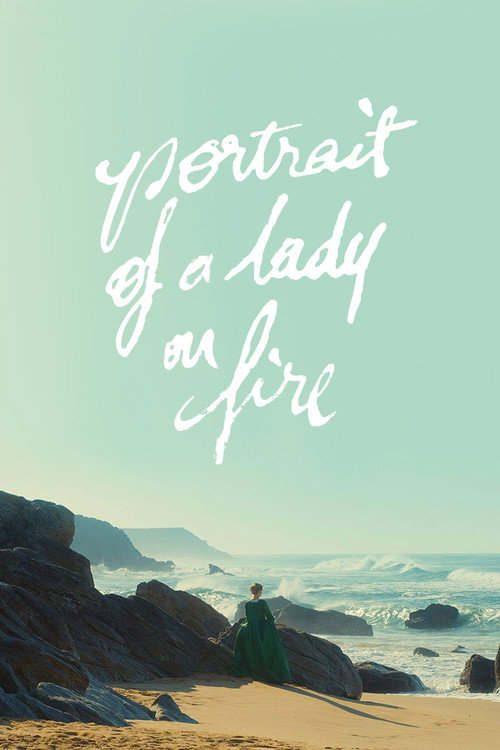
In 1770s Brittany, a young painter named Marianne arrives on a remote island with a secret mission: to paint a wedding portrait of Héloïse, a woman who has just left a convent to marry a Milanese nobleman. But Héloïse has refused to sit for any artist, and her mother, the Countess, hires Marianne under the guise of a walking companion. The setup forces Marianne to observe Héloïse during their daily walks along the rugged coast, memorizing her features in secret. What begins as a professional challenge soon becomes a consuming fixation, as the two women circle each other with wary curiosity and unspoken attraction.
Director Céline Sciamma crafts a film that is both a meticulous period piece and a radical inversion of the male gaze. There are almost no male characters of consequence; the world is populated entirely by women, servants, mothers, daughters, artists, each navigating the constraints of their era. The cinematography by Claire Mathon is luminous, capturing the salt-sprayed cliffs and candlelit interiors with a painterly precision that echoes the film's central theme of looking. The performances are equally remarkable: Noémie Merlant brings a fierce intelligence to Marianne, while Adèle Haenel, in her final film role before retiring from acting, imbues Héloïse with a melancholy that feels both brittle and tender.
The film premiered at the Cannes Film Festival in May 2019, where it won the Queer Palm and Best Screenplay, and went on to earn widespread acclaim, with many critics hailing it as a masterpiece. It was later voted the 30th greatest film of all time in the 2022 Sight & Sound critics' poll, a testament to its lasting impact on cinema and queer storytelling.
Availability and pricing can change. Confirm on the provider's site before purchasing.
PlotSpoiler-free
Marianne, a painter in her late twenties, is commissioned by a wealthy countess to travel to an island off the coast of Brittany and paint a portrait of her daughter, Héloïse. The catch: Héloïse has just left a convent and is to be married to a Milanese nobleman, but she has refused to pose for any portrait. The previous painter abandoned the task, leaving behind an unfinished canvas with a faceless figure. The Countess, pragmatic and weary, instructs Marianne to pose as a walking companion, observing Héloïse during their daily walks and painting her image from memory in the evenings.
Marianne arrives on the island and meets Héloïse, who is sullen and withdrawn. Their first walks are silent and tense, with Héloïse always staying a few steps ahead, as if to evade Marianne's gaze. Marianne struggles to capture Héloïse's features, the shape of her ears, the way her hands move, the color of her hair, but slowly, she begins to notice details that elude simple description. As the days pass, the two women start to talk, sharing stories and opinions. Marianne reveals her frustration with the limitations placed on female painters, while Héloïse speaks of her grief over her sister's death and her dread of the marriage that awaits her.
Their conversations grow more intimate, and Marianne finds herself increasingly drawn to Héloïse, not just as a subject but as a person. One evening, while reading the myth of Orpheus and Eurydice aloud, they debate the meaning of Orpheus's backward glance: was it a lover's instinct or a poet's choice? The question echoes their own situation, and the air between them thickens with unspoken feeling. Marianne completes the secret portrait but cannot bring herself to present it, knowing it would betray Héloïse's trust. She confesses everything, and Héloïse, surprisingly, agrees to pose openly for a new portrait.
The Countess, furious at the delay, departs for Italy for five days, leaving the two women alone with the maid, Sophie. During this interlude, the household becomes a sanctuary of female companionship. The three women share meals, read together, and support each other through a difficult abortion that Sophie undergoes, a scene that deepens their bond. Marianne and Héloïse's connection blossoms into a passionate affair, conducted in stolen moments and whispered words. They know the idyll cannot last, that Héloïse will soon be married and sent away, and this awareness lends their love a desperate, aching quality. The film's title, a reference to the portrait that 'burns,' hints at the consuming nature of their passion, and the story builds toward an inevitable separation, the details of which remain unspoken until the final act.
Portrait of a Lady on Fire is a breathtakingly beautiful and emotionally devastating romance that subverts the male gaze to create a love story of astonishing intimacy. Céline Sciamma's direction, Claire Mathon's luminous cinematography, and the magnetic performances of Noémie Merlant and Adèle Haenel combine to make a film that is both a period piece and a timeless meditation on desire, memory, and the act of looking.
islandfirebeacharranged marriageclassical musicpaintingmelancholypaintergreek mythologylesbian relationshipperson on fireperiod dramalesbian sexportraitlgbt18th centurywoman directorabortionportrait drawingposing for a portraitwomen gatheringwomen in filmcomplexwalkpainting lessonsymphony orchestralesbianwoman falls in lovevivaldiwomenbitteradmiringadoringawestruckcompassionateempatheticmelodramaticsteamy romance
 France