 United States
Overview
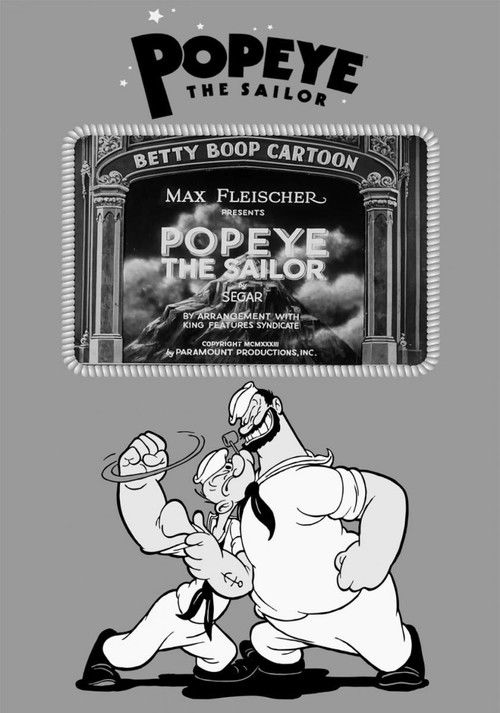
When Popeye the Sailor hit theaters on July 14, 1933, it introduced audiences to a character who would soon become an icon of American animation. This seven-minute short marked the first time the world saw the one-eyed sailor in action, fighting for affection while spitting tobacco juice and cracking jokes. Directed by Dave Fleischer and produced by his brother Max at Fleischer Studios, the film blended slapstick comedy with musical numbers that defined the studio's unique style. The production relied on rotoscoping to give the characters fluid, realistic movement despite their cartoonish designs.
The story centers on Olive Oyl, a sweet but perpetually distressed woman caught between her true love Popeye and her dim-witted suitor Bluto. Early in the narrative, Bluto uses his brute strength to intimidate Olive and push Popeye aside. The sailor watches from afar, unable to compete with the bully's physical dominance using conventional means. This dynamic sets up a classic underdog scenario where the smaller protagonist must find a way to overcome a much larger threat to protect his love interest.
Where to Watch
Free with ads
Availability and pricing can change. Confirm on the provider's site before purchasing.
PlotSpoiler-free
The opening scene establishes a bustling port town atmosphere typical of the early 1930s. Olive Oyl walks through the streets, drawing the attention of both the rough-around-the-edges sailor Popeye and the burly, arrogant Bluto. Bluto immediately makes his move, attempting to woo Olive with aggressive gestures and displays of force. He grabs her arm and tries to drag her away, ignoring her protests. Popeye stands nearby, pipe clenched in his teeth, watching the interaction with longing. He tries to intervene, offering gifts or performing tricks to win her favor, but Bluto easily dismisses him with a shove or a laugh.
As the short progresses, the conflict escalates into a series of slapstick confrontations. Bluto becomes increasingly bold, snatching Olive away and threatening her safety. Popeye chases after them, but every attempt to fight back fails miserably. The bully is simply too strong, tossing the sailor around like a ragdoll. The animation captures these moments with precision thanks to the rotoscoping technique used by the studio. Animators traced over live-action footage of actors moving in New York City to create the exaggerated yet grounded movements seen on screen. This method gave the characters a weight and physics that felt real even within a fantastical setting.
Musical interludes break up the tension throughout the runtime. These sequences feature lively jazz and ragtime tunes performed by the studio's in-house musicians. They provide a rhythmic backdrop to the chaos, enhancing the comedic timing of the physical gags. Popeye attempts various strategies to save Olive, including spitting tobacco juice with pinpoint accuracy. While this gag provides some humor, it does not stop Bluto from continuing his assault. The audience sees the sailor struggling against overwhelming odds, creating suspense about whether he can ever hope to win.
The stakes rise as Bluto takes Olive further from the safety of the town. Popeye follows, driven by determination rather than just romantic interest. He faces obstacles that test his resolve, from falling off docks to getting knocked down by heavy objects. Despite these setbacks, he refuses to give up. The narrative builds toward a climax where the final confrontation will decide the fate of the couple. The short masterfully balances the humor of the situation with the genuine emotional core of the story. Viewers are left anticipating the moment when the tide will finally turn in favor of the underdog.
Ending ExplainedSpoilers
Critical Reception
Critical Consensus
While no formal consensus exists for this 1933 short, contemporary reviews praised its innovative animation, particularly the use of rotoscoping, and the introduction of a charismatic new character. Critics noted the blend of slapstick humor and musical elements as defining features of the Fleischer Studio style.
Top Cast
William 'Billy' Costello
Popeye (voice)
William Pennell
Bluto (voice)
Bonnie Poe
Olive Oyl (voice)
Mae Questel
Betty Boop (voice)
Crew
Director
Dave Fleischer
Writer
E.C. Segar
Producer
Max Fleischer
Keywords
Sources
Facts
- Debut Date
- July 14, 1933
- Studio
- Fleischer Studios
- Technique
- Rotoscoping
- Voice Actor Origin
- Billy Costello
- Spinach Inspiration
- Real-world iron supplements
Join the community
fans discussing