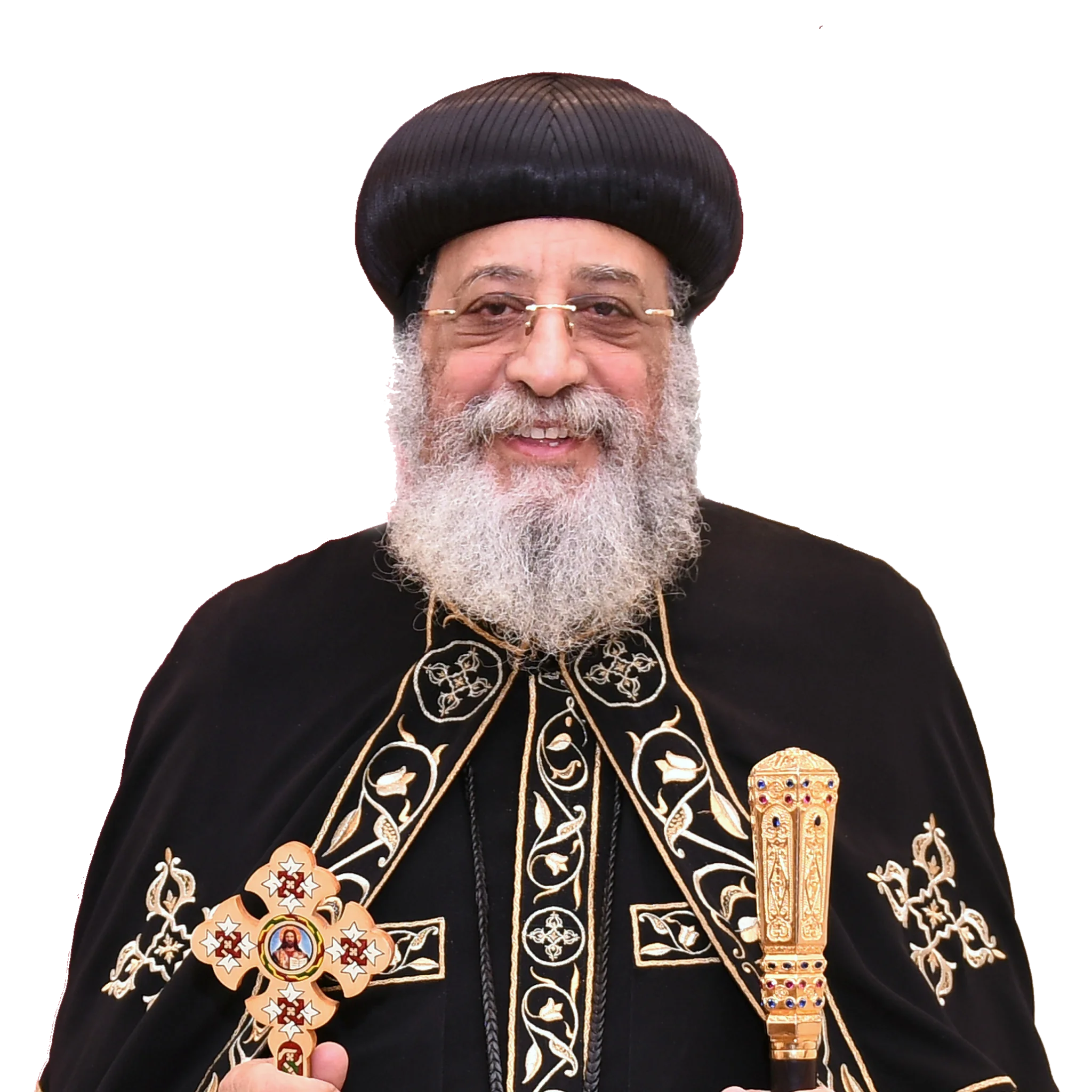
Pope Theophilus of Alexandria
 Egypt
EgyptAlso known as: Theophilus, Theophilus of Alexandria
Birthday
Birth Sign
Birthplace
Egypt
Age
Died at 0
About
Theophilus of Alexandria (Greek: Θεόφιλος) was the 23rd Pope of Alexandria and Patriarch of the See of Saint Mark, serving from 385 to 412 CE. He is remembered as a pivotal figure in late antique Christianity, known for his assertive role in suppressing paganism and managing ecclesiastical disputes that shaped the doctrinal course of the early Church. He died on 15 October 412 and was buried in the Dominicium in Alexandria. He is venerated as a saint in the Coptic Orthodox Church, the Syriac Orthodox Church, and the Eastern Orthodox Church, with feast days on 18 Paopi (Coptic calendar), 15 October (Julian calendar), and currently 28 October (Gregorian calendar).
Early Life & Background
Little is known of Theophilus's early life. He was born in Egypt in the mid-4th century, though the exact date and location of his birth are unknown. At the time of his election as Archbishop of Alexandria, he was likely a leading member of the clergy in Alexandria, known for his intellectual gifts but also for his aggressiveness and violence. Saint Jerome records that Theophilus did not come forward as a public teacher before 385. Hydatius, a contemporary chronicler, called him a "most learned man" and dedicated to him an Easter table for 100 years. The Coptic synaxarium describes him as knowledgeable and well-read in church books with a full understanding of their interpretation, noting that he wrote many discourses and works of exhortation urging works of charity and mercy, and warning people about receiving the Divine Mysteries without preparation.
Career Growth
Theophilus rose to the patriarchate during a period of significant transformation in the Roman Empire, when Christianity had recently gained imperial support through the policies of Constantine and Theodosius I, displacing long-dominant pagan cults. Alexandria, a center of learning and philosophical traditions, became a focal point of religious and political tensions.
In 384-385 CE, Theophilus was elected as the 23rd Pope of Alexandria, succeeding Timothy I. He attended a council in Constantinople in 394, sitting with Nectarius of Constantinople, Gregory of Nyssa, and Theodore of Mopsuestia. In 396, he informed Jerome through Isidore that he should show more respect for the authority of his bishop, John of Jerusalem. In 399, he was challenged by a group of Egyptian monks on his statement approving Origen's concept of an absolutely immaterial God, and he initially supported Origen and the Origenist monks. In 401, he reversed his position on Origen, denouncing his writings and beginning a persecution of Origenist monks, personally commanding troops sent to destroy their desert monasteries. In 403, he presided at the Synod of the Oak, where he successfully condemned and exiled John Chrysostom, the leading theologian of the era, by implicating him in controverted points of Origenism. He also banished an Egyptian bishop named Paulus who was an opponent of the Origenists, and reproached Saint Jerome for showing hospitality to Paulus. He accused Saint Epiphanius of anthropomorphism. He obtained from the Emperor the gift of all the houses of idols, which he converted into churches and lodging houses for strangers, endowing them with land. He ordained as bishops the two sons of a woman who came from Rome. He wrote "one large volume against Origen" (according to Gennadius), of which some fragments are preserved. The Canons ascribed to Theophilus are collected in Pitra's "Juris eccles. Graecor. hist. et monum." Inauthentic and doubtful writings were also in circulation under his name.
Career Timeline
Public Image & Style
Theophilus is remembered in church history as a complex figure, a fierce defender of Christian orthodoxy who was also ruthless in his methods. The Coptic tradition honors him as the "Pillar of Faith" and remembers him positively for his church-building activities and theological writings. Western church historians, particularly those sympathetic to John Chrysostom, tend to portray him more critically, emphasizing his role in Chrysostom's condemnation and exile. His artistic depiction at the Serapeum appears in the Alexandrian World Chronicle. There is no modern fandom or fan culture associated with him.
Fame & Fandom (iFAMOUS Rankings)
Pope Theophilus of Alexandria commands a distinct and enduring presence in global historical memory, anchored by his pivotal role in late antique Christianity rather than modern celebrity metrics. His standing is quantified by the iFANN Global Fame Rankings, which place him as the 95th most famous person from Egypt, a position he has held steady through recent assessment cycles. This ranking reflects a sustained level of attention across media coverage, search behavior, and cultural consumption signals worldwide. While he does not possess a formal fan club or organized fandom name in the contemporary pop-culture sense, his devotees are the faithful members of the Coptic Orthodox Church and the broader Christian community who venerate him as Saint Theophilus. These followers engage with his legacy through liturgical commemoration, hagiographic study, and pilgrimage to sites associated with his era, maintaining a continuous tradition of reverence that spans sixteen centuries without the need for modern marketing campaigns.
Interesting Facts and Legends
Theophilus initially championed Origen and the four monks of Scetius, known as the Tall brothers, before reversing his stance to persecute them. He played a central role in the intrigues involving Empress Eudoxia that led to the deposition and exile of Saint John Chrysostom from Constantinople. Though a fierce defender of the faith, he was also noted for his aggressiveness and violence, maintaining good relations with fellow clergy during the early years of his episcopate, including attendance at the 394 council in Constantinople. The Coptic synaxarium records his conversion of idol houses into churches and lodging for strangers. A widely retold legend details his destruction of the Serapeum, where he utilized imperial edicts to seize pagan property and demolish shrines, marking a definitive turning point in the decline of paganism in Alexandria. Another enduring story concerns his rivalry with John Chrysostom, alleging that Theophilus exploited the Archbishop's personal indiscretions to orchestrate his downfall at the Synod of the Oak. Tradition also links him to the narrative of the Holy Family's flight, noting how his era saw the formalization of traditions regarding their journey through Egypt.
Family & Personal Life
Notable Connections
Theophilus's significant relationships were ecclesiastical and political in nature. His nephew Cyril of Alexandria succeeded him as patriarch. He corresponded with Saint Jerome and reproached him for showing hospitality to Paulus, an opponent of the Origenists. He accused Saint Epiphanius of anthropomorphism. He made Isidore archpriest and patriarchal oeconomus. He sat with Nectarius of Constantinople, Gregory of Nyssa, and Theodore of Mopsuestia at the 394 council. His predecessor was Timothy I.
Relationships & Dating History
As a 4th-5th century Christian patriarch who lived approximately 1,600 years ago, Theophilus had no public romantic relationships. He was a celibate church leader, and no historical records document any marriages, engagements, or romantic partnerships. His significant relationships were ecclesiastical and political in nature, primarily with fellow clergy and church leaders.
Death & Aftermath
Died
October 15, 412
Death Place
Alexandria, Egypt
Cause of Death
Unknown
Pope Theophilus of Alexandria concluded his twenty-seven-year patriarchate within the city of Alexandria, Egypt, on October 15, 412 AD. While historical chronicles document his vigorous suppression of pagan sites and his theological conflicts with Origenist factions, no medical records or contemporary accounts preserve the specific circumstances of his final days or a definitive cause of death. The transition of power was immediate and orderly, as his nephew Cyril assumed the See of Saint Mark without interruption, marking the beginning of a new era for the church rather than a period of documented public mourning. Traditional liturgical calendars record his departure on this date, noting his status as a disciple of St. Athanasius, though the Coptic Synaxarium does not elaborate on the burial rites or the specific location of interment beyond the general association with Alexandria. His legacy was cemented through ecclesiastical tradition rather than posthumous awards or foundations, with his feast day established annually in both the Coptic and Syrian churches to honor his role in shaping early Christian doctrine.
Net Worth (Estate Value)
$0
iFANN Editorial Team estimate
Per iFANN's editorial analysis, the estimated net worth of Pope Theophilus of Alexandria is $0. As a historical figure from the 4th and 5th centuries, he possessed no modern monetary assets, estate value, or posthumous earnings. His significance is measured entirely in religious and ecclesiastical terms rather than financial ones, and no information regarding estate management exists for him.
Awards & Accolades
View 2 records, honours and achievementsKnown For
Suppression of paganism in Egypt
385-412 · Patriarch of Alexandria
Origenistic controversy
399-401 · Patriarch of Alexandria
Condemnation of John Chrysostom
403 · Presiding at the Synod of the Oak
Keywords
Sources
Quick Facts
- Profession
- patriarch, Eastern Orthodox priest
- Birthplace
- Egypt
- Died
- +0412-10-15
- Death Place
- Egypt
- Gender
- Male
Frequently Asked Questions
Who was Pope Theophilus of Alexandria?
When did Theophilus of Alexandria die?
What did Theophilus of Alexandria do?
Who succeeded Theophilus of Alexandria?
Was Theophilus of Alexandria a saint?
Join the community
fans discussing