 Japan
JapanPart of a Collection
Pokémon (Game Boy)
Overview
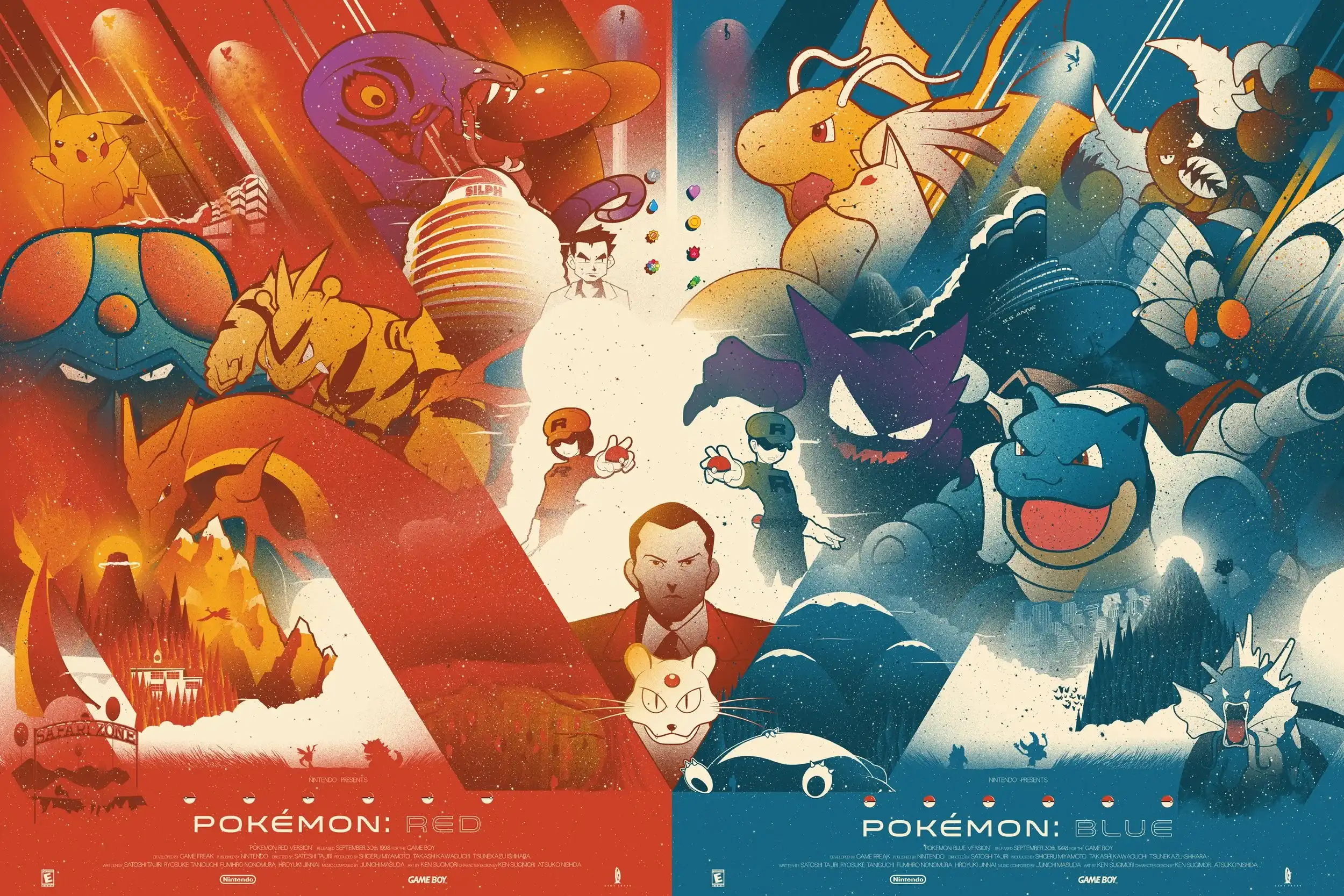
February 27, 1996 marked a quiet Tuesday in Tokyo when Nintendo released two Game Boy cartridges that would eventually reshape global entertainment. Pokémon Red and Pokémon Green arrived exclusively in Japan as role-playing video games rather than films. Satoshi Tajiri created the experience to capture the childhood joy of catching insects and exploring nature, translating those memories into digital form for millions of handheld players.
The original Japanese release featured unique regional variants with different Pokémon available in each version. Players could only complete their Pokédex by trading with friends who owned the opposite color cartridge. This mechanic forced social interaction before online connectivity existed on consumer devices. The game launched without the international fanfare seen later, yet it quietly built a foundation for one of history's largest media franchises.
PlotSpoiler-free
Ash Ketchum does not appear in this story because no animated protagonist exists within the game files. Instead, players create a silent trainer from Pallet Town to embark on a journey across the Kanto region. The adventure begins when Professor Oak gives the player a choice between three starter Pokémon: Bulbasaur, Charmander, or Squirtle. Each creature evolves through battle experience and requires specific items or level thresholds to reach its final form.
The core loop involves wandering grassy routes to encounter wild creatures while battling rival trainers and gym leaders. Eight distinct gyms stand between the player and the Elite Four, each specializing in a different elemental type like Fire, Water, or Electric. Defeating these leaders earns badges required to challenge the championship. Along the way, Team Rocket operatives attempt to steal rare Pokémon for their own sinister goals involving cloning technology.
Players must navigate caves, oceans, and cities while managing inventory and healing supplies. The narrative unfolds through exploration rather than cutscenes or dialogue trees. Every decision about which monsters to catch or which paths to take shapes the individual experience. Completing the main storyline requires defeating the team leader Giovanni and then conquering the Elite Four members at the Indigo Plateau.
The game introduces legendary beasts like Mewtwo deep within Cerulean Cave after the main quest concludes. Finding this mythical creature demands high-level teams and precise strategy. The ending leaves the trainer victorious but implies endless possibilities for continued play. New challenges emerge through side quests and hidden items scattered throughout the map. Trading remains essential for completing the National Pokédex and seeing all possible encounters.
No cinematic climax occurs here since the medium relies entirely on player agency. Success depends on preparation, resource management, and persistence against random encounter rates. The story concludes when the player defeats the final boss and receives the Champion title. Friends can then exchange data via link cable to share progress or battle directly.
Ending ExplainedSpoilers
Critical Reception
Critical Consensus
This title represents a groundbreaking video game release rather than a motion picture. Critics praised its innovative trading mechanics and addictive gameplay loop. The concept of collecting over 150 creatures defined a new genre standard. Sales figures exceeded expectations within months of launch.
Top Cast
Crew
Director
Satoshi Tajiri
Writers
Junichi Masuda, Atsuko Nishida
Composer
Junichi Masuda
Producer
Tsunekazu Ishihara
Keywords
Sources
Facts
- Original Release Date
- February 27, 1996
- Developer
- Game Freak
- Publisher
- Nintendo
- Platform
- Game Boy
- Region
- Japan Exclusive (Initial)
- Creator
- Satoshi Tajiri
Join the community
fans discussing