“Unlike the regular Pokémon anime, which frequently introduces its own towns, gyms and characters, Pokémon Origins specifically follows the story of the games.”
Nintendojo Staff
Nintendojo
 Japan
"The journey begins where the games end."
User Score
350 votes
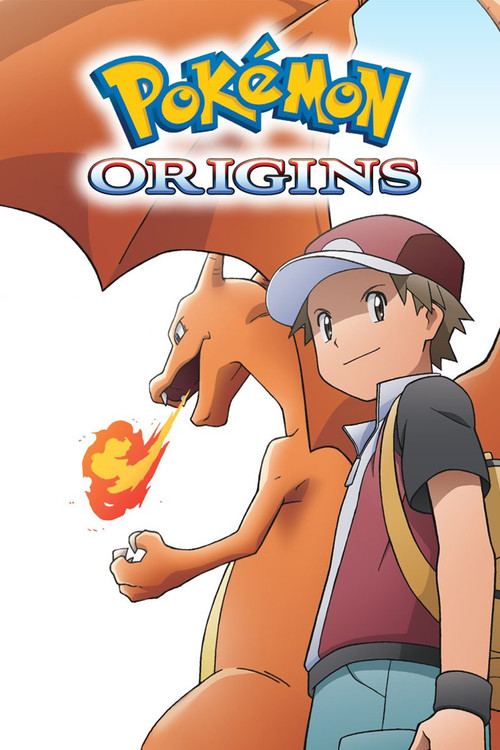
Aired on TV Tokyo in October 2013, Pokémon Origins adapts the original Game Boy titles into a four-part miniseries that prioritizes narrative fidelity over the episodic format of the main anime. The project features voice work from Junko Takeuchi and Takuya Eguchi, who bring distinct energy to the protagonist and his rival Green respectively. Writers Junichi Masuda and Satoshi Tajiri oversaw the production to ensure every battle and discovery felt authentic to the games.
This adaptation stands apart by stripping away the comedic side stories common in other series to focus strictly on Red's quest to complete the Pokédex and challenge the Elite Four. The animation style, handled by Production I.G, employs a sleeker aesthetic with more mature character designs and fluid combat sequences. By adhering closely to the mechanics of Pokémon Red and Blue, the show offers a condensed yet detailed look at the Kanto region's history.
Free with ads
Availability and pricing can change. Confirm on the provider's site before purchasing.
The story opens in Pallet Town when Professor Oak invites local residents to choose their first partner Pokémon. Red arrives late and finds only Charmander left, while his rival Blue has already selected Squirtle. This initial delay sets a tone of urgency for Red as he embarks on his journey through the Kanto region. Unlike previous adaptations that follow an original protagonist named Ash, this narrative centers entirely on the silent trainer from the video games, whose actions mirror the player's progression through the game's map.
Red travels from town to town, facing trainers who challenge him to battles that test his strategic knowledge of type advantages. The series dedicates significant time to showcasing the tactical depth of the gameplay, detailing how moves interact and how stamina affects outcomes. Along the way, Red encounters members of Team Rocket, a criminal organization led by Giovanni that seeks to exploit Pokémon for power. These conflicts introduce darker themes regarding the exploitation of creatures and the moral responsibilities of trainers.
As Red advances toward the Indigo Plateau, the stakes rise with each Gym Leader he defeats. The narrative builds tension by highlighting the rivalry between Red and Blue, showing how their competing philosophies shape their growth. Blue often serves as a foil, representing speed and aggression, while Red demonstrates patience and resilience. The episodes explore the motivations of supporting characters like Misty and Brock, giving them more agency than they typically receive in the broader franchise lore.
The final arc focuses on the rigorous challenges posed by the Elite Four, a group of elite trainers guarding the championship title. Each battle requires Red to utilize specific strategies and manage his team's health carefully. The series maintains a steady pace, avoiding filler content to keep the focus on the central objective of becoming the champion. This structure allows viewers to experience the full scope of the original game's campaign within a limited runtime.
Beyond the battles, the story examines the bond between humans and Pokémon. It portrays these creatures not merely as tools for victory but as companions with their own personalities and needs. Red's interactions with his team reflect a deep respect for their abilities, reinforcing the theme that true strength comes from cooperation rather than domination. The narrative arc culminates in a confrontation that resolves the immediate conflict while leaving room for future adventures.
Official Trailer
Critical Consensus
Critics praised the series for its faithful adaptation of the original games and its mature storytelling approach. Reviewers noted the high-quality animation and the respectful treatment of source material mechanics. The show was seen as a necessary evolution for the franchise, appealing to older fans while remaining accessible to newcomers.
“Unlike the regular Pokémon anime, which frequently introduces its own towns, gyms and characters, Pokémon Origins specifically follows the story of the games.”
Nintendojo Staff
Nintendojo
“Pokemon Origins is praiseworthy for capturing the original games' spirit, representing how far the franchise has come, and hinting at the future.”
Review Summary
General Review
“The Genius of Pokémon Origins lies in its dedication to the game mechanics, making every battle feel authentic and impactful.”
Variety Staff
Variety
Junko Takeuchi
Red (voice)
Takuya Eguchi
Green (voice)
Tomokazu Sugita
Takeshi (voice)
Minoru Inaba
Old Man Fuji (voice)
Rikiya Koyama
Giovanni (voice)
Tokuyoshi Kawashima
Sam (voice)
Katsuji Mori
Professor Oak (voice)
Yui Ishikawa
Misty (voice)
Director
Kenjiro Ito
Writers
Junichi Masuda, Satoshi Tajiri
Composers
Hiroaki Hayama, Shota Kageyama
Producer
Kenjiro Ito
Join the community
fans discussing