 Japan
Part of a Collection
Pokémon mainline series
Overview
Pokémon Gold Version and Silver Version arrived on the Game Boy Color in Japan on November 21, 1999, with North American and Australian releases in October 2000 and Europe following in April 2001. Developed by Game Freak and published by Nintendo, they are the second generation of the mainline Pokémon role-playing games, directed by series creator Satoshi Tajiri. The pair added 100 new creatures, bringing the total to 251, and introduced the Johto region west of the original games' Kanto.
The additions were structural rather than cosmetic. A real-time day and night cycle governed which Pokémon appeared and when, breeding at the Day-Care produced Eggs, held items altered battle outcomes, and the PokéGear phone let non-player characters call with tips and rematch offers. Shiny color variants, including the red Gyarados at the Lake of Rage, gave collectors a new pursuit. The two cartridges differ mainly in version-exclusive species, and completing the Pokédex required trading across both and with the earlier Red, Blue, and Yellow.
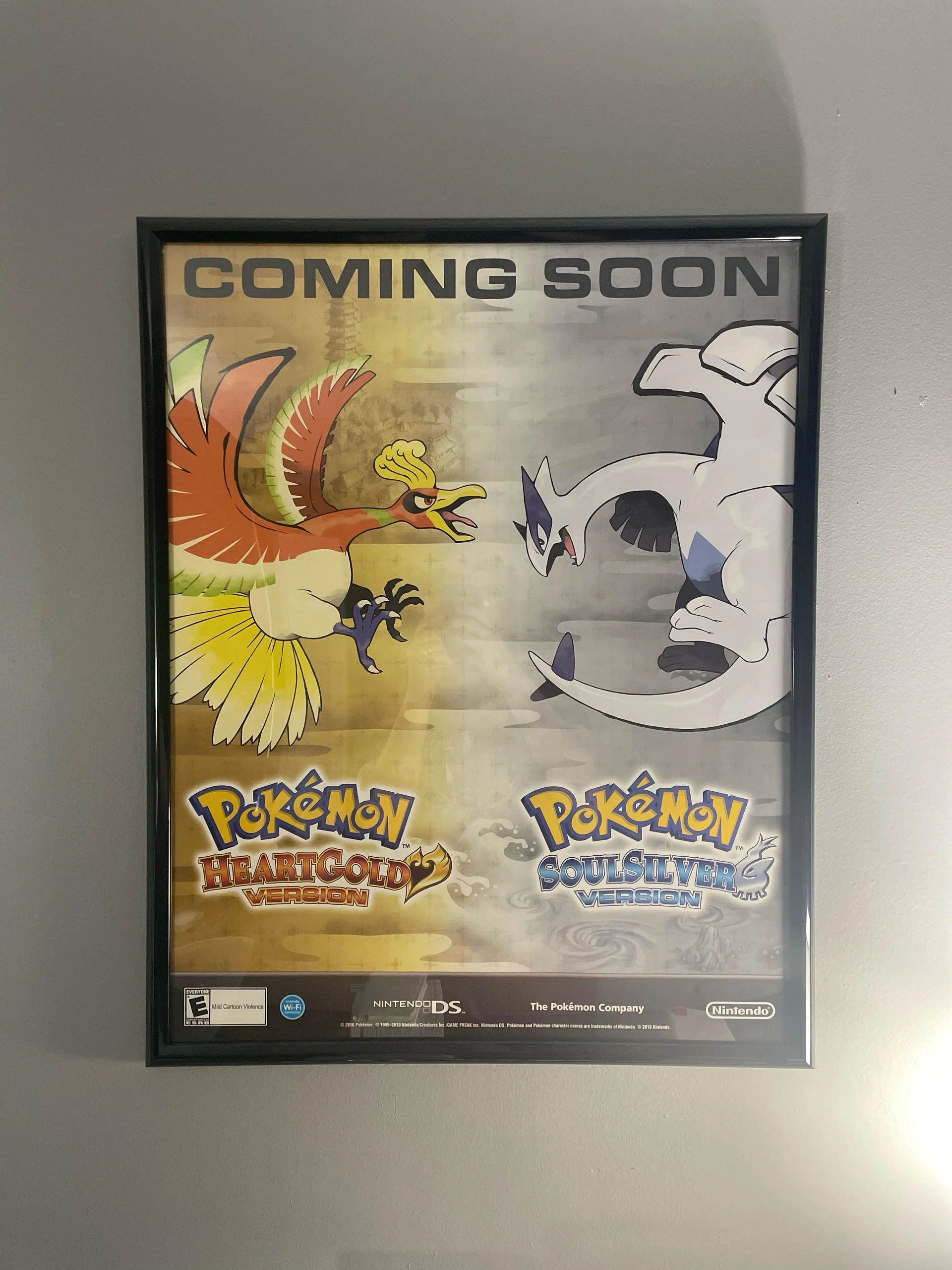
Commercial results were substantial: more than 23 million copies sold, making Gold and Silver the best-selling Game Boy Color titles and the third-best-selling games in the Game Boy family. An enhanced third version, Pokémon Crystal, followed in 2000 with animated sprites and a female player option. Remakes, HeartGold and SoulSilver, reached the Nintendo DS in 2009 in Japan and 2010 elsewhere. In 2026, Nintendo's official accounts began referencing Johto again and a 30th-anniversary merchandise line shipped Gold and Silver shirts in replica game boxes, though no new release has been confirmed.
PlotSpoiler-free
New Bark Town sits in the southeast corner of Johto, a region built around older wooden towns, shrines, and a slower pace than the industrial Kanto of the first games. Professor Elm runs the local lab, and his research specialty is Pokémon breeding and Eggs. The player, a young trainer, receives one of three starters from him: Chikorita, a Grass type; Cyndaquil, a Fire type; or Totodile, a Water type. What begins as an errand, carrying a mysterious Egg to a specialist in Violet City, turns into a badge quest across the region.
Johto's eight Gym Leaders form the spine of the journey. Falkner in Violet City leads Flying types; Bugsy in Azalea Town uses Bug types; Whitney in Goldenrod City fields a Normal-type Miltank that became a byword for difficulty among players. Morty in Ecruteak City specializes in Ghost types, Chuck in Cianwood City in Fighting, Jasmine in Olivine City in Steel, Pryce in Mahogany Town in Ice, and Clair in Blackthorn City in Dragon. Each victory yields a badge, and the route between them passes through caves, forests, and the Ruins of Alph, where puzzles involving Unown hint at the region's older history.
Team Rocket returns as the antagonist force, though not as the organized syndicate of the previous generation. Its leader is gone, and the remnants operate in splinters. One cell takes over the Slowpoke Well outside Azalea Town to harvest Slowpoke tails. Another seizes the radio tower in Goldenrod City, broadcasting a signal meant to summon Giovanni back to the organization. At the Lake of Rage, the player finds a red Gyarados, a forced evolution produced by a radio wave experiment run from a hidden base beneath Mahogany Town's souvenir shop. These schemes are smaller in scale than the first games' corporate conspiracy, and the game treats them accordingly: the player dismantles each one in turn rather than confronting a single mastermind.
A rival threads through all of it. This red-haired trainer steals a starter from Elm's lab in the opening hours, battles the player repeatedly, and carries his own history with Team Rocket that the game reveals in fragments. His arc runs parallel to the player's rather than merging with it. Elsewhere, the three legendary beasts, Raikou, Entei, and Suicune, roam the map after being revived at the Burned Tower in Ecruteak City, and Suicune in particular recurs at specific locations as a scripted encounter. The box legendaries, Ho-Oh and Lugia, anchor the version differences: Ho-Oh at the Tin Tower in Gold, Lugia in the Whirl Islands in Silver.
The systems layered over this structure give Johto its texture. Because the clock runs in real time, Hoothoot appear at night and certain events trigger only on particular days of the week. The PokéGear phone rings with calls from trainers met along the routes, offering rematches or reporting that a swarm of a rare Pokémon has appeared. Breeding allows players to pass moves down to Eggs, and held items let a trainer give a Pokémon a Berry to restore health or a type-boosting item to shift damage calculations. None of these mechanics are required to finish the story, but each one changes how a player moves through the world.
The badge quest ends at the Indigo Plateau, where the Elite Four and the reigning Champion await. What happens after that, and what the game opens up once the credits roll, is best discovered without warning.
Ending ExplainedSpoilers
Critical Reception
Critical Consensus
Contemporary reviews praised the expanded world, the day and night cycle, and the refinements to battle mechanics, and the games sold more than 23 million copies. Retrospectives routinely place Gold and Silver among the strongest entries in the series, citing the Kanto post-game and the Red encounter at Mt. Silver as high points. No aggregate film score exists because the title is a video game.
Top Cast
Crew
Director
Satoshi Tajiri
Composers
Junichi Masuda, Go Ichinose
Producers
Satoru Iwata, Tsunekazu Ishihara
Keywords
Sources
Facts
- Release Date
- 1999-11-21
- Director
- Satoshi Tajiri
- Country
- Japan
- Developer
- Game Freak
- Publisher
- Nintendo
- Platform
- Game Boy Color
- Copies Sold
- Over 23 million
- New Pokémon Added
- 100 (251 total)
- First Shown
- Nintendo SpaceWorld Expo, 1997
Join the community
fans discussing