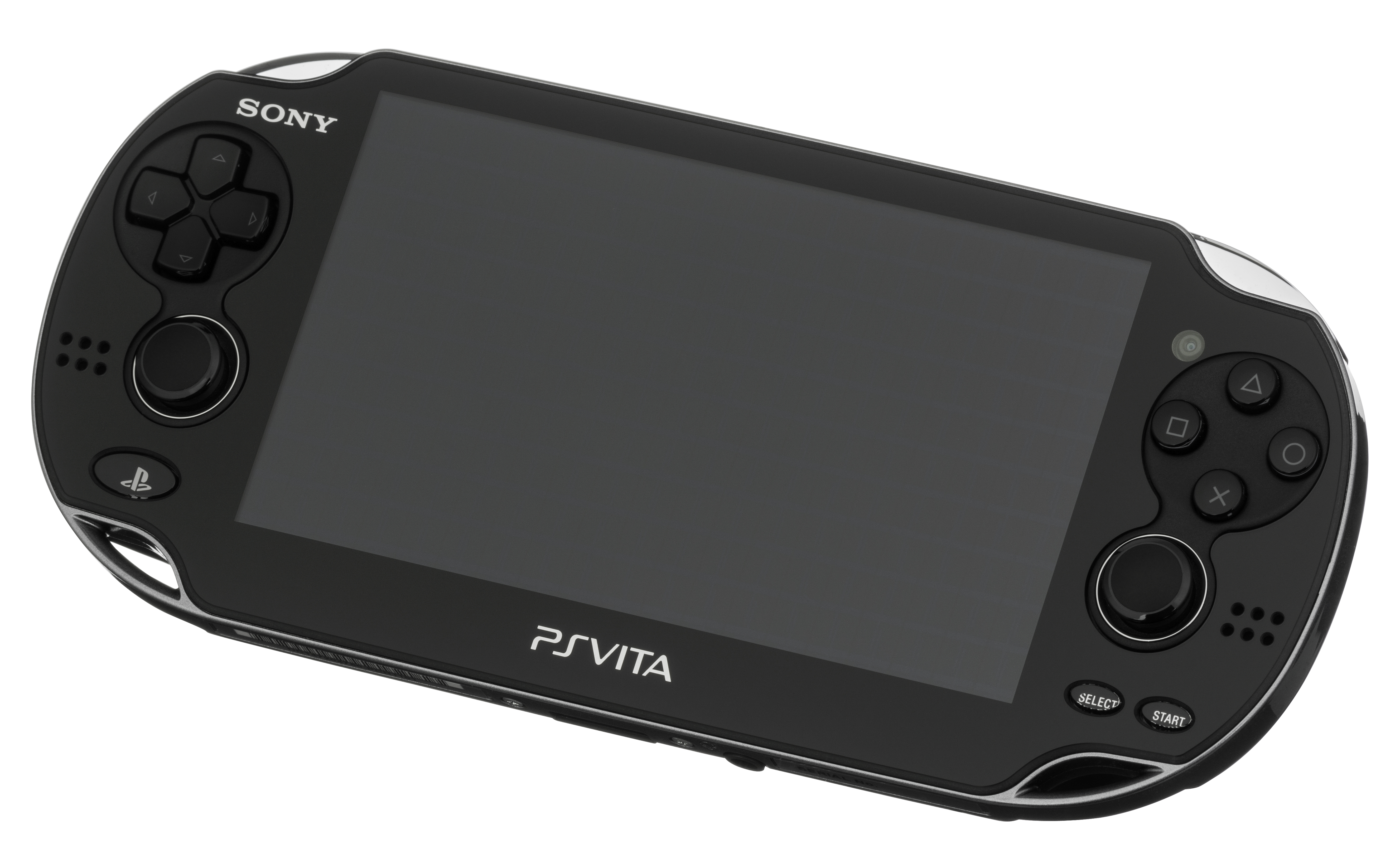
PlayStation Vita
"Sony's ambitious portable that never quite found its audience"
Overview
Sony's PlayStation Vita aimed to bridge the gap between console-quality gaming and the portability of smartphones. Released in Japan in December 2011 and globally in February 2012, this handheld packed a 5-inch OLED touchscreen, a rear touchpad, dual analog sticks, and a quad-core processor. The system ran on a custom operating system and supported both physical game cards and digital downloads. Sony positioned the Vita as a high-end portable for core gamers, competing directly with the Nintendo 3DS.
The launch lineup included Uncharted: Golden Abyss, a technical showcase, and the social hub Near. Early sales were strong, but momentum faded as big-budget games struggled to sell. Sony responded by courting indie developers, which brought hits like Spelunky and Hotline Miami. In Japan, the Vita became a haven for JRPGs and visual novels, with titles like Persona 4 Golden and Danganronpa finding loyal audiences. A revised model in 2013 swapped the OLED for an LCD but extended battery life and added 1 GB of internal storage. The PlayStation TV, a TV-connected version, arrived in 2014 but was discontinued by 2015.
Despite its power and innovative features, the Vita never matched the 3DS in sales, estimated at 15-16 million units. Remote Play with the PS4 became a late selling point, but the Nintendo Switch's 2017 launch effectively ended its relevance. Sony discontinued the Vita in 2019, leaving no direct successor. The system remains a cult favorite among enthusiasts, remembered for its robust library of niche Japanese games and indie gems.
Gameplay
The Vita's standout feature was its dual analog sticks, a first for a dedicated handheld, enabling console-like control for shooters and action games. The front 5-inch OLED touchscreen and rear touchpad allowed developers to experiment with novel interactions. In Tearaway, you could poke through the game world via the rear pad or tap the screen to affect the environment. Motion sensors and cameras added further input possibilities, though few games used them extensively.
The system's graphics were powered by a POWERVR SGX543MP4+ GPU, capable of tile-based deferred rendering and efficient anti-aliasing. This allowed games like Uncharted: Golden Abyss to display detailed environments at smooth framerates, visually surpassing the PlayStation 2 and Wii. The CPU was a quad-core ARM Cortex-A9, with three cores available to games. Memory included 512 MB RAM and 128 MB VRAM, a generous amount for a 2011 portable.
Connectivity options included Wi-Fi, Bluetooth, and on some models 3G. The Near app let players share game data and discover nearby players. The proprietary memory cards were a sore point: they were expensive and not interchangeable with standard SD cards. The PCH-2000 model introduced 1 GB of internal storage, alleviating the issue slightly. Battery life varied, typically 3-5 hours for demanding games, better for lighter titles.
Keywords
Sources
Game Info
- Developer
- Sony Interactive Entertainment
- Publisher
- Sony Computer Entertainment
- Release Date
- 2011-12-17
- Modes
- Single-player, Multiplayer
- Platforms
- PlayStation Vita
- Discontinued
- 2019-03-01
- Units Sold
- 15-16 million (estimated)
- Best-Selling Game
- Persona 4 Golden (1.5 million)
- Resolution
- 960x544
Join the community
fans discussing