
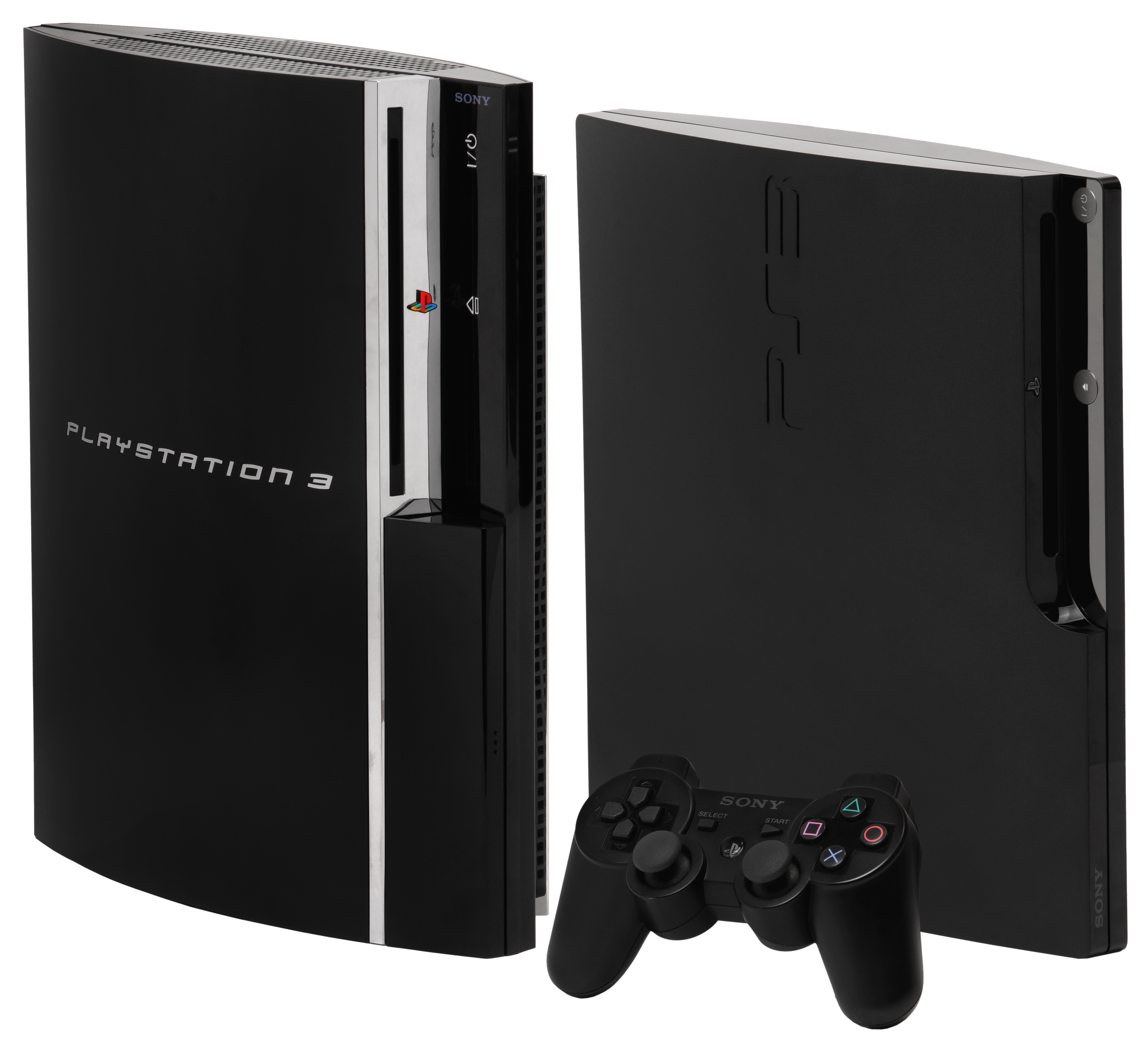
PlayStation 3
 Japan
Japan"The seventh-generation console that brought Blu-ray to the living room and defined a decade of gaming."
Overview
Sony launched the PlayStation 3 on November 11, 2006, with a bold vision to turn the living room into a high-performance computing hub. The system relied on the Cell Broadband Engine, a complex processor co-developed by Sony, IBM, and Toshiba that featured one main core and six specialized co-processors. This architecture allowed for massive parallel processing but made development notoriously difficult for third-party studios. The launch price shocked the market at $599 for the 60 GB model and $499 for the 20 GB version, causing sales to lag behind Microsoft's Xbox 360 in the early years.
Despite the rocky start, the console found its stride through aggressive price cuts and a surge of exclusive titles. The 2009 release of the Slim model reduced the chassis size and power consumption while dropping hardware-based backward compatibility for PlayStation 2 games. A final Super Slim revision arrived in late 2012. By the end of its lifecycle, the PS3 had sold approximately 87.4 million units, securing its place as the eighth best-selling console of all time.
Gameplay
The PlayStation 3 experience centered on the Sixaxis controller, which introduced motion sensing via tilt controls before Sony added vibration feedback with the DualShock 3 in 2007. Later releases like the PlayStation Move wand offered precise 3D tracking when paired with the PlayStation Eye camera. The hardware enabled seamless transitions between gameplay and cinematic cutscenes in titles like Uncharted 2: Among Thieves. User-generated content flourished with LittleBigPlanet, which leveraged the Cell processor to create physics-heavy levels. The system also supported the PlayStation Network, offering free online multiplayer and a trophy system that competed directly with Xbox Live achievements.
Story
Announced in May 2005 by Ken Kutaragi, the PlayStation 3 was designed to handle everything from complex simulations to high-definition video playback. Its inclusion of a Blu-ray drive became a strategic weapon in the format war against HD DVD, helping Sony win the battle for the next generation of home media. The platform pioneered the PlayStation Network infrastructure, introducing digital storefronts and social features that reshaped industry distribution models. Production officially ended in Japan on May 29, 2017, after an 11-year run that saw nearly 1 billion game copies sold worldwide.
Awards & Acclaim
Game of the Year: Uncharted 2: Among Thieves: (2009)
BAFTA Games Award: Best Game: (2013)
Keywords
Sources
Game Info
- Developer
- Sony Interactive Entertainment
- Publisher
- Sony Computer Entertainment
- Release Date
- 2006-11-11
- Age Rating
- ESRB: T (Teen)
- Modes
- Single-player, Multiplayer, Online Multiplayer
- Platforms
- PlayStation 3
- Units Sold
- 87.4 million
- Media Format
- Blu-ray Disc
- CPU
- Cell Broadband Engine
- GPU
- RSX Reality Synthesizer
- Production End
- May 29, 2017
Join the community
fans discussing