 Spain
Spain“Bava's film is a triumph of style over substance, a gorgeous exercise in atmospheric dread that transforms its threadbare production values into a dreamlike vision of cosmic horror.”
Chuck Bowen
Slant Magazine
In 1965, Italian horror maestro Mario Bava took a break from giallo and Gothic chills to make his one and only science fiction film. The result, Planet of the Vampires, is a fog-drenched, color-saturated nightmare that would go on to shape the DNA of space horror for decades. Shot on a shoestring budget of $200,000, the film follows the crew of the interstellar ship Argos as they answer a distress signal from the uncharted planet Aura. What they find there is not salvation but a slow, creeping madness that turns crewmates against each other and resurrects the dead.
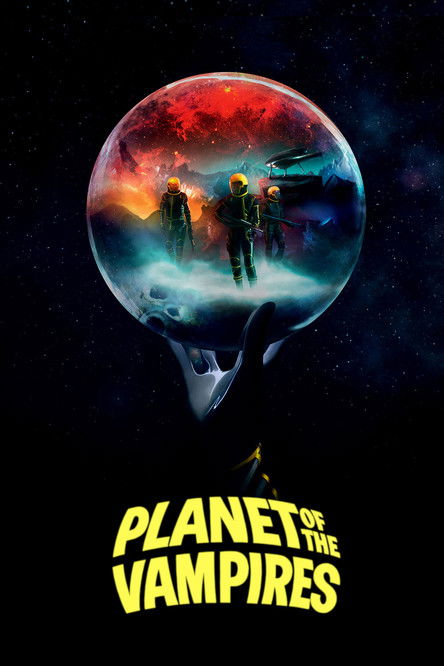
Bava, who also served as cinematographer and special effects wizard, crafted the alien world of Aura entirely on soundstages at Rome's Cinecittà studios. Using forced perspective, miniature models, and his signature colored lighting gels, he conjured a volcanic landscape of eerie beauty and palpable menace. The film's visual style, all sickly greens, electric blues, and blood reds, became a template for later sci-fi horror, most famously influencing Ridley Scott's Alien (1979).
Despite its modest origins, Planet of the Vampires grossed over a million dollars at the box office and has since earned a devoted cult following. Its blend of paranoid psychology and cosmic dread, anchored by a solid performance from American lead Barry Sullivan, makes it essential viewing for anyone interested in the roots of modern horror.
Availability and pricing can change. Confirm on the provider's site before purchasing.
The film opens on the bridge of the Argos, a massive spacecraft cruising through deep space. Captain Mark Markary (Barry Sullivan) and his crew, including his second-in-command Sanya (Norma Bengell), are alerted to a strange distress signal emanating from the unexplored planet Aura. The signal, which repeats a warning in an unknown language, piques Markary's curiosity. Against the advice of some crew members, he orders the ship to investigate. Meanwhile, a second ship, the Galliot, also picks up the signal and changes course.
As the Argos approaches Aura, the planet's atmosphere begins to interfere with the ship's systems. The crew experiences violent hallucinations and irrational behavior. One man, Eldon (Mario Morales), goes berserk and attacks his colleagues before being subdued. The ship crash-lands on the fog-shrouded, volcanic surface of Aura. The crew emerges to find a desolate landscape of jagged rocks and thick, unnatural mist.
Exploring the area, they discover the wreckage of the Galliot, which landed earlier. Its crew appears dead, but soon the bodies begin to move. These reanimated corpses, under the control of an unseen alien intelligence, attack the survivors. The threat is not the traditional vampire of folklore but something far more insidious: a parasitic consciousness that can inhabit the dead and slowly bend the living to its will.
As the survivors, including Wess (Ángel Aranda), Tiona (Evi Marandi), and Dr. Karan (Fernando Villena), navigate the treacherous terrain, they find evidence of an ancient alien civilization: a vast underground installation carved into the rock. Inside, they uncover clues that the planet's original inhabitants were a species of energy beings who, facing extinction, seek to escape by taking over human bodies. The crew realizes that their own ranks may already be compromised. Paranoia takes hold as they struggle to trust one another, unsure who is still human and who has been touched by the alien presence.
With the Galliot destroyed and the Argos damaged, the survivors must find a way to repair their ship and leave Aura before the aliens claim them all. But the planet's influence is subtle, and the line between ally and enemy blurs with every passing hour.
Planet of the Vampires (1965) - Trailer HD 1080p
Planet of the Vampires Trailer (1965) - Mario Bava
Critical Consensus
A visually stunning and atmospherically rich precursor to modern space horror, Mario Bava's Planet of the Vampires overcomes its B-movie limitations with striking imagery and a paranoid, unsettling narrative that has influenced countless later films.
“Bava's film is a triumph of style over substance, a gorgeous exercise in atmospheric dread that transforms its threadbare production values into a dreamlike vision of cosmic horror.”
Chuck Bowen
Slant Magazine
“All true Alien fans need to watch the influential cult classic sci-fi horror that inspired it. Bava's film is essential viewing for understanding the DNA of modern space horror.”
Collider Staff
Collider
“Among the forgotten '60s sci-fi movies that still hold up today, Bava's Planet of the Vampires stands out for its remarkable visual craft and its profound influence on the genre.”
SlashFilm Staff
SlashFilm
“Bava's sole science fiction outing is a masterpiece of mood and atmosphere, a film that understands that true horror lies not in monsters but in the dissolution of identity and trust.”
Film Authority
Film Authority
Barry Sullivan
Captain Mark Markary
Norma Bengell
Sanya
Ángel Aranda
Wess
Evi Marandi
Tiona
Stelio Candelli
Brad / Mud
Franco Andrei
Bert / Garr
Fernando Villena
Dr. Karan
Mario Morales
Eldon
Ivan Rassimov
Carter / Dervy
Federico Boido
Keir
Alberto Cevenini
Toby Markary / Wan
Massimo Righi
Captain Sallas / Nordeg
Director
Mario Bava
Writers
Renato Pestriniero, Ib Melchior, Alberto Bevilacqua, Callisto Cosulich, Mario Bava
Composer
Gino Marinuzzi Jr.
Cinematographer
Antonio Rinaldi
Producer
Fulvio Lucisano
Join the community
fans discussing