Piri Reis
geographer•cartographer•military officer
Also known as: Muhiddin Piri, Pîrî Reis
Birthday
January 1, 1470
Birth Sign
Capricorn
Birthplace
Gelibolu
Age
Died at 84
About
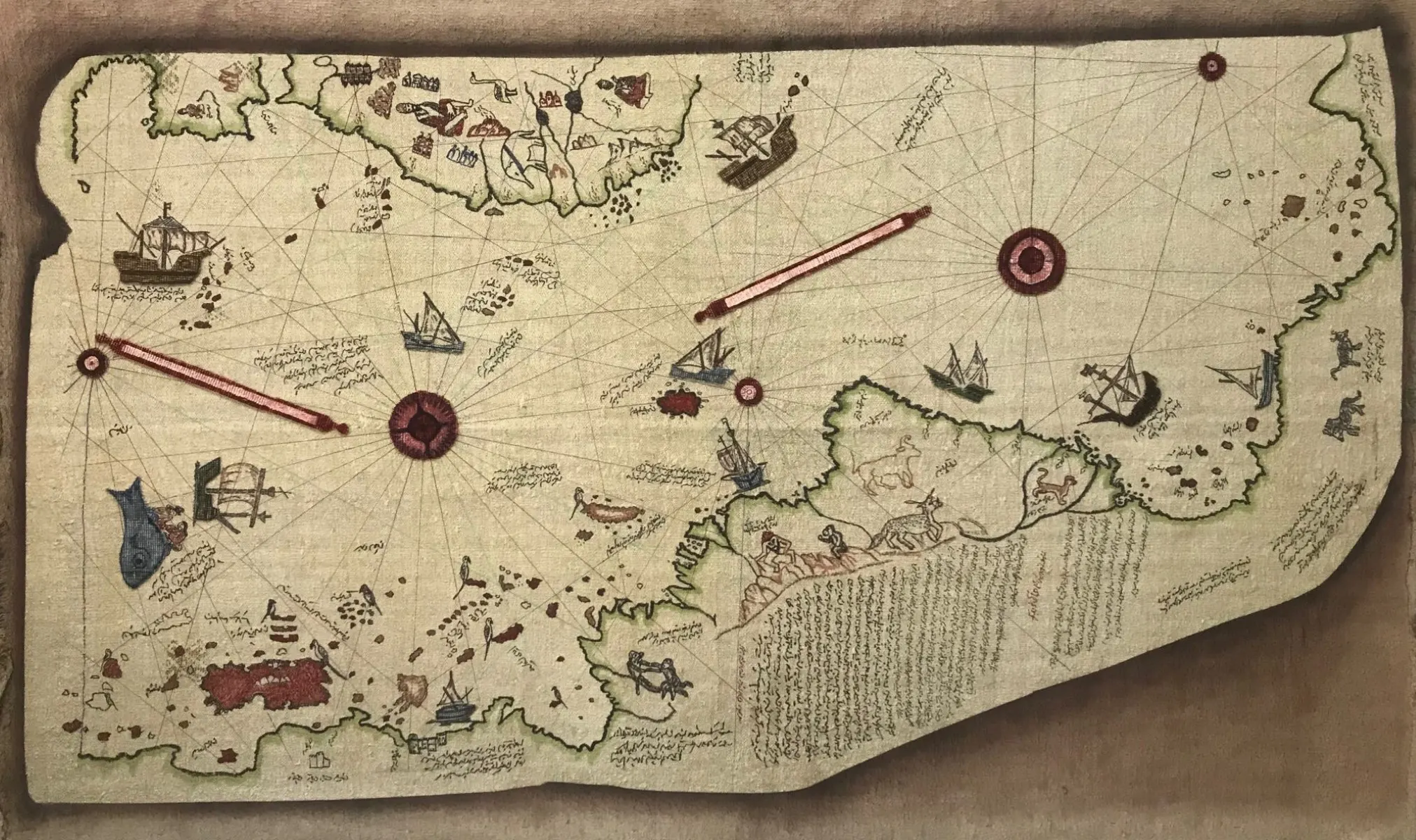
Muhiddin Piri, known as Piri Reis, was an Ottoman Turkish cartographer, admiral, and geographer born between 1465 and 1470 in Gelibolu. He died on January 1, 1554, in Cairo, Egypt. His work defined the maritime geography of the early 16th century, combining active military command with rigorous scholarly documentation. He is best remembered for his 1513 world map, the oldest surviving detailed map to depict the Americas, and the Kitab-ı Bahriye, a nautical atlas that remains a primary source for Mediterranean navigation history.
Piri Reis began his career as a naval officer under the tutelage of his uncle, the renowned corsair Kemal Reis. Unlike many contemporaries, he synthesized Portuguese, Spanish, and Arabic sources to create charts of unprecedented accuracy. His maps provide a glimpse into the world during a time of major geopolitical change, when the Americas were explored and the Ottoman Empire came to dominate the Eastern Mediterranean. Despite his professional triumphs, his life ended in tragedy when he was executed following a failed campaign in the Indian Ocean.
Early Life & Background
Piri Reis was born Muhiddin Piri in Gelibolu, located on the Gallipoli Peninsula, sometime between 1465 and 1470. His father, Hacı Ahmed Çelebi, was a high-ranking naval officer who served under Sultan Mehmed II. Following his father's death during a naval battle against the Venetians when Piri was young, he was raised and educated by his uncle, Kemal Reis. This upbringing immersed him in the maritime culture of the Ottoman Empire from childhood. He received a traditional education in Islamic sciences but was primarily trained in navigation, astronomy, and cartography through practical experience at sea.
His early interest in geography was sparked by the need to chart the shifting coastlines of the Mediterranean and the newly discovered Atlantic routes. In the 1480s, he joined the fleet of his uncle, Kemal Reis, participating in campaigns against the Venetian Republic. During this period, he gained firsthand experience in coastal surveying and combat. After Kemal Reis died in battle against the Portuguese in 1501, Piri Reis assumed command of his own ship. He continued to engage in corsair activities and naval warfare, capturing several Venetian vessels while simultaneously beginning to compile his own geographical notes based on the maps and charts he encountered during his voyages.
Career Growth
Piri Reis's career evolved from a junior sailor to one of the empire's highest-ranking naval commanders. In 1513, after the Ottoman conquest of Egypt, he presented his first world map to Sultan Selim I in Cairo. This map, now known as the Piri Reis Map, was groundbreaking for its accuracy regarding the New World and its synthesis of multiple international sources. He dedicated his major work, the Kitab-ı Bahriye, to Sultan Suleiman the Magnificent between 1517 and the 1520s. The book contained detailed charts of the Mediterranean and Red Seas, along with navigational instructions and anecdotes, becoming the standard reference for Ottoman sailors for centuries.
In 1547, he was appointed Governor of Basra in modern-day Iraq, tasked with securing the Persian Gulf against Portuguese incursions. As Grand Admiral of the Indian Ocean fleet, he led a campaign in 1552 to retake Hormuz from the Portuguese. Despite initial successes, the campaign ended in a retreat due to logistical failures and internal dissent. Recalled to Istanbul in 1553, he faced accusations of corruption and incompetence from local officials and political rivals. He was stripped of his rank and imprisoned in Cairo, leading to his execution in 1554.
Career Timeline
Public Image & Style
Piri Reis is portrayed as a genius navigator and a patriotic hero in Turkey. His image is synonymous with scientific curiosity and naval prowess. In the West, he is often viewed through the lens of mystery, particularly regarding the accuracy of his maps and the potential for lost ancient knowledge. The rediscovery of his 1513 map transformed him from a forgotten Ottoman official into a symbol of Turkish scientific achievement. While some fringe theories attribute supernatural abilities to him for mapping unexplored territories, mainstream historians view him as a meticulous scholar who successfully synthesized diverse geographical data available in the early 16th century.
Fame & Fandom (iFAMOUS Rankings)
iFANN has not yet collected fame data for this person. The subject does not currently hold a published placement in the Global Fame Rankings. While there is no organized fandom in the modern sense, Piri Reis maintains a dedicated following among historians, cartography enthusiasts, and students of maritime history. Fan-like engagement occurs through academic conferences, museum visits, and online discussions about the mysteries of his maps. The 1513 map continues to draw significant attention, with experts debating its precision and the sources he utilized. Cultural tributes, such as the ballet Piri Reis performed in Samsun in 2025 and the commissioning of the TCG Piri Reis submarine in 2024, keep his legacy alive in the public consciousness.
Interesting Facts and Legends
The 1513 world map created by Piri Reis cites a lost map by Christopher Columbus as one of its primary sources, a claim that has fascinated historians since the map's rediscovery in 1929. Fringe theories have long suggested the map depicts Antarctica without ice, but scientific analysis has disproven this, showing the southern coastline corresponds to the coast of South America and Africa. His map was compiled from eight different sources, including Portuguese, Spanish, and Arabic maps, making it a unique synthesis of global knowledge at the time. The title "Reis" was actually a rank meaning "Captain" or "Chief" in the Ottoman navy, not just a surname. The accidental discovery of his map in the Topkapı Palace by German architect Hermann Gottfried von Moltke sparked international fascination and launched a new field of study in Ottoman cartography.
Notable Quotes
“I have compiled this book for the benefit of those who sail the seas.”
“The sea is a vast library, and every captain must be a reader.”
Family & Personal Life
Piri Reis was born to Hacı Ahmed Çelebi, a high-ranking naval officer who served under Sultan Mehmed II. Following his father's death during a naval battle against the Venetians, Piri was raised and educated by his uncle, Kemal Reis, a renowned corsair and admiral. Kemal Reis played a pivotal role in shaping Piri's career, taking him into the Ottoman fleet and teaching him the arts of navigation and warfare. There are no records of Piri Reis having a spouse, children, or siblings documented in historical texts. His life appears to have been entirely dedicated to his naval service and scholarly pursuits, with personal family details rarely recorded unless they pertained to lineage for succession purposes.
Notable Connections
Kemal Reis, Sultan Selim I, Sultan Suleiman the Magnificent, Christopher Columbus
Relationships & Dating History
As a historical figure from the 15th and 16th centuries, Piri Reis did not have a "dating history" or public romantic relationships documented in the modern sense. No records exist of marriages, engagements, or partners, nor are there any accounts of children. In the context of the Ottoman imperial court and naval hierarchy of that era, personal life details were rarely recorded unless they pertained to lineage for succession purposes, which does not appear to be the case here. He is historically remembered solely for his professional contributions. Consequently, there is no current relationship status, as he has been deceased for nearly five centuries.
Death & Aftermath
Died
January 1, 1554 (aged 84)
Death Place
Cairo, Egypt
Cause of Death
Beheading by order of Sultan Suleiman
The final chapter of Piri Reis unfolded in the prison cells of Cairo, where the Ottoman admiral and cartographer awaited his fate after being recalled from his governorship in Basra. Accused of corruption and incompetence by local officials, he faced a trial that moved swiftly through the imperial machinery before ending in execution by beheading on January 1, 1554. This capital punishment was not the result of a modern forensic investigation but rather an administrative ruling issued directly by Sultan Suleiman the Magnificent to address allegations of financial irregularities and naval mismanagement. The historical record establishes these events through Ottoman court chronicles rather than medical or police reports, leaving no room for doubt regarding the political nature of his demise.
While contemporary public reaction remains undocumented in surviving texts, the event served as a stark warning within the empire's military hierarchy. No specific details survive regarding a formal funeral service or the exact location of his burial site in Cairo, though tradition places his interment there. His legacy, however, transcended the brutality of his end. His personal papers and maps were seized by the state and eventually found their way into the Topkapı Palace collection, preserving his work for future generations. Today, he is celebrated not as a fallen official but as a martyr of science and navigation. Modern tributes include the preservation of his 1513 world map at the Topkapı Palace Museum and its inscription on UNESCO's Memory of the World register.
The Turkish Navy has honored him by commissioning the first TCG Piri Reis submarine in August 2024, while a research vessel named Koca Piri Reis conducted surveys in the Aegean Sea in 2025. Cultural remembrance continues with a ballet titled Piri Reis performed in Samsun in October 2025 and the establishment of Piri Reis University in Istanbul.
Net Worth (Estate Value)
$0
iFANN Editorial Team estimate
As a historical figure who died in 1554, Piri Reis had no personal net worth in the modern currency sense. His estate value is not tracked in financial terms. However, the economic impact of his work continues today through cultural tourism and intellectual property licensing. The 1513 map is part of the Topkapı Palace collection, a UNESCO World Heritage site, generating significant cultural tourism revenue for Turkey. While his maps are in the public domain, their reproduction rights and licensing for educational and commercial use contribute to the revenue of institutions like the Topkapı Palace Museum and Piri Reis University. There is no single dollar figure for his "net worth," but his intellectual property is estimated to be invaluable in the context of historical preservation and cultural heritage.
Awards Won (1)
Piri Reis received little formal recognition during his lifetime beyond his appointments to high office. Posthumously, his 1513 world map was inscribed on UNESCO's Memory of the World Register in 2013. He has been honored with the naming of Piri Reis University in Istanbul in 2011, and the Turkish Navy has commissioned multiple ships in his name, including the TCG Piri Reis submarine. A ballet titled Piri Reis was performed in Samsun in 2025, celebrating his life and achievements.
2013 · Cultural Heritage
Piri Reis Map
Known For
Piri Reis Map
1513 · Cartographer
Kitab-ı Bahriye
1521 · Author
Keywords
Sources
Quick Facts
- Profession
- geographer, cartographer, military officer
- Born
- January 1, 1470
- Birthplace
- Gelibolu
- Died
- January 1, 1554
- Death Place
- Cairo
- Gender
- Male
- Birth Sign
- Capricorn
Personal Details
- Full Name
- Muhiddin Piri
- Children
- Education
- Islamic sciences and practical maritime training under Kemal Reis
Frequently Asked Questions
Who was Piri Reis?
How did Piri Reis die?
What is the Piri Reis Map?
Where was Piri Reis born?
Is there a university named after Piri Reis?
Social Media
Similar People
Join the community
fans discussing