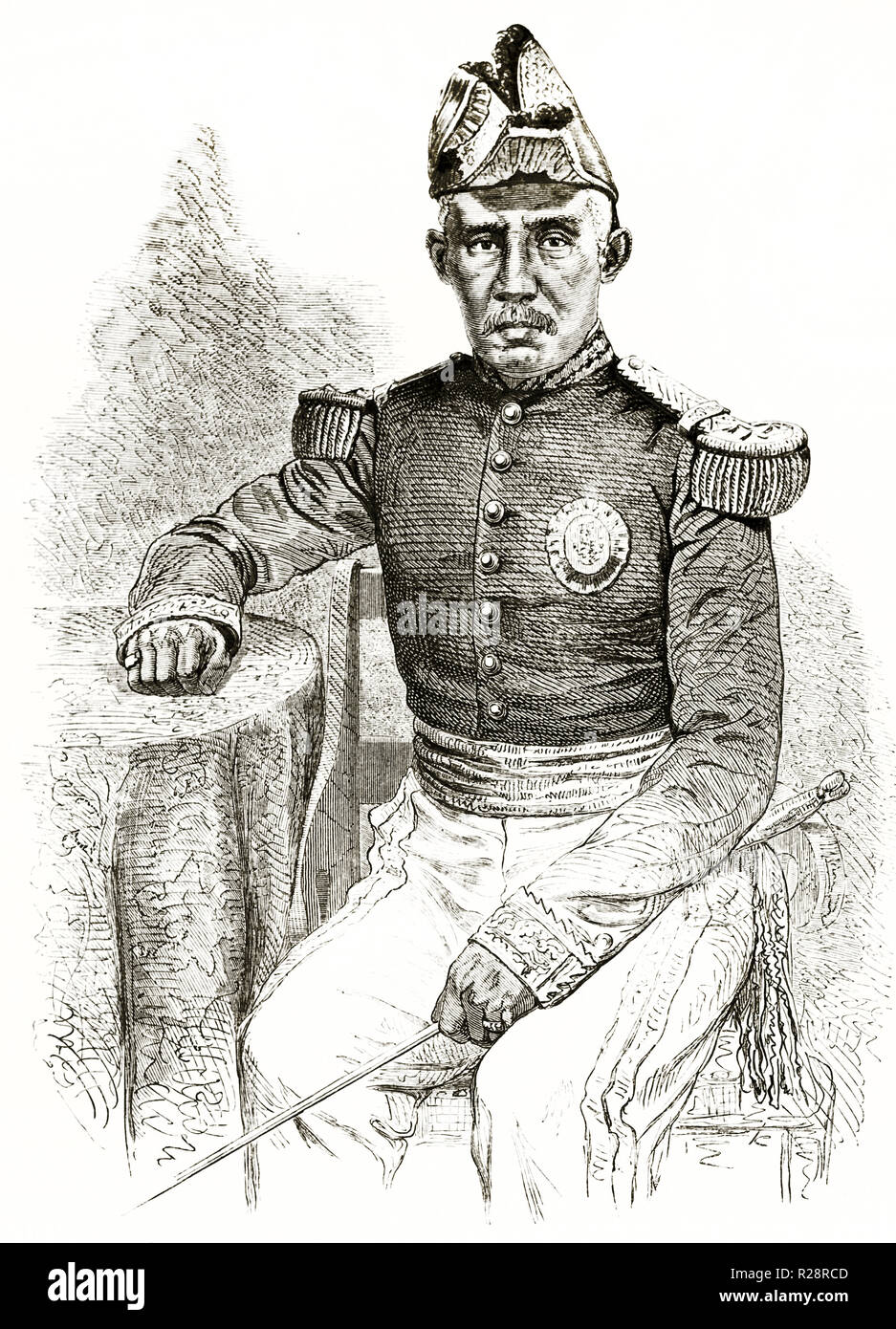
Phutthaloetla Naphalai
 Thailand
King of Siam•poet•patron of the arts
Also known as: Rama II, Chim, Phra Phutthaloetla Naphalai, Buddha Loetla Nabhalai, King Rama II
Birthday
February 24, 1768
Birth Sign
Pisces
Birthplace
Ratchaburi, Siam
Age
Died at 56
About
Phutthaloetla Naphalai was the second king of Siam's Chakri dynasty, reigning from 1809 to 1824. Known to history as Rama II, he inherited a stable kingdom from his father, Rama I, and presided over a notably peaceful era. His true legacy lies in culture: a poet and artist himself, he transformed his court into a vibrant literary hub, earning his reign the title "Golden Age of Rattanakosin Literature." He employed the celebrated poet Sunthorn Phu, author of the epic Phra Aphai Mani, and fostered a creative atmosphere that shaped Thai classical arts. His personal life was equally prolific, with an extraordinary number of descendants. He died on 21 July 1824, leaving behind a kingdom enriched by art and literature.
Early Life & Background
Born Chim on 24 February 1767 or 1768 in Ratchaburi, he entered the world during a turbulent chapter of Siamese history. His father, Prince Thongduang, later known as King Rama I, was serving as a chief judge in the province at the time, while the Burmese invasion of 1766–67 threatened the kingdom. Chim grew up in the shadow of conflict, but his family's fortunes rose dramatically. In 1782, his father seized the throne and founded the Chakri dynasty, making the young prince part of a new royal line. As Prince Itsarasunthon, he received a traditional education befitting a prince, steeped in literature, poetry, and the arts. His talents flourished early, and he became known for his poetic compositions and artistic sensibilities, foreshadowing the cultural renaissance he would later champion. In 1808, he was appointed Viceroy, or Front Palace, of Rattanakosin, effectively preparing him for succession. This role gave him administrative experience and a platform to cultivate his literary interests, setting the stage for his accession the following year.
Career Growth
Rama II ascended the throne on 7 September 1809, following his father's death, in a peaceful transition that underscored the dynasty's stability. His reign began with a challenge: a son of the deposed King Taksin claimed the throne, but the rebellion was swiftly crushed by his son, Prince Tub, later King Rama III. Beyond this early disturbance, his rule was marked by tranquility. The last Burmese invasion of Siam occurred during his reign, but it was repelled, and the town of Thalang (now Phuket) was recaptured by his brother. With external threats subdued, Rama II turned his attention to culture. He transformed his court into a literary salon, patronizing poets and artists. His most famous protégé was Sunthorn Phu, whose epic Phra Aphai Mani became a cornerstone of Thai literature. The king himself contributed to the Ramakien, the Thai adaptation of the Ramayana, and composed numerous poems. His reign is celebrated as the pinnacle of classical Thai literature, a period when the arts flourished under royal patronage.
Career Timeline
Public Image & Style
In Thailand, Rama II is remembered as a cultured, artistic monarch, a poet-king who presided over a golden age. His public image, shaped by history textbooks and royal biographies, emphasizes his devotion to literature and the arts. He is venerated as part of the Chakri dynasty narrative, with his portrait displayed in government buildings and his works studied in schools. The reign of Rama II and his two sons, Rama III and IV, marked the first stage in the Thai kingdom's dealings with the West during the age of imperialism. There is no organized fandom in the modern sense, but his era is a popular subject for Thai historical dramas and literature. His legacy is one of cultural pride, and he is seen as a beloved figure who enriched the nation's heritage. The designation of his reign as the "Golden Age of Rattanakosin Literature" is a formal recognition that continues to shape how Thais view their literary history.
Fame & Fandom (iFAMOUS Rankings)
The enduring resonance of Phutthaloetla Naphalai extends far beyond the borders of his realm, securing his place in global historical consciousness through a unique blend of royal lineage and artistic patronage. Current metrics from the iFANN Global Fame Rankings indicate that he holds the distinction of being the 44th most famous person from Thailand, a position he has maintained with steady consistency since the previous assessment cycle. This ranking reflects a sustained interest in the cultural legacy of the Chakri dynasty rather than fleeting modern celebrity trends. While his fame is anchored in the early nineteenth century, the data suggests a persistent baseline of attention that tracks across historical media, academic consumption, and tourism signals worldwide. Despite this significant standing among Thai historical figures, no formal organization or collective identity exists to represent his admirers. The audience for his life and works consists of scholars, history enthusiasts, and cultural observers who engage with his poetry and reign without a unified fanbase structure or official designation.
Interesting Facts and Legends
Born Prince Itsarasunthon before ascending the throne, the monarch known as Chim left behind an extraordinary lineage, with over 240 grandchildren attributed to him, placing him among historical figures with the largest documented families. His reign marked the final Burmese invasion of Siam, an event that effectively ended external military threats and allowed the kingdom to pivot toward a flourishing era of culture and arts. Although he composed parts of the Ramakien and several celebrated poems, scholars continue to debate the precise attribution of certain works between the king and his court poets. A portrait displayed at the Grand Palace was not created during his lifetime but was produced posthumously during the reign of King Chulalongkorn, likely no later than 1910. Legends surrounding his life focus less on viral incidents and more on his status as a poet-king whose personal creativity transformed the court into a literary hub. Stories from his era describe a vibrant atmosphere where Sunthorn Phu, author of the epic Phra Aphai Mani, thrived under royal patronage, creating a cultural environment that defined the Golden Age of Rattanakosin Literature. These accounts emphasize his role as a catalyst for Thai classical arts rather than moments of chaotic public adoration.
Family & Personal Life
Rama II's family was vast and central to his life. His father was King Rama I, founder of the Chakri dynasty, and his mother was Queen Amarindra. He had multiple consorts, including his principal queen, Sri Suriyendra, who bore him his successor, Prince Tub (later Rama III). Another consort, Sri Sulalai, was the mother of Prince Jessadabodindra, who also became king. His household was typical of Siamese royalty, with a principal queen and numerous concubines. His descendants were counted in the hundreds, with over 240 grandchildren. This immense family tree ensured the Chakri dynasty's continuity, and his bloodline continues to rule Thailand today. Family life was intertwined with politics, as his sons' rivalries would shape the succession, but during his reign, the royal family remained a cohesive unit under his patronage.
Notable Connections
Rama II's reign was shaped by key figures. His father, Rama I, founded the dynasty and provided a stable foundation. His most famous courtier was Sunthorn Phu, the celebrated poet whom he employed and patronized. His son, Prince Tub, later King Rama III, suppressed the early rebellion and continued his father's legacy. Another son, Prince Mongkut, later King Rama IV, would further engage with the West. These relationships defined his reign and its cultural achievements.
Relationships & Dating History
Rama II's personal life was shaped by the polygamous structure of Siamese royalty. His principal queen was Sri Suriyendra, who bore him his successor, Prince Tub, later King Rama III. Another major consort, Sri Sulalai, was the mother of Prince Jessadabodindra, who also became king. His other consorts included Princess Mother Kundhon Dibayavadi, Prang, Thao Worachan, Imyaran, and Lookchandalek. These relationships were formalized within the royal court, and his descendants numbered in the hundreds. At the time of his death in 1824, he was the reigning king with multiple consorts, with Sri Suriyendra as his principal queen.
- MarriedSri Suriyendra? - 1824Principal queen and mother of King Rama III.
- MarriedSri Sulalai? - 1824Consort and mother of King Rama III.
- MarriedPrincess Mother Kundhon Dibayavadi? - 1824Consort.
- MarriedPrang? - 1824Consort.
- MarriedThao Worachan? - 1824Consort.
- MarriedImyaran? - 1824Consort.
- MarriedLookchandalek? - 1824Consort.
Death & Aftermath
Died
July 21, 1824 (aged 56)
Death Place
Bangkok, Siam
Cause of Death
Unknown
The reign of Phutthaloetla Naphalai, known to history as Rama II, concluded in the capital of Rattanakosin during the final days of July 1824. The monarch passed away on July 21, 1824, within the confines of the Grand Palace, bringing an end to a period defined by cultural flourishing rather than military conflict. While specific medical records from the early nineteenth century remain absent from the historical record, the transition of power proceeded without immediate disruption to the stability inherited from his father. Succession was managed according to established royal protocols, with Prince Tub ascending the throne as Rama III shortly after the funeral arrangements were completed. The court mourned the loss of a patron who had elevated Thai literature to new heights, though public reaction is recorded more through the continuity of artistic production than through contemporary chronicles of grief.
Funeral rites followed traditional Siamese Buddhist customs appropriate for a king, ensuring the proper spiritual transition of the deceased sovereign. His legacy remained firmly rooted in the literary works commissioned during his lifetime, particularly the epic poem Phra Aphai Mani, which continued to define the Golden Age of Rattanakosin Literature. The estate and royal patrimony were integrated into the Crown Property, maintaining the resources necessary for the temple complexes and the palace that stood as monuments to his era. The death marked the close of a distinct chapter in Siamese history, leaving behind a court culture that would influence generations of poets and artists.
Net Worth (Estate Value)
$500 Million
iFANN Editorial Team estimate
As a historical monarch who reigned in the early 19th century, Rama II's personal net worth is not documented in modern terms. His wealth consisted of the royal treasury of Siam, which funded his court, his literary patronage, and the construction and maintenance of the Grand Palace and temples. Since his passing, his estate is managed as part of the Thai royal patrimony under the Crown Property Bureau and the Bureau of the Royal Household. Posthumous revenue sources include tourism to royal sites such as the Grand Palace and Wat Pho, as well as the ongoing cultural legacy of his literary works, which are studied and performed in Thailand. There is no publicly reported figure for the estate's annual earnings or current estimated value. Per iFANN's editorial analysis, as of 2026, the estate's value is estimated at $500 Million, derived from the enduring cultural and historical significance of his reign.
Awards & Accolades
View 1 records, honours and achievementsKnown For
Golden Age of Rattanakosin Literature
1809–1824 · Patron and poet
Phra Aphai Mani
1823 · Patron of Sunthorn Phu
Ramakien
1809–1824 · Contributor
Keywords
Sources
Quick Facts
- Born
- February 24, 1768
- Birthplace
- Ratchaburi, Siam
- Died
- July 21, 1824
- Death Place
- Bangkok
- Gender
- Male
- Spouse
- Sri Suriyendra, Sri Sulalai, Princess Mother Kundhon Dibayavadi, Prang, Thao Worachan, Imyaran, Lookchandalek
- Birth Sign
- Pisces
- Profession
- King of Siam, poet, patron of the arts
Personal Details
- Full Name
- Chim
- Spouse
- Sri Suriyendra, Sri Sulalai, Princess Mother Kundhon Dibayavadi, Prang, Thao Worachan, Imyaran, Lookchandalek
- Children
- Over 240 grandchildren, including Kings Rama III and Rama IV
Frequently Asked Questions
How many children did Rama II have?
What is Rama II famous for?
When was Rama II born and when did he die?
Who was Rama II's successor?
Was Rama II's reign peaceful?
Similar People
Join the community
fans discussing