
Phương Mai
 Vietnam
Princess of Vietnam•Duchess of Addis Abeba
Also known as: Princess Phương Mai of Vietnam, Duchess of Addis Abeba, Nguyễn Phúc Phương Mai
Birthday
August 1, 1937
Birth Sign
Leo
Birthplace
Đà Lạt, Vietnam
Age
Died at 83
About
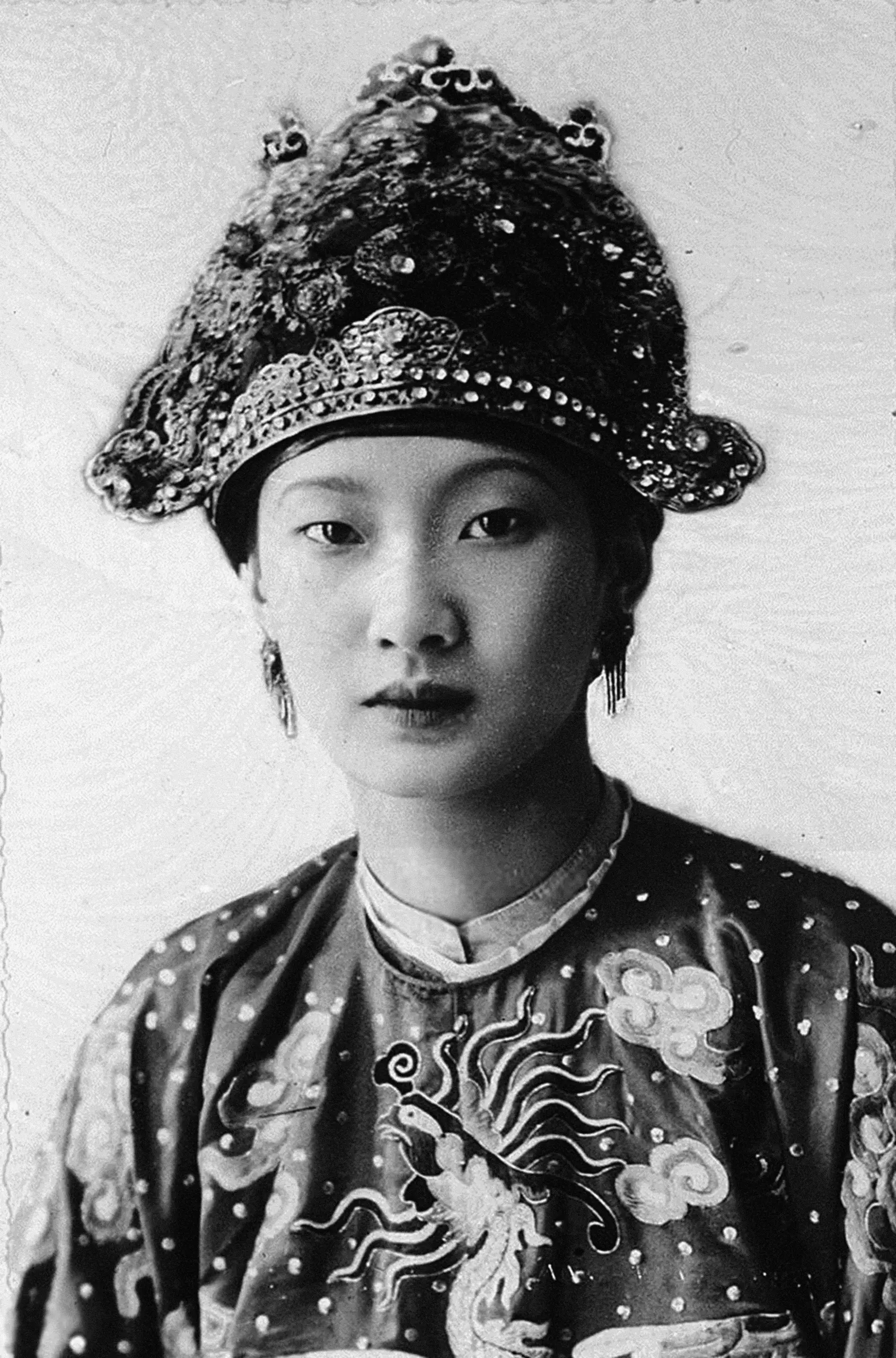
Princess Phương Mai of Vietnam, Duchess of Addis Abeba, was a Vietnamese royal and Italian noblewoman whose life bridged the twilight of Vietnamese imperial history with the aristocratic society of post-war Europe. She was the eldest daughter of Emperor Bảo Đại and Empress Nam Phương, the last sovereigns of the Nguyễn dynasty. Her existence served as a living link to Vietnam's imperial past, embodying the grace and resilience of a fallen monarchy. Phương Mai is remembered for her quiet dignity and her role as a custodian of her family's legacy, preserving the memory of the Nguyễn dynasty through her life and associations. She spent most of her adult life in France, where she raised her two children and maintained close ties with the Badoglio family into which she married. Her marriage in 1971 to Pietro Badoglio, the 2nd Duke of Addis Abeba, united Vietnamese royalty with Italian nobility, cementing her status within European aristocratic circles. She passed away on January 16, 2021, in Louveciennes, France, at the age of 83, leaving behind a legacy that continues to fascinate historians and royal watchers alike, a testament to her unique position straddling two distinct cultural worlds.
Early Life & Background
Phương Mai was born into a world of immense privilege and profound historical change. She was the eldest daughter of Emperor Bảo Đại, Vietnam's last emperor, and Empress Nam Phương, the first Vietnamese empress to be formally crowned. Her early childhood was spent in the imperial capital of Huế, a period marked by the growing political instability and the escalating conflict between the Viet Minh and French colonial forces. The safety of the imperial children became a paramount concern for Empress Nam Phương amidst this turmoil.
In 1947, Empress Nam Phương made the difficult decision to move Phương Mai and her siblings to France, seeking a safer environment. They settled at Château Thorenc, a property belonging to the Empress's family, located near Cannes. Phương Mai received her formative education at the prestigious Convent des Oiseaux in Verneuil-sur-Seine, a Catholic institution favored by aristocratic families. She experienced a brief return to Vietnam between 1949 and 1953, a period coinciding with the First Indochina War. This interval was followed by her permanent relocation to France. These formative years, characterized by movement between two distinct cultures and the backdrop of war and exile, profoundly shaped her cosmopolitan identity and her ability to navigate both Eastern and Western aristocratic traditions with poise.
Career Growth
While Princess Phương Mai's life did not follow a conventional career trajectory, she occupied a significant and unique position as a cultural and social figure. As the eldest daughter of Emperor Bảo Đại, she served as a living embodiment of Vietnam's imperial past, a tangible connection to a history that was rapidly receding. After establishing her life in France, she became an integrated and respected presence within the aristocratic circles of Paris and Rome. She frequently attended significant social gatherings and maintained connections with members of other exiled royal families, her presence a quiet affirmation of enduring lineage.
Her marriage in 1971 to Pietro Badoglio, the 2nd Duke of Addis Abeba and Marquess of Sabotino, was a notable event that cemented her standing within European nobility. The couple divided their time between their residences in France and Italy, with Phương Mai embracing her role as Duchess. In this capacity, she was involved in managing the family's estates and fulfilling their social obligations, always with characteristic elegance and discretion. She rarely spoke publicly about her family's history or her personal life, maintaining an aura of privacy. In her later years, she became increasingly focused on preserving the legacy of her father and the Nguyễn dynasty, lending her support to initiatives that honored this history. Her passing in 2021 was met with widespread tributes from both Vietnamese and Italian communities, underscoring her enduring symbolic importance and the unique place she held in bridging two worlds.
Career Timeline
Public Image & Style
Princess Phương Mai was widely perceived as a symbol of a bygone era, embodying the grace, dignity, and resilience associated with Vietnam's former imperial family. The press often referred to her as a 'quiet princess,' noting how she carried herself with understated elegance and composure, even after the loss of her family's throne. Her personal style was consistently described as refined and timeless, favoring classic French couture that subtly reflected her aristocratic upbringing and her life within European high society. She was seen as a living link to Vietnam's past, a figure of quiet strength in the face of historical upheaval.
Within circles interested in royal history and Vietnamese culture, she is regarded as an important figure for her role in preserving the memory of the Nguyễn dynasty. Her passing in 2021 garnered significant attention in Vietnamese media, where she was celebrated as a vital connection to the nation's imperial history. Unlike many public figures who embrace the spotlight, Phương Mai deliberately maintained a low profile, rarely granting interviews or making public pronouncements. This consistent air of privacy and discretion only enhanced her mystique, making her a subject of enduring fascination for historians, royal enthusiasts, and those interested in the intersection of Eastern royalty and European aristocracy.
Fame & Fandom (iFAMOUS Rankings)
The cultural footprint of Princess Phương Mai remains distinct from the frenetic energy of modern pop stardom. Unlike global icons who command organized armies of fans, she cultivated a quiet reverence that spanned generations without a formal collective name or ritualistic campaigns. Her audience was less a mob and more a constellation of historians, aristocrats, and those fascinated by the twilight of the Nguyễn dynasty. There were no subway billboards demanding her attention, nor did her personal milestones trigger viral fan wars; instead, her legacy rested on the dignified preservation of a fallen empire's memory. This absence of a unified fanbase does not diminish her stature but rather frames her as a figure of historical gravity rather than commercial spectacle. In August 2026, the iFANN Global Fame Engine evaluated her standing and determined that she holds no placement in the published rankings (Global Top 1,000 or a Top-100 scope list). The engine found no documented fandom name associated with her, confirming that while she possessed a dedicated circle of admirers, no public group claimed her as their official charge. Her fame existed in the margins of high society and imperial history, anchored by her marriage to Pietro Badoglio and her role as the daughter of Emperor Bảo Đại. While other figures named Phương Mai have sparked brief news cycles regarding luxury gifts or film festival selections, none generated the legendary crowd reactions or iconic moments that define true superstardom. Her influence was subtle, woven into the fabric of European-Vietnamese aristocracy rather than shouted from the rooftops.
Interesting Facts and Legends
Phương Mai was an accomplished pianist whose skill was honed during her education at the Convent des Oiseaux. She spoke fluent French, Vietnamese, and Italian, a linguistic trio that mirrored her multicultural upbringing. Her father, Emperor Bảo Đại, famously abdicated the throne in 1945, an event that set her family on a path of exile and defined her life's trajectory. Her 1971 wedding to Pietro Badoglio in Paris was a grand convergence of Vietnamese royalty and Italian nobility, attended by members of numerous European royal families. As a first cousin once removed of Prince Henri, the Count of Paris, she sat at the intersection of intricate European lineages. While some search results confuse her with other figures like the singer Phương Mai or animator Phuong Mai Nguyen, the Princess remains unique in her specific historical role. A story often cited in lifestyle columns involves a different individual named Phương Mai receiving a car worth 2.5 billion VND from her husband, but this luxury gift belongs to a separate person entirely and has no connection to the Princess's own life or legends. Similarly, the Cannes selection of Phuong Mai Nguyen's film *In Waves* in April 2026 is a professional milestone for the animator, not a legend attached to the Princess. No viral incidents or crowd-shutting events are recorded in her biography, distinguishing her from figures who generate folklore through chaotic public appearances.
Family & Personal Life
Phương Mai was the eldest of five children born to Emperor Bảo Đại and his first wife, Empress Nam Phương. Her younger siblings included Prince Bảo Long, Princess Phương Thảo, Princess Phương Dung, and Prince Bảo Thắng. The family's life was profoundly shaped by the turbulent political landscape of Vietnam, which ultimately led to their exile in France. This shared experience of displacement and the preservation of their heritage created strong bonds among the siblings, many of whom also established lives in Europe.
In 1971, Phương Mai married Pietro Badoglio, the 2nd Duke of Addis Abeba and Marquess of Sabotino. He was the son of the renowned Italian Marshal Pietro Badoglio. Their union produced two children: Donna Manuela Badoglio, born in 1959, and Don Flavio Badoglio, born in 1973, who would later succeed his father as the 3rd Duke. Phương Mai's household in France was a harmonious blend of Vietnamese and Italian traditions, reflecting her own dual heritage and her husband's lineage. She was remembered by her family as a devoted mother and grandmother, a warm and private individual who deeply valued her heritage and family connections.
Notable Connections
Phương Mai was closely associated with her father, Emperor Bảo Đại, and her mother, Empress Nam Phương. Her husband, Pietro Badoglio, was the son of Marshal Pietro Badoglio, Italy's Prime Minister after World War II. She was also connected to the broader European aristocratic network, including the French and Italian nobility, through her marriage and her mother's French ancestry.
Relationships & Dating History
Princess Phương Mai's most significant and defining relationship was her marriage to Pietro Badoglio, the 2nd Duke of Addis Abeba and Marquess of Sabotino. They were wed on August 5, 1971, in Paris, a union that symbolically joined Vietnamese royalty with Italian nobility. Together, they had two children: Donna Manuela Badoglio, born in 1959, and Don Flavio Badoglio, born in 1973. Their marriage was characterized by stability and privacy, with the couple dividing their time between their homes in France and Italy. Pietro Badoglio passed away prior to Princess Phương Mai, leaving her a widow in her later years.
Details regarding Phương Mai's romantic life prior to her marriage are scarce. Historical accounts suggest she may have been courted by several European aristocrats, but no confirmed relationships outside of her marriage are documented. As of her passing in 2021, she was a widow, having outlived her husband by several years, a state that marked the final chapter of her personal life.
- MarriedPietro Badoglio, 2nd Duke of Addis Abeba1971 - presentMarried in Paris on August 5, 1971; had two children together.
Death & Aftermath
Died
January 16, 2021 (aged 83)
Death Place
Unknown
Cause of Death
Unknown
The final days of Princess Phương Mai unfolded in the quiet solitude of a French residence, where the last heir to the Nguyễn dynasty passed away without public spectacle. On January 16, 2021, she left the world at peace, her passing marking the end of an era for Vietnamese royalty in exile. Tributes poured in from both Vietnamese and Italian communities, honoring her as a living bridge between two cultures and a custodian of imperial history. The royal family issued a brief statement confirming her death, asking for privacy during their time of grief while acknowledging her decades of service to preserving the legacy of Emperor Bảo Đại and Empress Nam Phương.
A private funeral ceremony was held in accordance with her wishes, attended only by close kin and select members of the aristocratic circles she had moved within for most of her life. Her estate, tied to family heirlooms and historical assets rather than commercial ventures, was settled quietly among her heirs. The cultural void left by her absence was felt deeply by those who viewed her existence as the final thread connecting modern Vietnam to its pre-colonial imperial past.
Net Worth (Estate Value)
$5 Million
iFANN Editorial Team estimate
Princess Phương Mai's financial standing was never defined by the accumulation of personal wealth in the conventional modern sense. As a member of the Vietnamese imperial family, her assets were historically tied to family estates and significant heirlooms rather than personal enterprises. Following her marriage to the Duke of Addis Abeba, she gained access to the established resources of the Badoglio family, which included substantial properties and investments in both Italy and France. Per iFANN's editorial analysis, her estate following her death in 2021 is valued at $5 Million. This valuation primarily reflects the worth of real estate holdings and personal belongings accumulated over her lifetime. The administration of her estate has been overseen by her son, Don Flavio Badoglio, who succeeded his father as the 3rd Duke of Addis Abeba. While Phương Mai was not primarily known for her financial dealings, her legacy is recognized as more cultural than strictly financial. Her estate continues to play a role in supporting the preservation of her family's historical legacy and artifacts.
Awards & Accolades
View 1 records, honours and achievementsKnown For
Daughter of Emperor Bảo Đại
1937 · Princess of Vietnam
Duchess of Addis Abeba
1971 · Noble title by marriage
Keywords
Sources
Quick Facts
- Born
- August 1, 1937
- Birthplace
- Đà Lạt, Vietnam
- Died
- January 16, 2021
- Gender
- Female
- Spouse
- Pietro Badoglio
- Children
- Manuela Badoglio, Flavio Badoglio
- Education
- Convent des Oiseaux
- Birth Sign
- Leo
Personal Details
- Full Name
- Nguyễn Phúc Phương Mai
- Spouse
- Pietro Badoglio, 2nd Duke of Addis Abeba
- Children
- Donna Manuela Badoglio, Don Flavio Badoglio
- Education
- Convent des Oiseaux, Verneuil-sur-Seine, France
Frequently Asked Questions
How old was Princess Phương Mai when she died?
Who was Princess Phương Mai's husband?
What is Princess Phương Mai's net worth?
Was Princess Phương Mai related to Emperor Bảo Đại?
How many children did Princess Phương Mai have?
Similar People
Join the community
fans discussing