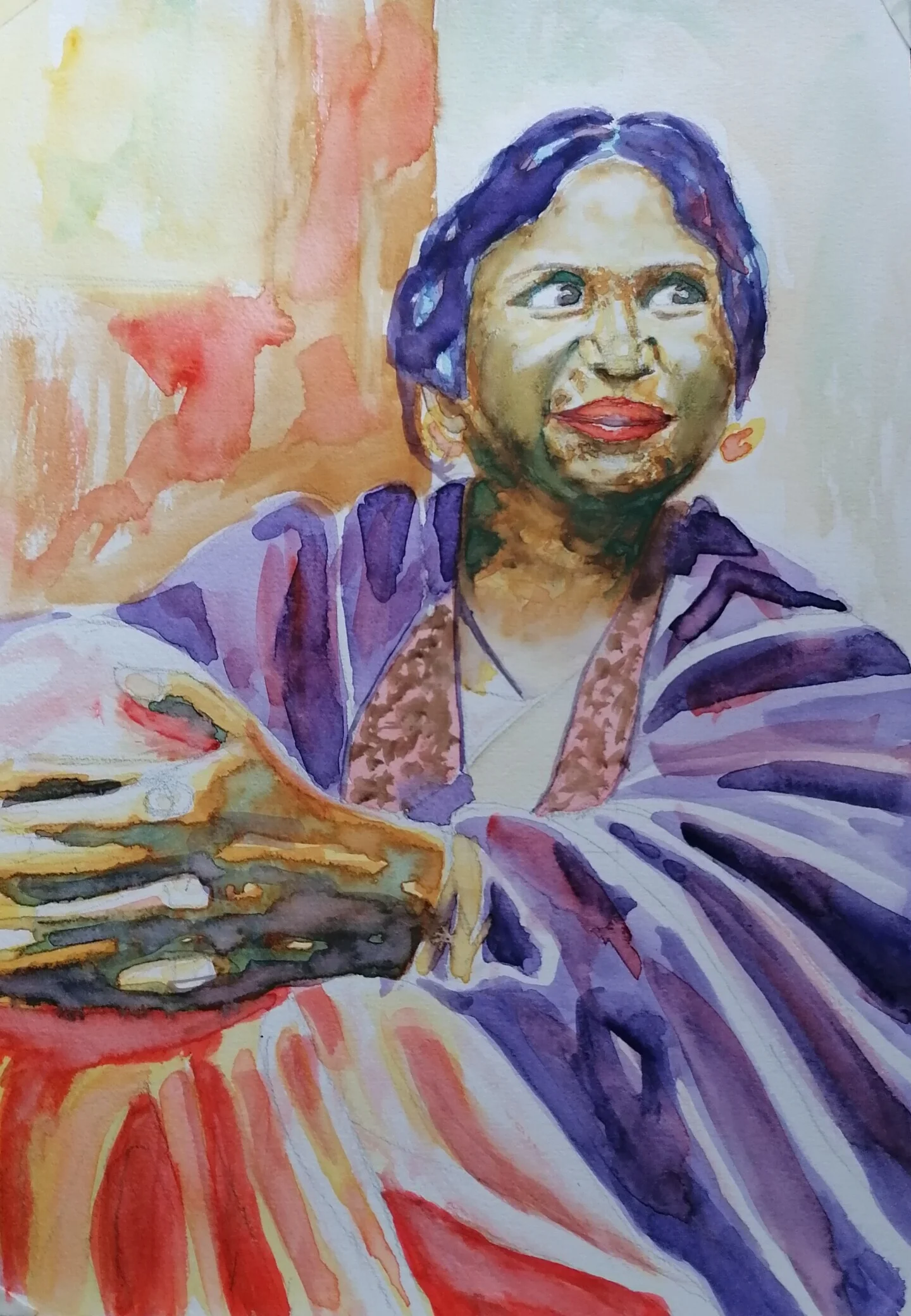
Phoolan Devi
 India
IndiaAlso known as: Bandit Queen, Queen of Dacoits
Birthday
August 10, 1963
Birth Sign
Leo
Birthplace
Bharsauli, Jalaun district (now Mirzapur), Uttar Pradesh, India
Age
Died at 37
About
Phoolan Devi was an Indian outlaw who became a member of parliament and a symbol of resistance for the oppressed. Born into extreme poverty as a member of the Mallah subcaste in Uttar Pradesh, she endured a childhood marked by forced marriage and sexual abuse before fleeing into the Chambal ravines to lead a gang of dacoits. Her life trajectory from victim to feared bandit to lawmaker ended abruptly when she was assassinated at age 37.
Her criminal career peaked with the 1981 Behmai massacre, an act of vengeance that sparked a massive manhunt and cemented her reputation as a figure of caste defiance. After surrendering in 1983, she spent eleven years in Gwalior Central Jail, where she dictated her autobiography. Released in 1994, she entered politics as a candidate for the Samajwadi Party, winning a seat in the Lok Sabha twice before her death. She is remembered for her fierce advocacy for women and lower castes, though her legacy remains complex due to her violent past.
Early Life & Background
Phoolan Devi was born on August 10, 1963, in the village of Bharsauli, located in what was then Jalaun district and is now part of Mirzapur district in Uttar Pradesh. She belonged to the Mallah community, a group traditionally associated with fishing and boatmen, which placed them at the bottom of the social hierarchy. Her early years were defined by crushing poverty and systemic oppression within the rigid caste structure of rural India.
At the age of eleven, her family arranged her marriage to Sher Singh, a much older man from the Thakur (Rajput) caste, reportedly to settle a debt owed by her father. This union proved disastrous. For several years, Phoolan suffered repeated rape and physical torture at the hands of her husband and his relatives. The situation escalated in 1980 when she was gang-raped by members of the Thakur clan in front of her husband. Unable to endure further humiliation or violence, she fled her home and sought refuge in the dense Chambal ravines. There, she joined the gang of Vikram Mallah, a notorious dacoit leader, marking the beginning of her transformation from a victim of domestic abuse to a formidable outlaw seeking revenge against the upper castes who had exploited her.
Career Growth
Devi's criminal career began in earnest after joining Vikram Mallah's gang in 1980. By the mid-1980s, she had established herself as a capable leader, organizing raids on wealthy upper-caste landowners and distributing the loot among the poor. This strategy earned her the nickname "Robin Hood" among lower-caste communities while branding her a ruthless killer in the eyes of the state. The defining moment of her outlaw life occurred on February 14, 1981, during the Behmai massacre. After being captured and held captive for months by a rival Thakur gang, she and her followers escaped and returned to the village of Behmai to kill twenty-two men. This event triggered a nationwide manhunt and political crisis.
In 1983, under a negotiated surrender deal, Devi turned herself in to the authorities. She spent eleven years in Gwalior Central Jail awaiting trial, a period during which she dictated her autobiography, I, Phoolan Devi, to a journalist. Her release in 1994 followed a special pardon granted by the government. Post-prison, she transitioned into politics, joining the Samajwadi Party. She won a seat in the Lok Sabha representing the Mirzapur constituency in 1996. Although she lost the seat in the 1998 elections, she regained it in 1999 and served until her assassination in 2001. As an MP, she focused on issues affecting women and marginalized communities, often speaking out against domestic violence and caste discrimination.
Career Timeline
Public Image & Style
Phoolan Devi's public image is one of profound contradiction. To the state and upper castes, she was a dangerous criminal and terrorist responsible for mass killings. To the Bahujan and lower-caste communities, she was a goddess-like figure and a liberator who fought back against centuries of oppression. Media portrayals have oscillated between these extremes, from the sensationalized depiction in Bandit Queen to the more sympathetic and nuanced views in recent documentaries and films. Her style was practical and rugged, reflecting her life in the ravines and prison. She spoke with a directness that challenged societal norms, often refusing to apologize for her past actions while advocating for justice in her political career.
Fame & Fandom (iFAMOUS Rankings)
The iFANN Global Fame Engine evaluated Phoolan Devi in September 2026 and confirmed she does not hold a placement in the published rankings. This absence of a numeric rank reflects the unique nature of her fame; she was never a pop star seeking chart dominance but a symbol whose influence defies standard celebrity metrics. Her legacy is sustained not by viral moments or fan-driven campaigns, but by the enduring power of her narrative as a resistance figure for marginalized communities. Unlike modern celebrities who cultivate organized fandoms with specific names and rituals, Phoolan Devi's supporters identified with her cause rather than her persona. There is no documented formal name for her fanbase, as her following consisted primarily of Bahujan communities who viewed her life as a mirror of their own struggles against caste oppression and gender violence. Her cultural footprint persists through academic study, historical commemoration, and the recent wave of media adaptations, including the upcoming biopic Phoolan. While the world measures fame through search volume and consumption signals, her impact is measured in the resilience she inspired in those who had none. The lack of a ranked position in the global engine underscores that her legend operates on a different plane, one where martyrdom and political transformation hold more weight than transient popularity.
Interesting Facts and Legends
Despite her fearsome reputation, Phoolan Devi once admitted to veteran actor Shekhar Suman that she was scared of him, revealing a rare vulnerability beneath her tough exterior. She kept the ashes of her lover and co-leader Vikram Mallah with her for years after his death in 1983, carrying them in a small pouch before eventually burying them. A poignant story from her time in the ravines describes her lying with Mallah in the open, highlighting the personal tragedy behind their public rebellion. Her autobiography, I, Phoolan: The Autobiography of India's Bandit Queen, was dictated to a journalist while she was imprisoned because she could not write fluently herself. Recent cultural developments include the premiere of the biopic Phoolan starring Janhvi Kapoor at the 2026 Toronto International Film Festival, which received critical acclaim for its nuanced portrayal of her agency.
Notable Quotes
“I am not a bandit. I am a woman who fought back.”
“They showed my pain, but they did not show my strength.”
“If they want to kill me, let them come. But they will not kill the spirit of the people.”
Family & Personal Life
Phoolan Devi was born into a poor family in Bharsauli village. Her parents arranged her marriage at age eleven to settle a debt, a decision that set her life on a tragic path. She had siblings, including a brother named Ram Kumar, who remained in the village. During her time as a Member of Parliament, she lived with her mother and siblings in New Delhi. Reports indicate she maintained close ties with her family throughout her life, even as her fame grew. She did not have any children of her own. Her relationship with her mother was particularly significant, as her mother supported her through various hardships and later mourned her loss deeply.
Notable Connections
Relationships & Dating History
Phoolan Devi's romantic life was short, intense, and largely defined by her partnership with Vikram Mallah. They met after she fled her abusive marriage and joined his gang in 1980. Their relationship was both romantic and strategic; they led the gang together and shared a deep bond forged through survival and revenge. Vikram Mallah was killed in a police encounter in 1983. Devi reportedly carried his ashes with her for years before burying them. They did not have children together. Following the death of Vikram Mallah and her surrender, there are no publicly documented records of other marriages or long-term romantic relationships. She remained unmarried during her political career. Reports suggest she lived with her mother and siblings in New Delhi during her time as an MP.
- DatedVikram Mallah1980 - 1983Romantic partner and co-leader of the dacoit gang; died in a police encounter.
Death & Aftermath
Died
July 25, 2001 (aged 37)
Death Place
New Delhi, India
Cause of Death
Gunshot wounds
The legacy of Phoolan Devi endured as a massive public funeral in Behmai, where thousands gathered to mourn the legislator who had risen from the ravines to the Lok Sabha. Her body was laid to rest on July 26, 2001, in her hometown of Uttar Pradesh, marking a final tribute that blended grief with reverence for a figure who challenged caste hierarchies. This outpouring of respect followed an assassination that occurred just one day prior at her residence in Vasant Vihar, New Delhi. On the evening of July 25, 2001, three gunmen intercepted Phoolan Devi as she left her home to attend political work, firing multiple shots at point-blank range before she could reach the nearby All India Institute of Medical Sciences.
She was declared dead upon arrival at the hospital, with official records citing gunshot wounds to the chest and abdomen as the cause. The incident triggered a swift investigation by Delhi Police, which identified Sher Singh Rana and two accomplices as perpetrators motivated by revenge for the 1981 Behmai massacre. The legal aftermath saw the killers convicted in 2002, though the process faced delays including Rana's escape from Tihar Jail in 2004 and his eventual release on bail in 2014 due to evidentiary disputes regarding conspiracy charges. Political leaders from across the spectrum expressed shock, while memorial murals and landmarks soon appeared in Bihar and Uttar Pradesh to honor her memory.
Net Worth (Estate Value)
$0
iFANN Editorial Team estimate
Phoolan Devi passed away in 2001, leaving behind minimal assets. She lived a life of poverty for most of her existence and spent over a decade in prison, limiting her ability to accumulate wealth. Any financial resources she may have accumulated during her brief political career were likely modest. There are no reports of major business ventures, real estate holdings, or investment portfolios managed by her estate. The economic value associated with her name today comes entirely from licensing deals related to biographical works, documentaries, and film adaptations, which benefit production companies and rights holders rather than her personal estate. Research by the iFANN Editorial Team indicates that her estate value is not publicly disclosed and remains negligible compared to modern celebrity estates.
Awards & Accolades
View 2 records, honours and achievementsKnown For
Bandit Queen
1994 · Subject of film
Phoolan
2026 · Subject of film
Member of Parliament
1996 · Politician
Keywords
Sources
Quick Facts
- Profession
- politician, brigand
- Born
- August 10, 1963
- Birthplace
- Bharsauli, Jalaun district
- Died
- July 25, 2001
- Death Place
- New Delhi
- Gender
- Female
- Birth Sign
- Leo
Personal Details
- Full Name
- Phoolan Devi
- Children
- Education
- Little to no formal schooling; dictated autobiography while in prison
Frequently Asked Questions
How did Phoolan Devi die?
What was Phoolan Devi's age when she died?
Why was Phoolan Devi assassinated?
Did Phoolan Devi have any children?
Is there a new movie about Phoolan Devi in 2026?
Similar People
Join the community
fans discussing