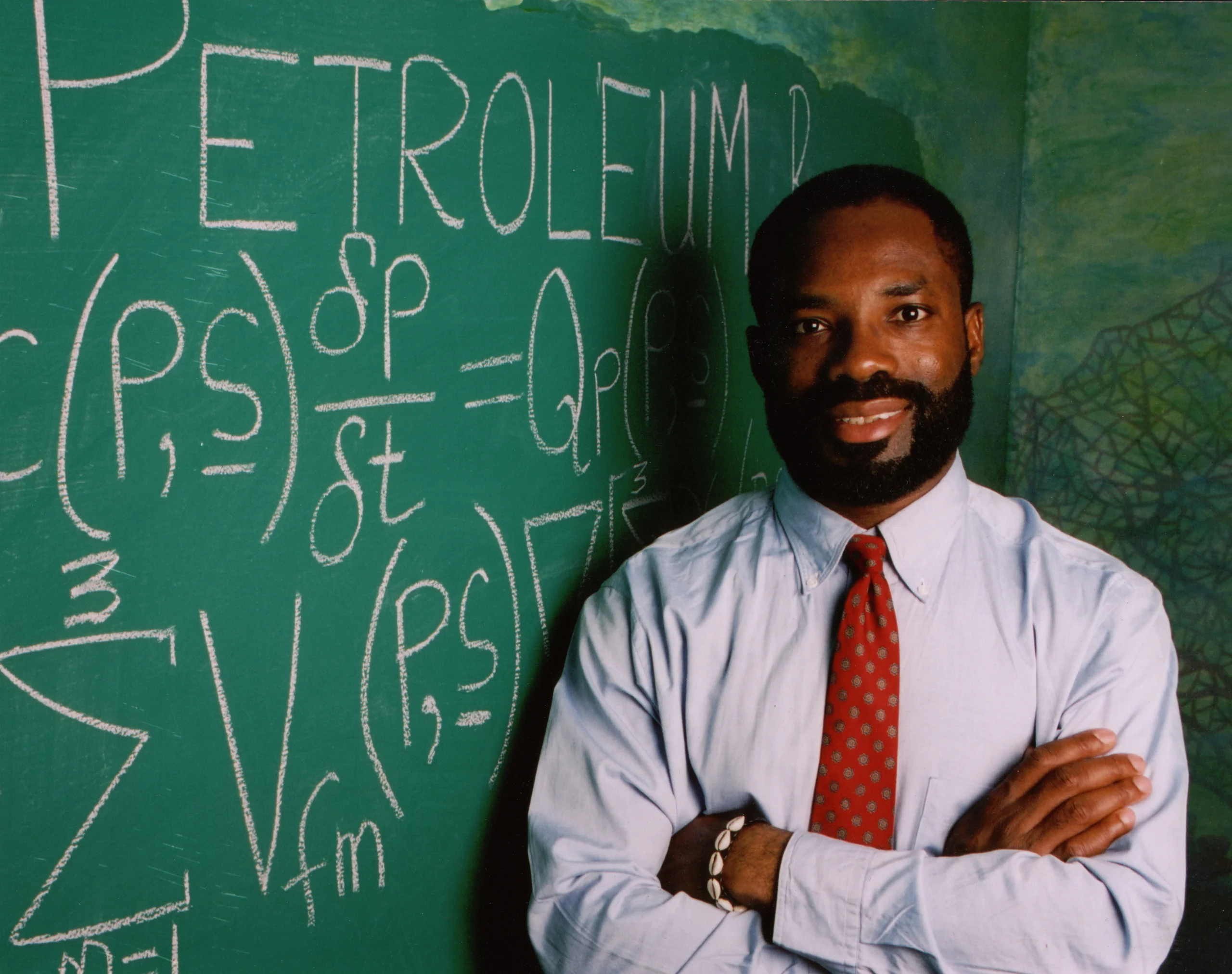
Philip Emeagwali
 Nigeria
computer scientist•engineer•mathematician
Also known as: Father of the Internet, Greatest Scientist of African Descent Ever
Birthday
August 23, 1954
Birth Sign
Leo
Birthplace
Akure, Nigeria
Age
72 years old
About
Philip Emeagwali is a Nigerian-American computer scientist, engineer, and mathematician. He is best known for winning the 1989 Gordon Bell Prize for his work in high-performance computing, where he programmed 65,000 processors to work in parallel on the Connection Machine. His achievement in simulating oil reservoirs remains a respected milestone in the field.
Beyond that recognized accomplishment, Emeagwali has made broader claims about inventing the internet and building the world's fastest computer, assertions that experts and fact-checkers have disputed. Still, he is celebrated within the African diaspora as a symbol of black excellence in STEM, and he continues to speak publicly and maintain an active online presence.
Early Life & Background
Philip Emeagwali was born on August 23, 1954, in Akure, Nigeria, to Igbo parents. His childhood was shaped by the Nigerian Civil War (1967–1970), during which his family was displaced and lived in a refugee camp. Despite the hardship, he showed an early gift for mathematics.
He attended Government College in Ibadan, Nigeria, where he continued to excel. After the war, he left Nigeria to pursue higher education abroad, eventually earning a doctoral fellowship at the University of Michigan in the 1980s. There he began working on a project that used computers to solve complex problems, which would later lead to his breakthrough work on parallel computing.
Career Growth
In 1989, Philip Emeagwali won the Gordon Bell Prize, a major award in high-performance computing, for his work using the Connection Machine to solve the oil reservoir simulation problem. He programmed 65,000 processors to operate in parallel, a feat that drew international attention.
Following the prize, Emeagwali built a career as a public speaker and keynote presenter, particularly on topics of African scientific talent and the diaspora. He has maintained an active online presence through his website, YouTube channel, and social media, where he promotes his legacy and speaking services. As of 2026, he continues to be a sought-after speaker in discussions about computing and African innovation.
Career Timeline
Public Image & Style
Philip Emeagwali's public image is marked by bold self-promotion and superlative claims about his achievements. His official materials describe him as a "father of the Internet" and "the world's greatest living genius," titles that have drawn both celebration and skepticism.
Within African and African-American communities, he is often celebrated as a symbol of black excellence in STEM, with his refugee-to-pioneer story resonating deeply. His content emphasizes perseverance and achievement against adversity, and he maintains an active presence on Instagram and YouTube, where he shares his message with a dedicated following.
Fame & Fandom (iFAMOUS Rankings)
Philip Emeagwali does not command a formal celebrity fandom, nor is there a documented name for his supporters. His recognition stems from academic and technical contributions rather than pop culture phenomena, meaning no organized fanbase maintains campaigns, rituals, or unofficial titles in his honor. While he is celebrated within specific communities as a symbol of achievement, the general public engagement with his work remains distinct from the fervent following seen among entertainers. In August 2026, the iFANN Global Fame Engine evaluated this profile and determined that Philip Emeagwali is currently unranked. This assessment places him outside the published Global Top 1,000 rankings, indicating a significant but non-ranked standing in the current global fame landscape. The evaluation reflects a steady presence driven by historical significance in computing rather than viral trends or contemporary media saturation. Unlike figures who dominate social platforms or generate constant news cycles, his visibility relies on enduring educational narratives and occasional high-profile acknowledgments. The absence of a numeric placement in the top tiers suggests that while his legacy is secure, his immediate cultural footprint has not expanded to meet the thresholds required for a ranked position in the latest iFANN scope. This status aligns with his profile as a specialist whose influence is profound within STEM fields yet limited in broader entertainment contexts. Consequently, the data indicates a stable, non-ranked position where the individual remains a notable figure without holding a specific ordinal rank in the primary global lists.
Interesting Facts and Legends
Philip Emeagwali's official website promotes him as the "Greatest Scientist of African Descent Ever," a title he has embraced in his public materials. His YouTube channel describes him as "the world's greatest living genius and scientist," and his podcast is titled "This Is Philip Emeagwali." He has been featured in Black History Month spotlights at universities and community organizations, often highlighted as a pioneer in STEM. Emeagwali's journey from refugee camp to Gordon Bell Prize winner is a story that resonates with audiences, and he has used it to inspire discussions about perseverance and achievement. A widely retold narrative characterizes him as the "Father of the Internet," claiming he discovered how to connect supercomputers while living in a refugee camp during the Nigerian Civil War. This tale serves as a significant piece of cultural mythology, frequently cited to highlight the achievements of African innovators. However, fact-checking organizations have debunked the claim that he created the internet, noting that his actual work involved using parallel processing to solve complex equations related to oil exploration. Despite the factual inaccuracies regarding the internet's creation, the dramatized version of his life has taken on a life of its own in educational contexts. There are no records of crowds shutting down streets or fans fainting, as his fame remains rooted in technical achievement rather than performative spectacle.
Family & Personal Life
Philip Emeagwali is married to Dale Brown Emeagwali, a distinguished American microbiologist known for her investigational research. The couple's marriage is documented, though details about when they met or married are not publicly available. They have no publicly known children.
Emeagwali's family background includes his Igbo heritage and the experience of displacement during the Nigerian Civil War, which he has spoken about as a formative part of his life.
Notable Connections
Philip Emeagwali is associated with his wife, Dale Brown Emeagwali, a prominent microbiologist. He is also connected to the Gordon Bell Prize community, having won the award in 1989 alongside another recipient. His work is often discussed in the context of high-performance computing and African diaspora contributions to STEM.
Relationships & Dating History
Philip Emeagwali is married to Dale Brown Emeagwali, a distinguished American microbiologist. The couple's relationship is documented, though details about when they met or married are not publicly available. They have remained together, and as of 2026, they are still married.
No other public relationships have been reported for Emeagwali. His marriage appears to be stable and long-lasting, with no reports of divorce or separation.
- MarriedDale Brown EmeagwaliCurrentMarried to Dale Brown Emeagwali, a distinguished microbiologist; details of their wedding are not public.
Salary, Net Worth In 2026
$1 Million
iFANN Editorial Team estimate
Estimating Philip Emeagwali's net worth is challenging due to a lack of credible financial data. His primary income sources appear to be public speaking engagements and keynote presentations, which his website actively promotes. He also maintains a YouTube channel and podcast that may generate some revenue, though specific figures are not publicly available. Per iFANN's editorial analysis, his net worth is estimated at around $1 million as of 2026. This figure is speculative, as Emeagwali has not publicly disclosed his finances, and no major media outlets have reported on his wealth. His speaking career, combined with his online presence, likely provides a modest but steady income.
Awards Won (1)
Philip Emeagwali won the 1989 Gordon Bell Prize, a prestigious award in high-performance computing, for his work on the Connection Machine. This remains his most significant and verified accolade.
1989 · High-Performance Computing
Oil reservoir simulation using the Connection Machine
Known For
Gordon Bell Prize
1989 · Winner for parallel computing
Connection Machine
1989 · Programmed 65,000 processors
Internet claims
· Self-proclaimed 'father of the Internet'
Keywords
Sources
Quick Facts
- Profession
- computer scientist, engineer, mathematician
- Born
- August 23, 1954
- Birthplace
- Akure, Nigeria
- Gender
- Male
- Spouse
- Dale Brown Emeagwali
- Birth Sign
- Leo
- Nationality
- Nigerian-American
Personal Details
- Full Name
- Philip Emeagwali
- Spouse
- Dale Brown Emeagwali
- Education
- University of Michigan (doctoral fellowship in the 1980s)
Frequently Asked Questions
Did Philip Emeagwali invent the internet?
What did Philip Emeagwali actually achieve?
Who is Philip Emeagwali's wife?
Where was Philip Emeagwali born?
Is Philip Emeagwali still alive in 2026?
Social Media
Similar People
Join the community
fans discussing