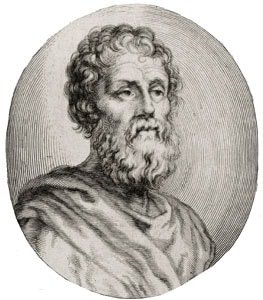
Phidias
Birthday
-0490-01-01
Birth Sign
Capricorn
Birthplace
Athens
Age
Died at 60
About
Phidias, born around 490 BC in Athens, was the most celebrated sculptor, painter, and architect of ancient Greece. He is best known for creating the Statue of Zeus at Olympia, one of the Seven Wonders of the Ancient World. This massive gold and ivory figure of the king of the gods seated on a throne became a benchmark for divine representation. On the Athenian Acropolis, Phidias designed two major statues of Athena: the Athena Parthenos, a towering 12-meter chryselephantine statue housed inside the Parthenon, and the Athena Promachos, a colossal bronze that stood between the Parthenon and the Propylaea, visible to ships sailing into Piraeus. His work defined the Classical style, blending idealized human forms with a sense of majestic calm.
Early Life & Background
Phidias was the son of Charmides, an Athenian citizen. He trained in sculpture and painting during the early Classical period, likely under the sculptor Hegias or the painter Polygnotus. His first major commission came around 456 BC: the Athena Promachos, a nearly 9-meter-tall bronze statue of Athena funded from the spoils of the Battle of Marathon. This project established his reputation for handling colossal works and demonstrated his mastery of bronze casting. The statue stood on the Acropolis as a symbol of Athenian military might and was visible from the sea. Phidias also set up a large workshop on the Acropolis, training a generation of craftsmen and preparing for the grander projects to come.
Career Growth
In 447 BC, Pericles appointed Phidias as the general overseer of the Parthenon building project. He designed and supervised the sculptural decoration, including the pediments, metopes, and the 160-meter-long Ionic frieze. The centerpiece was the Athena Parthenos, a 12-meter chryselephantine statue dedicated in 438 BC. Its gold was detachable, a precaution against theft accusations. Around 435 BC, Phidias traveled to Olympia to create the Statue of Zeus, a 13-meter chryselephantine figure that became one of the Seven Wonders. Political enemies accused him of embezzlement and impiety for carving his own portrait and Pericles's onto Athena's shield. Though acquitted of theft, he was imprisoned and died in exile around 430 BC.
Career Timeline
Public Image & Style
The "Phidian" style is defined by idealized human forms, serene expressions, intricate drapery, and a sense of majestic calm known as ethos. He perfected the Classical severe style. In modern media, Phidias is portrayed as the archetypal genius artist victimized by political intrigue, appearing in documentaries and historical novels. Enthusiasts are often called Classical art historians or Phidias scholars. The Acropolis Museum hosts annual lectures on his legacy. Social media accounts dedicated to him are scholarly in tone, focusing on archaeological discoveries.
Fame & Fandom (iFAMOUS Rankings)
Phidias commands a global attention defined by academic reverence and historical legacy rather than contemporary celebrity metrics. While his works remain the bedrock of Western art history, iFANN has evaluated his current standing and determined that he holds no placement in the published Global Top 1,000 rankings or any Top-100 scope list as of August 2026. The status remains EVALUATED_UNRANKED, indicating that while his historical impact is undeniable, he does not currently generate the volume of modern search activity or media consumption required for a numerical ranking. Consequently, there is no documented fandom name associated with the ancient sculptor; his audience consists entirely of historians, archaeologists, and museum visitors rather than an organized fanbase with rituals or campaigns.
Interesting Facts and Legends
Phidias was also a painter, though his sculpting achievements ultimately overshadowed this skill during a competition. To counter theft allegations, the gold plating on the Athena Parthenos was designed to be removable, a strategic decision attributed to Pericles. The statue famously held a six-foot-tall figure of Nike in its right hand. Excavations of Phidias's workshop in Olympia during the 1950s uncovered tools, terracotta molds, and fragments of ivory and glass, confirming the chryselephantine technique used in his masterpieces. A fifth-century BC drinking cup in the British Museum is thought to depict the artist at work. Plutarch records that Phidias portrayed himself as a bald, elderly man on the shield of Athena.
Historical lore often recounts the dramatic fall of the artist, who faced accusations of embezzling gold intended for the Athena statue and impiety for carving portraits of himself and Pericles into her shield. This narrative of political intrigue led to his imprisonment and eventual death, cementing his image as a tragic genius. Another enduring story involves the massive scale of his workshop, where he trained numerous pupils, suggesting that many surviving works attributed to him were actually executed by his team under his direction.
Notable Quotes
“The gods themselves would have chosen Phidias to carve them. – Pericles, as recorded by Plutarch”
“The beauty of the statue of Zeus adds something to the traditional conception of the god. – Dio Chrysostom”
“Phidias, the son of Charmides, the Athenian, made me. – Inscription on the base of the Athena Parthenos, cited by Pausanias”
Family & Personal Life
Phidias was the son of Charmides, an Athenian citizen. He had a son named Pheidias the Younger, who also became a sculptor. No other family members are recorded in ancient sources.
Notable Connections
Phidias was a close associate of the Athenian statesman Pericles, who served as his patron and political ally. He collaborated with the architects Ictinus and Callicrates on the Parthenon. His son, Pheidias the Younger, also became a sculptor. The painter Polygnotus may have been his teacher or contemporary.
Relationships & Dating History
Ancient sources provide no record of Phidias's romantic relationships or marriages. His personal life was not a subject of interest for writers like Plutarch or Pausanias. The only known personal connection is his friendship and political alliance with Pericles, which was strictly professional. As of 2026, he is deceased with no known relationships.
Death & Aftermath
Died
-0430-01-01 (aged 60)
Death Place
Unknown
Cause of Death
Unknown
The final days of the sculptor Phidias remain obscured by the silence of ancient records, with no contemporary documentation preserving his last public appearance or specific location of death. Historical tradition, primarily derived from Plutarch's Life of Pericles, suggests he fell into political disfavor and was imprisoned in Athens on charges of embezzlement regarding the gold for the Statue of Zeus at Olympia. While some accounts allege he died within these prison walls awaiting trial, other narratives propose he fled to Elis to complete his masterpiece before passing away there around 430 BCE. The circumstances of his end are thus limited to literary traditions rather than verified historical fact, leaving the exact nature of his demise as an unresolved matter of antiquity.
In the centuries following his passing, the immediate reaction was a complex mixture of reverence for his artistic output and the lingering shadow of the political accusations that ended his career. Modern scholarship often refers to him as a fugitive ghost, emphasizing the lack of biographical data surrounding his exit from history. Posthumously, his reputation has been restored through the enduring preservation of his works, including the Parthenon sculptures and the legendary Statue of Zeus, which secured his place among the greatest artists of antiquity.
Net Worth (Estate Value)
$0
iFANN Editorial Team estimate
Phidias passed away around 430 BC, leaving behind a legacy that spans millennia but no financial estate. Research by the iFANN Editorial Team puts his net worth at $0. There are no credible modern sources estimating personal wealth, as no assets, royalties, or intellectual property survive from antiquity. His workshop and tools were lost to time, resulting in zero estate management, posthumous revenue, or licensing income in any modern financial sense.
Awards & Accolades
View 8 records, honours and achievementsKnown For
Statue of Zeus at Olympia
c. 435 BC · Sculptor
Athena Parthenos
c. 438 BC · Sculptor
Athena Promachos
c. 456 BC · Sculptor
Parthenon sculptures
c. 447–432 BC · Overseer and designer
Keywords
Quick Facts
- Profession
- sculptor, architect, painter
- Born
- -0490-01-01
- Birthplace
- Athens
- Died
- -0430-01-01
- Death Place
- Classical Athens
- Gender
- Male
- Birth Sign
- Capricorn
Frequently Asked Questions
How tall was the Statue of Zeus at Olympia?
Why was Phidias exiled?
Did Phidias have any surviving works?
What is chryselephantine sculpture?
Where is Phidias buried?
Similar People
Join the community
fans discussing