 United States

“Mr. Anderson has made a film that is both a celebration of the art of dressmaking and a devastating portrait of a man who loves his work more than he loves anyone else.”
A.O. Scott
The New York Times
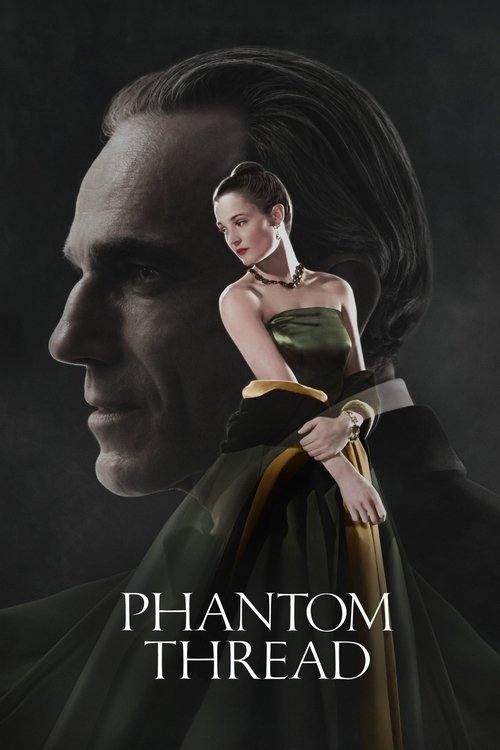
Paul Thomas Anderson crafted Phantom Thread as a sharp dissection of the toxic equilibrium between artistic genius and romantic love. Set in the rigid, high-stakes world of 1950s London fashion, the film introduces Reynolds Woodcock, a dressmaker whose life is governed by an unyielding routine and a temperamental need for control. His sister Cyril manages his household with military precision, while his muses are expected to be silent, compliant vessels for his creations.
The narrative shifts when Reynolds encounters Alma Elson, a spirited waitress who refuses to be silenced or intimidated. Their whirlwind courtship leads to marriage, but the central conflict emerges as Alma challenges Reynolds' dominance over her body and mind. The story explores how two strong-willed individuals negotiate power within a relationship where art and personal life are inextricably linked.
Stream
Availability and pricing can change. Confirm on the provider's site before purchasing.
In the winter of 1957, Reynolds Woodcock stands at the height of his career as a celebrated couturier in London. His studio operates with clockwork precision, managed by his domineering sister Cyril, who screens callers and enforces strict dietary regimens to keep Reynolds focused on his work. He demands absolute submission from his models, treating them as extensions of his own will rather than independent people. His latest collection is scheduled for presentation at the House of Windsor, attended by aristocrats like Countess Henrietta Harding and Princess Mona Braganza, all awaiting his next masterpiece.
Reynolds spots Alma Elson during a dinner at a local hotel. Unlike the other women he has dated, Alma is not impressed by his status or intimidated by his temperament. She challenges him verbally and physically, sparking a fierce attraction. Despite his initial resistance to her lack of experience in high society, Reynolds pursues her aggressively. They marry quickly, moving into his home where the domestic dynamic immediately becomes strained. Reynolds expects Alma to conform to his established patterns, including specific meals and schedules that he believes fuel his creativity.
Alma soon realizes that Reynolds' genius relies on a fragile ecosystem of silence and obedience. When she attempts to assert her independence by altering his diet or questioning his decisions, he reacts with cold fury and emotional withdrawal. The tension escalates as Reynolds grows increasingly erratic, accusing her of trying to ruin his work. He retreats further into his craft, treating her with disdain while she struggles to find her place in his world. The film meticulously documents their psychological battle, showing how Reynolds' need for control manifests as abuse and how Alma's desire for agency clashes with his refusal to share power.
As the pressure mounts, the couple reaches a breaking point. Reynolds falls ill after consuming a meal prepared by Alma, which she has secretly laced with a mild toxin derived from wild mushrooms. This act forces a reversal of their roles; Reynolds becomes dependent on Alma for care, stripping away his usual authority. He wakes to find her tending to him, and in this vulnerable state, he acknowledges her influence over his life. The film concludes with a dark reconciliation where both parties accept a new arrangement. Reynolds returns to his work, fully aware that Alma holds the power to sustain or destroy him, creating a symbiotic bond built on mutual manipulation and survival.
Official Trailer
Critical Consensus
Phantom Thread offers a masterful exploration of obsession and power dynamics, anchored by Daniel Day-Lewis's career-defining performance and Vicky Krieps' equally compelling portrayal. Paul Thomas Anderson crafts a visually stunning and emotionally resonant narrative that dissects the delicate balance between art and love. The film's meticulous attention to detail, combined with its sharp dialogue and haunting score, creates a rich tapestry of human complexity that lingers long after the credits roll.
“Mr. Anderson has made a film that is both a celebration of the art of dressmaking and a devastating portrait of a man who loves his work more than he loves anyone else.”
A.O. Scott
The New York Times
“Daniel Day-Lewis gives one of the greatest performances of his career, a tour de force that captures the soul of a man consumed by his craft.”
Peter Travers
Rolling Stone
“Phantom Thread is a masterpiece of modern cinema, a film that transcends its period setting to speak to universal truths about love, power, and the cost of genius.”
Richard Roeper
Chicago Sun-Times
“Anderson has crafted a film that is as beautiful as it is disturbing, a work of art that challenges the viewer to confront the darker sides of human desire.”
David Ehrlich
IndieWire
“The film is a triumph of style and substance, a dazzling display of cinematic artistry that leaves a lasting impression.”
Manohla Dargis
The New York Times
Daniel Day-Lewis
Reynolds Woodcock
Vicky Krieps
Alma Elson
Lesley Manville
Cyril Woodcock
Camilla Rutherford
Johanna
Gina McKee
Countess Henrietta Harding
Brian Gleeson
Dr. Robert Hardy
Harriet Sansom Harris
Barbara Rose
Lujza Richter
Princess Mona Braganza
Julia Davis
Lady Baltimore
Julie Vollono
London Housekeeper
Director
Paul Thomas Anderson
Writer
Paul Thomas Anderson
Composer
Jonny Greenwood
Cinematographer
Paul Thomas Anderson
Producers
Megan Ellison, JoAnne Sellar, Paul Thomas Anderson, Daniel Lupi
Academy Awards (2018)
Best Actress: Nominated
Academy Awards (2018)
Best Costume Design: Nominated
Golden Globe Awards (2018)
Best Actress – Motion Picture Drama: Nominated
Golden Globe Awards (2018)
Best Original Score: Nominated
BAFTA Awards (2018)
Best British Film: Nominated
Critics' Choice Movie Awards (2018)
Best Actress: Won
Join the community
fans discussing