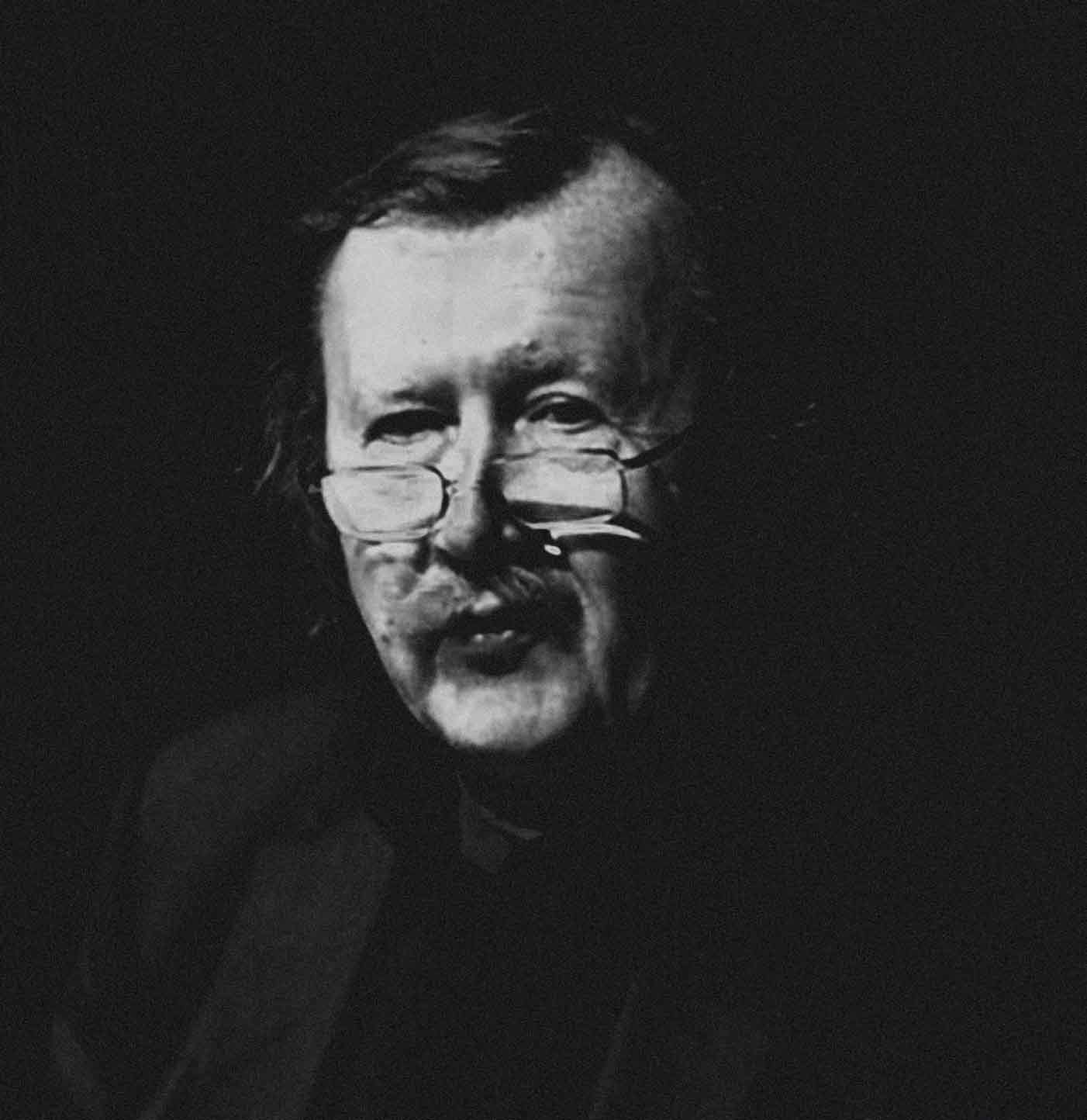
Peter Sloterdijk
 Germany
philosopher•television presenter•writer
Birthday
June 26, 1947
Birth Sign
Cancer
Birthplace
Karlsruhe, Germany
Age
79 years old
About
Peter Sloterdijk is a German philosopher, cultural critic, and public intellectual, widely regarded as one of the most provocative and influential thinkers of his generation. He is best known for his 1983 bestseller Critique of Cynical Reason, which became an unlikely publishing phenomenon and established him as a major voice in contemporary philosophy. His monumental Spheres trilogy, a sweeping exploration of human spatiality and coexistence, has been translated into many languages and continues to shape academic debate.
Sloterdijk's reach extends beyond the page. He co-hosted the popular German television program Das Philosophische Quartett from 2002 to 2012, bringing philosophical discourse to a broad audience. As Rector of the Karlsruhe University of Arts and Design from 2001 to 2015, he wielded considerable institutional influence. His distinctive style, blending erudition with a flair for provocation, has earned him both devoted followers and fierce critics. As of 2026, he remains an active and frequently cited figure in philosophical and cultural conversations.
Early Life & Background
Peter Sloterdijk was born on June 26, 1947, in Karlsruhe, Germany. His birth was marked by Rhesus incompatibility between his parents, a condition that caused severe jaundice and left him, in his own words, “a near-dead person.” He later recalled that people remarked how “blue eyes look particularly good with yellow skin,” and that “from the first moment of my life I was already reminded of its end.” He described this dark beginning as being followed by “brighter intervals that kept getting larger,” an experience that shaped his philosophical outlook.
Growing up in postwar Germany, Sloterdijk developed an early interest in philosophy, literature, and history. He pursued these subjects at the University of Munich and later at the University of Hamburg, where he immersed himself in the Frankfurt School tradition and continental philosophy. His academic formation was rigorous, but he was never content to remain within orthodox boundaries. He began to forge his own intellectual path, one that would eventually challenge the very institutions that trained him.
Before his breakthrough, Sloterdijk contributed essays to various publications and taught at universities, gradually building a reputation as a sharp and unconventional thinker. His early work showed a fascination with the intersections of philosophy, culture, and politics, but it was not until 1983 that he would capture the public imagination with a single, sweeping critique.
Career Growth
Sloterdijk's breakthrough came in 1983 with the publication of Critique of Cynical Reason (Kritik der zynischen Vernunft). The book, a wide-ranging attack on modern cynicism and a defense of Enlightenment ideals, became an unexpected bestseller in Germany, selling hundreds of thousands of copies and being translated into numerous languages. It established him as a public intellectual of the first rank.
His most ambitious project, the Spheres trilogy, unfolded over nearly a decade: Bubbles (1998), Globes (1999), and Foam (2004). These volumes explore how humans create and inhabit “spheres” of coexistence, from the intimate space of the womb to the globalized world. The first volume, Bubbles, was published in English by MIT Press in 2011, bringing his ideas to a wider Anglophone audience.
From 2001 to 2015, Sloterdijk served as Rector of the Karlsruhe University of Arts and Design, where he had earlier been appointed professor of philosophy and media theory. His tenure consolidated his institutional influence. In 2005, he contributed the essay “Atmospheric Politics” to the volume Making Things Public, edited by Bruno Latour and P. Weibel, extending his thought into political theory. His television role on Das Philosophische Quartett (2002–2012) made him a household name in German-speaking countries, and he continues to write and lecture extensively.
Career Timeline
Public Image & Style
Peter Sloterdijk presents himself as a public intellectual in the grand European tradition: erudite, provocative, and unafraid of controversy. He is known for his distinctive speaking style, which mixes philosophical depth with a certain theatrical flair, and for his willingness to challenge academic orthodoxies. In the media, he is often portrayed as a rock star of philosophy, a figure who can fill auditoriums and spark nationwide debates. His television appearances on Das Philosophische Quartett made him a familiar face in German living rooms, and his social media presence, including Instagram and X, allows him to engage directly with a younger audience. Fans appreciate his ability to make complex ideas accessible without diluting their rigor, while critics sometimes accuse him of intellectual showmanship. His public image is that of a thinker who lives his ideas, constantly testing boundaries and inviting discussion.
Fame & Fandom
Peter Sloterdijk commands a stage where the roar of a stadium is replaced by the sharp intake of breath from a room full of philosophers. He does not have a fandom in the way a pop star does; there are no "Sloterdijkians" clutching autographs or organizing birthday billboards across Berlin. His audience consists of academics, students, and intellectuals who engage with his work through dense texts and televised debates rather than ritualized devotion. The legends surrounding him are intellectual rather than physical. Critics consistently frame him as the most exciting German philosopher since Nietzsche and Heidegger, a title that serves as his primary mythology. This reputation was forged by the 1983 publication of *Critique of Cynical Reason*, a book that revitalized German philosophy and cemented his status as a major force capable of diagnosing cultural crises. His career includes high-stakes moments like his tenure as Rector of the University of Art and Design Karlsruhe and recent discussions on right-wing extremism at the Elmau Castle context alongside figures like Curtis Yarvin. These events define his stature without the chaotic energy of celebrity culture. iFANN has evaluated his global standing using its proprietary Fame Engine. Peter Sloterdijk is currently EVALUATED_UNRANKED and holds no placement in the Global Top 1,000 or any Top-100 scope list. The system confirms he is not currently listed among the world's most famous individuals despite his enduring influence.
Interesting Facts and Legends
Peter Sloterdijk began life as a "near-dead person" due to complications from Rhesus incompatibility at birth. He describes humans as "self-fencing, self-shepherding creatures," a phrase capturing his view of human self-construction. His essay "Atmospheric Politics" appeared in the 2005 exhibition catalog *Making Things Public*, curated by Bruno Latour. In a 2006 interview, he compared football to "ancient proto-artillerist feelings of successful hunting," noting that players react in the "stupidest" way after scoring. He once called experts "someone already dead or someone who stopped living." A persistent story frames him as the most controversial German philosopher to emerge since Nietzsche and Heidegger. This narrative defines his cultural mythology more than any single viral event. His 1983 bestseller *Critique of Cynical Reason* became an unlikely publishing phenomenon that established him as a major voice. Recent coverage highlights his continued relevance in high-level philosophical circles, including a *Lectio Magistralis* at the Biennale della Parola in 2025.
Notable Quotes
“So the expert is someone already dead or someone who stopped living.”
“If there is one virtue of human beings. Humans are self-fencing, self-shepherding creatures.”
“Hardly any other game so clearly imitates our ancient proto-artillerist feelings of successful hunting. When we have completely paralysed the inner hunter and killed him off, we reach the inevitable conclusion that the stupidest thing in the world is how footballers react after scoring a goal.”
Family & Personal Life
Public details about Sloterdijk's family are scarce. He was born in Karlsruhe to parents who faced a medical crisis at his birth due to Rhesus incompatibility, a fact he has spoken about as formative. No information is available about his parents' names or occupations, nor about any siblings. Sloterdijk has kept his personal life largely out of the public eye, and there are no reliable reports about his marital status, children, or current household. His focus has always been on his intellectual work, and he has rarely discussed family matters in interviews.
Notable Connections
Peter Sloterdijk's intellectual network includes the French philosopher Bruno Latour, with whom he contributed to the 2005 volume Making Things Public. His work has engaged with the medieval thinker Nicholas of Cusa, and his television program Das Philosophische Quartett featured regular collaborations with fellow panelists, though their names are not widely documented. His philosophical dialogues have also touched on the ideas of the Frankfurt School, even as he charted his own independent course.
Relationships & Dating History
Peter Sloterdijk has kept his personal life remarkably private. Public sources do not document any romantic relationships, marriages, or children. Unlike figures in entertainment or sports, his private life has never been a focus of media attention. As of 2026, there is no credible reporting on his relationship status, and he has not publicly discussed a partner. His public persona is defined entirely by his intellectual work, and he has managed to maintain a clear separation between his professional and personal spheres.
Salary, Net Worth In 2026
$2 Million
iFANN Editorial Team estimate
As a philosopher and academic rather than a commercial entertainer, Peter Sloterdijk's net worth is not a subject of public financial disclosure. His income derives primarily from his academic salary, book royalties, and speaking engagements. His 1983 book *Critique of Cynical Reason* sold hundreds of thousands of copies, a remarkable feat for a philosophy book, and continues to generate royalties. The *Spheres* trilogy and his other works have been translated into many languages, contributing to his earnings. Per iFANN's editorial analysis, estimates of his net worth in 2026 are speculative, but given his long career and successful publications, it is reasonable to place the total at $2 Million. No celebrity wealth trackers provide reliable figures, so this remains an educated guess.
Awards & Accolades
Known For
Critique of Cynical Reason
1983 · Author
Spheres trilogy
1998 · Author
Das Philosophische Quartett
2002 · Co-host
Keywords
Sources
Quick Facts
- Profession
- philosopher, television presenter, writer
- Born
- +1947-06-26
- Birthplace
- Karlsruhe
- Gender
- Male
- Birth Sign
- Cancer
Personal Details
- Education
- University of Munich; University of Hamburg
Frequently Asked Questions
What is Peter Sloterdijk best known for?
How old is Peter Sloterdijk?
Is Peter Sloterdijk still active in 2026?
What is Peter Sloterdijk's net worth?
Is Peter Sloterdijk married?
Social Media
Similar People
Join the community
fans discussing