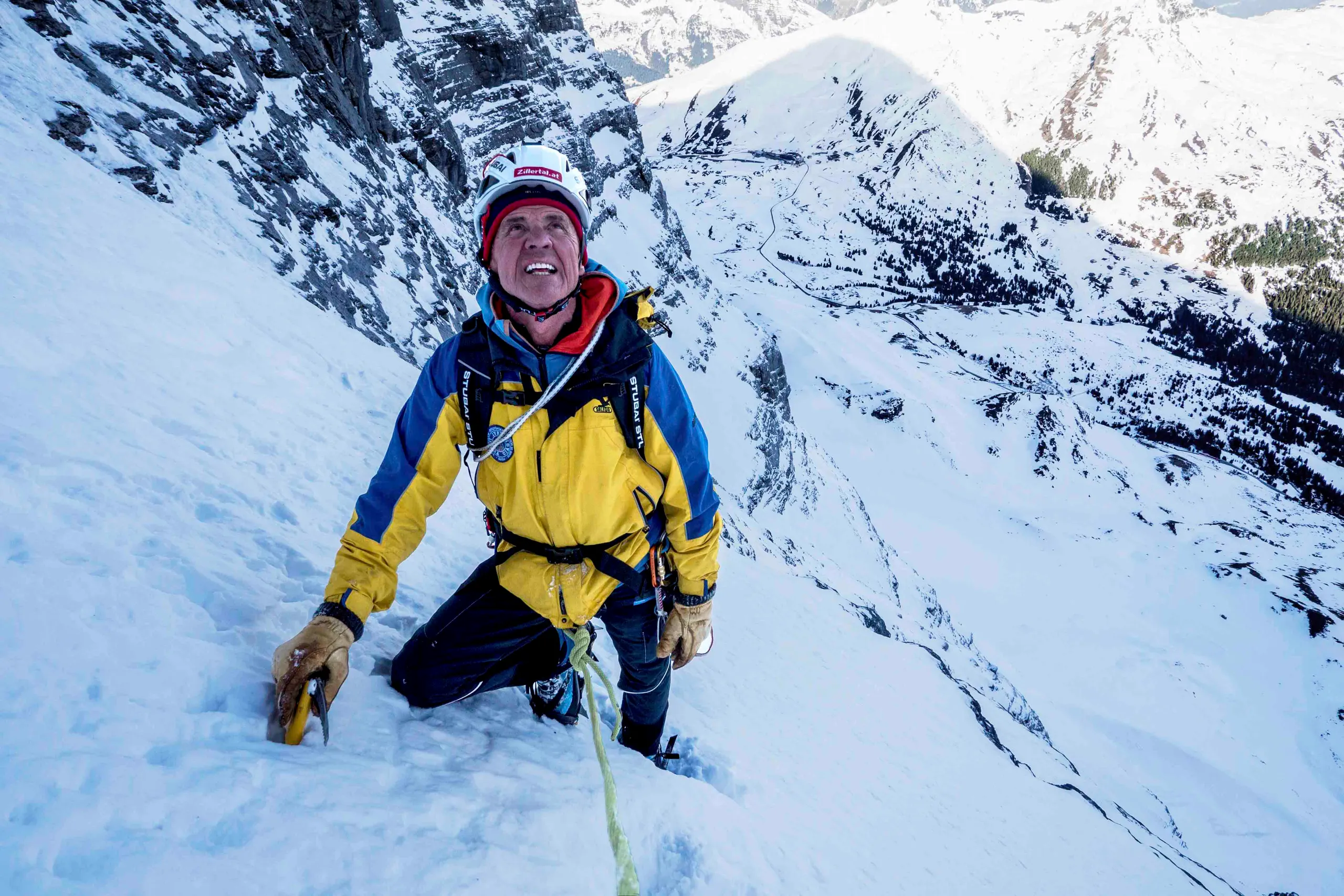
Peter Habeler
 Austria
Birthday
July 22, 1942
Birth Sign
Cancer
Birthplace
Mayrhofen, Austria
Age
84 years old
About
Peter Habeler is an Austrian mountaineer and explorer, widely regarded as one of the most influential figures in high-altitude climbing. Born in Mayrhofen, Tyrol, in 1942, he is best known for making the first oxygen-free ascent of Mount Everest with Reinhold Messner in 1978, a feat that rewrote the limits of human endurance. Today, Habeler is a living legend in the alpinism world, celebrated for his pioneering Alpine-style ascents and his speed records on classic faces like the Eiger. He remains an active voice in the climbing community, occasionally sharing his experiences at festivals and in interviews, and his name lives on through the Peter Habeler Runde, a 56-kilometer hiking trail in his native Tyrol.
Habeler's approach to climbing emphasized speed, light gear, and self-reliance, a philosophy that contrasted sharply with the heavy expedition tactics of his era. His partnership with Messner in the late 1960s and 1970s produced several groundbreaking climbs, including a three-day ascent of Gasherbrum I in 1975. Beyond Everest, he summited four other eight-thousanders, including K2 and Nanga Parbat, and set a speed record on the Eiger's North Face in 1974. His 1978 book, Lonely Victory, remains a classic mountaineering memoir.
Early Life & Background
Peter Habeler was born on July 22, 1942, in the small Austrian village of Mayrhofen, nestled in the Zillertal Valley of the Tyrol. His fascination with the mountains began at the age of six, when he first scrambled up a local peak. Growing up in the shadow of the Alps, he spent his childhood exploring the surrounding hills and developed a natural aptitude for climbing. By the time he was 21, in 1963, he had earned his living as a ski instructor, a job that kept him outdoors and sharpened his physical conditioning.
Habeler's early climbing career was marked by a willingness to push boundaries. In the mid-1960s, he traveled to the United States and became one of the first Europeans to tackle the big walls of Yosemite National Park. He completed several difficult routes on El Capitan and other granite monoliths, learning techniques that were far ahead of what was common in Europe at the time. These experiences honed his skills in aid climbing and exposed him to the minimalist style that would later define his Himalayan career. Returning to Europe, he applied these lessons to the Alps, making fast ascents of classic north faces, including the Eiger, Matterhorn, and Grandes Jorasses.
In 1969, Habeler met Reinhold Messner during a climbing trip in the Dolomites, and the two quickly recognized a shared vision. This meeting set the stage for a partnership that would change mountaineering forever.
Career Growth
Peter Habeler's breakthrough came through his partnership with Reinhold Messner, which began in 1969. Together, they set out to climb the world's highest peaks using lightweight, fast, and self-sufficient methods, a stark departure from the heavy siege tactics of the time. In 1975, they achieved a stunning success on Gasherbrum I (8,080 meters), completing the ascent in just three days without supplementary oxygen, porters, or fixed ropes. This climb proved that Alpine-style tactics could work on eight-thousanders and signaled a paradigm shift in high-altitude mountaineering.
The crowning moment arrived on May 8, 1978, when Habeler and Messner became the first humans to summit Mount Everest without supplemental oxygen. The feat, long considered physiologically impossible, shattered medical dogma and opened new possibilities for climbers. On the descent, Habeler set another record, racing from the summit to the South Col in just one hour. The achievement made headlines worldwide and cemented his place in climbing history.
Habeler continued to climb throughout the 1980s and 1990s, adding K2, Nanga Parbat, and Kangchenjunga to his list of eight-thousander summits. He also made a name for himself as a speed climber, completing the Heckmair Route on the Eiger's North Face in a record ten hours in 1974. In 1978, he published his memoir, Lonely Victory, which detailed the Everest expedition. Even in his seventies, Habeler remained active, and in 2017, at age 74, he climbed the Eiger North Face again, demonstrating remarkable endurance and skill.
Career Timeline
Public Image & Style
Peter Habeler is regarded as a pioneer and a purist in the mountaineering world. His public image is that of a rugged, no-nonsense climber who values self-reliance and speed over heavy logistics. He is often photographed in classic climbing gear against stark alpine backdrops, and his demeanor in interviews is humble and straightforward. Within the climbing community, he is celebrated for his role in the first oxygen-free Everest ascent, a feat that is frequently cited as one of the greatest in mountaineering history. His partnership with Messner is legendary, and he is respected for his contributions to the development of Alpine-style climbing. Despite his achievements, he has never sought the spotlight, preferring to let his climbs speak for themselves.
Fame & Fandom (iFAMOUS Rankings)
Peter Habeler stands as a titan of high-altitude exploration, his legacy etched not in social media metrics but in the sheer impossibility of what he achieved. He is currently the 47th most famous person from Austria, a standing confirmed by the iFANN Global Fame Rankings and holding steady through recent cycles. This placement reflects a career defined by silence rather than noise; while pop stars chase headlines, Habeler chased summits. His influence ripples through the specialized global mountaineering community, where he is revered as an icon of endurance. Unlike celebrities with organized fan clubs or branded merchandise lines, Habeler's following consists of alpinists who view his feats as professional benchmarks. There is no formal name for his supporters, only a collective reverence among climbers who study his routes. The climbing world celebrates him during major anniversaries, such as the 2018 commemoration of his oxygen-free Everest ascent, where publications released retrospective features that reignited global interest. His relationship with the public remains distant yet deeply respected, anchored by verified moments like his 2017 Eiger Nordwand climb at age 74. These events transform him from a historical figure into a living legend, proving that human limits are far more flexible than science once claimed. The rankings track this enduring relevance across global media coverage and consumption signals worldwide, placing him firmly among the most recognized figures from his nation.
Interesting Facts and Legends
A 56-kilometer circular hiking trail in Tyrol, the Peter Habeler Runde, winds through mountain huts in the Vals district, keeping his memory alive on footpaths. Habeler was one of the few Europeans to pioneer big-wall climbing in Yosemite during the 1960s, a formative experience that shaped his later style. His one-hour descent from the Everest summit to the South Col in 1978 remains a benchmark for extreme altitude speed. Despite his fame, Habeler rarely gives interviews and keeps his personal life private. He is also known for his love of traditional climbing gear, often favoring wool and leather over modern synthetics. In 2018, he joined Messner to celebrate the 40th anniversary of their oxygen-free Everest ascent. A defining moment in his mythology occurred on May 8, 1978, when he and Reinhold Messner became the first humans to reach the summit of Mount Everest without bottled oxygen, shattering the scientific dogma that the human body could not survive the Death Zone. Another legendary feat happened on April 6, 2017, when the 74-year-old Habeler climbed the North Face of the Eiger again, accompanied by young climber David Lama, cementing his status as an eternal climber capable of bridging generations.
Notable Quotes
“Without the false security blanket of a big group your senses are sharpened. You see danger more quickly. There are fewer...”
“The barrier-breaking undertaking proved that humans could survive and thrive at the top of the world without artificial aid.”
Family & Personal Life
Peter Habeler has kept his family life remarkably private, and little is known about his parents, siblings, or children. He was born in Mayrhofen, Austria, and grew up in the Zillertal Valley, but he has rarely spoken publicly about his family. As of 2026, there are no credible reports of a spouse or children, and he appears to live a solitary life focused on climbing and writing. He has mentioned that his early family environment encouraged his love for the outdoors, but specific details remain undisclosed. Habeler's home base has always been the Tyrol region, where he continues to spend time when not on expeditions.
Notable Connections
Peter Habeler is most closely associated with Reinhold Messner, his climbing partner in the historic 1978 Everest ascent and several other pioneering climbs. The duo's partnership is legendary in mountaineering history. Habeler is also connected to Doug Scott, a contemporary and fellow mountaineer with whom he shared mutual respect. In the broader climbing community, he is linked to the development of Alpine-style climbing alongside figures like Messner and others who championed lightweight tactics.
Relationships & Dating History
Peter Habeler has maintained a remarkably private personal life, and there are no credible public records of any romantic relationships, marriages, or children. Throughout his long career, he has focused almost exclusively on climbing and writing, and he has rarely spoken about his personal affairs in interviews. As of 2026, his relationship status remains unconfirmed, but there is no evidence of a spouse or partner. Given his desire for privacy, it is possible that he has had relationships that were never publicized, but none have been documented in reliable sources. Consequently, his dating history cannot be outlined, and he appears to have prioritized his passion for the mountains over public romantic entanglements.
Salary, Net Worth In 2026
$4 Million
iFANN Editorial Team estimate
Peter Habeler's net worth is difficult to pin down because he has never been a commercial celebrity. His income has historically come from several sources: book royalties from Lonely Victory and other publications, speaking engagements at climbing festivals and corporate events, and fees for guided expeditions. He has also likely earned money from appearances in documentaries and interviews about his Everest climb. Habeler has lived modestly in his native Tyrol, and it's plausible he owns property there, though he has never publicly discussed his finances. Unlike modern climbing influencers, he has no major sponsorship deals or social media monetization, which keeps his wealth modest compared to athletes in other sports. Per iFANN's editorial analysis, his net worth is estimated at $4 Million. His net worth has grown slowly over the years, largely through book sales and occasional appearances, and there is no indication of significant investments or business ventures.
Awards & Accolades
View 6 records, honours and achievementsKnown For
First oxygen-free ascent of Mount Everest
1978 · Climber
Gasherbrum I Alpine-style ascent
1975 · Climber
Eiger North Face speed record
1974 · Climber
Lonely Victory
1978 · Author
Keywords
Sources
Quick Facts
- Profession
- explorer, mountaineer
- Born
- +1942-07-22
- Birthplace
- Mayrhofen
- Gender
- Male
- Birth Sign
- Cancer
- Nationality
- Austrian
- Known For
- First oxygen-free Everest ascent
Personal Details
- Children
Frequently Asked Questions
Who was the first person to climb Everest without oxygen?
How old is Peter Habeler?
Did Peter Habeler climb the Eiger North Face recently?
What is Peter Habeler's most famous achievement?
Where was Peter Habeler born?
Social Media
Similar People

Join the community
fans discussing