 Japan
Japan“Wim Wenders has made a beautiful, gentle film about a man who finds happiness in the most unlikely of jobs. It is a masterpiece of understatement.”
Peter Bradshaw
The Guardian
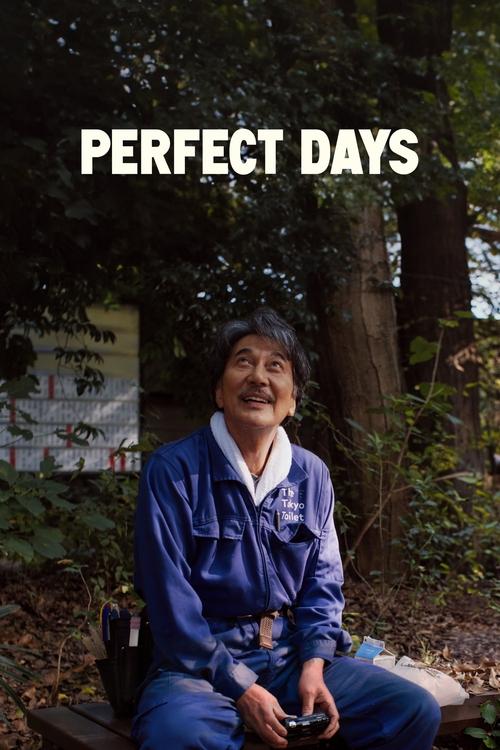
Wim Wenders returns to the screen with Perfect Days, a meditative character study set against the relentless energy of Tokyo. The film introduces Hirayama, portrayed by Koji Yakusho, a man who finds profound dignity in his daily work cleaning public restrooms across the city's parks and streets. While his job keeps him grounded in the physical world, his life outside those walls is filled with simple, deliberate pleasures: listening to classic rock on cassette tapes, reading paperback novels during breaks, and photographing sunlight filtering through city trees.
This slice-of-life drama avoids grand conflicts or traditional plot arcs in favor of observing the quiet rhythm of existence. Through Hirayama's eyes, the audience learns to slow down and appreciate the mundane architecture of modern life. The narrative structure mimics the cyclical nature of his routine, showing how a life devoid of grand ambitions can still be rich with meaning if one knows where to look for it.
Stream
Availability and pricing can change. Confirm on the provider's site before purchasing.
Hirayama wakes before dawn in his small apartment, prepares a modest breakfast, and begins his day by commuting to his assigned locations. He carries a portable cassette player and a compact camera, tools that define his personal sanctuary within the chaotic metropolis. His work involves meticulously scrubbing floors, sanitizing sinks, and ensuring every facility is spotless before the morning rush begins. Colleagues like Takashi greet him with friendly curiosity, often trying to pry into his private life, but Hirayama remains politely guarded, offering only brief smiles and nods.
During his lunch breaks, he retreats to the park benches or shaded corners of the city to read paperbacks from a local library. These moments of stillness are punctuated by his ritual of photography, where he captures images of light dancing through leaves or patterns formed by shadows on pavement. A young woman named Aya crosses his path while he photographs trees, sparking a brief, wordless connection that hints at the possibility of human contact without the need for intrusive questions.
The film slowly weaves in threads of his past through interactions with his niece, Niko, who visits periodically. She brings news of her own life and tries to understand why her uncle chose such a solitary existence. Their conversations reveal a deep, unspoken bond, though Niko sometimes struggles to reconcile her mother's history with her uncle's current reality. Fleeting encounters with a homeless man and an elderly woman add layers to the tapestry of survival and memory that exists within Tokyo's urban landscape.
As days pass, Hirayama maintains his stoic demeanor even when faced with minor inconveniences or unexpected disruptions. The narrative builds not through dramatic events but through the accumulation of small, meaningful moments. The viewer is invited to question the depth of his past and the reasons behind his chosen isolation. The story asks whether a life devoid of complex relationships can be considered perfect, or if perfection lies in the acceptance of one's circumstances and the ability to find joy in the smallest details. Through Hirayama's perspective, the audience is encouraged to observe the world with fresh eyes, finding the extraordinary hidden within the ordinary.
The film culminates not with a resolution to a problem but with a reaffirmation of Hirayama's commitment to his way of life. He continues to clean toilets, listen to music, and take photos, leaving the viewer with a lingering sense of calm and reflection. The cyclical nature of his days suggests that happiness is not a destination but a practice, found in the consistency of routine and the appreciation of the present moment.
Official International Trailer [Subtitled]
Official US Trailer [Subtitled]
Trailer [Subtitled]
Critical Consensus
Perfect Days stands as a masterclass in restraint, featuring a career-best performance from Koji Yakusho. Director Wim Wenders crafts a deeply moving meditation on the dignity of ordinary labor and the beauty found in routine. The film eschews dramatic flair for a quiet, contemplative pace that rewards patience, resulting in a profoundly humanistic portrait of a man who has learned to find joy in the simplest moments of life.
“Wim Wenders has made a beautiful, gentle film about a man who finds happiness in the most unlikely of jobs. It is a masterpiece of understatement.”
Peter Bradshaw
The Guardian
“A stunningly patient and deeply humane film that finds the extraordinary in the mundane. Koji Yakusho delivers a performance of quiet power.”
David Ehrlich
IndieWire
“Perfect Days is a film that respects its subject and its audience, offering a rare glimpse into the inner life of a man who has found peace in the chaos of modernity.”
A.O. Scott
The New York Times
“Wenders has created a film that feels like a warm hug for the soul, celebrating the simple joys of life with a grace and sensitivity that is truly remarkable.”
Owen Gleiberman
Variety
Koji Yakusho
Hirayama
Tokio Emoto
Takashi
Arisa Nakano
Niko
Aoi Yamada
Aya
Min Tanaka
Homeless Man
Miyako Tanaka
Old Lady with Brush
Director
Wim Wenders
Writers
Wim Wenders, Takuma Takasaki
Cinematographer
Franz Lustig
Producers
Takuma Takasaki, Wim Wenders, Koji Yanai
Cannes Film Festival (2023)
Best Actor: Won
European Film Awards (2024)
Best Film: Nominated
Golden Globe Awards (2024)
Best Foreign Language Film: Nominated
Academy Awards (2024)
Best International Feature Film: Nominated
BAFTA Awards (2024)
Best Film Not in the English Language: Nominated
Join the community
fans discussing