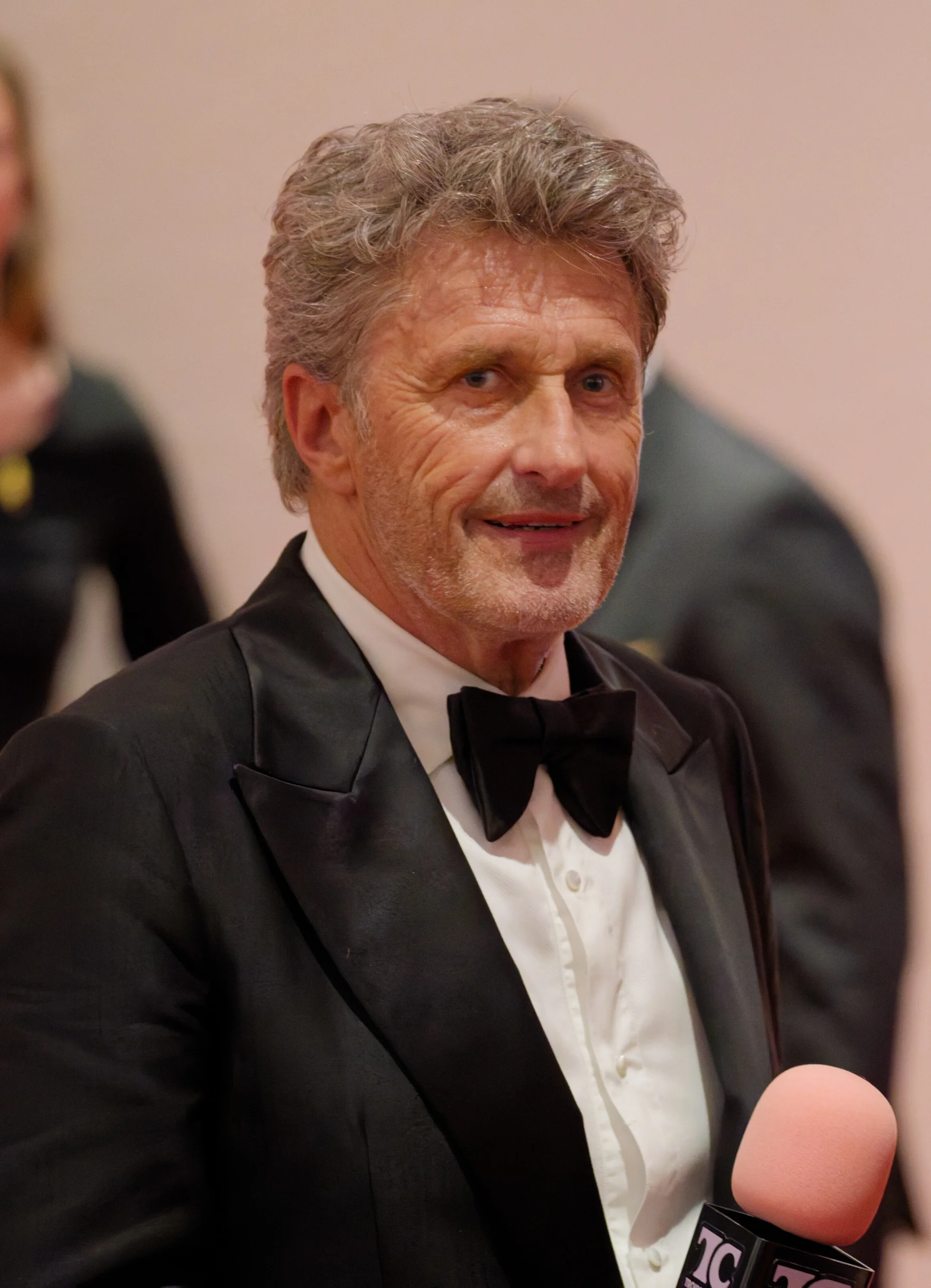
Paweł Pawlikowski
 Poland
film director•screenwriter•television director
Also known as: Paweł Aleksander Pawlikowski, Pawel Pawlikowski
Birthday
September 15, 1957
Birth Sign
Virgo
Birthplace
Warsaw, Poland
Age
69 years old
About
Paweł Aleksander Pawlikowski is a Polish film director, screenwriter, and television director. He is widely recognized for crafting visually striking and emotionally complex films that often explore themes of identity, memory, and historical upheaval. His work has gained significant international attention, marked by numerous prestigious awards, including two Best Director honors from the Cannes Film Festival and an Academy Award for Best International Feature Film. Pawlikowski maintains a distinctive artistic voice, known for his precise storytelling and evocative black-and-white cinematography in many of his projects. His films continue to draw a global audience, finding success in both arthouse circuits and broader cinematic release, resonating with audiences and critics alike.
Early Life & Background
Paweł Pawlikowski's formative years were marked by significant geographical shifts and cultural immersion. Born in Warsaw, Poland, in 1957, his family's move to England and Germany during his mid-teens exposed him to diverse European environments and intellectual currents. This early displacement likely contributed to his later cinematic explorations of identity, memory, and belonging, themes frequently woven into his feature films. His academic pursuits led him to study literature and philosophy at the University of Oxford and the University of London, providing a strong intellectual foundation for his storytelling and critical perspective.
He embarked on his filmmaking journey in the 1990s, initially making a name for himself in British television as a documentary filmmaker. During this period, he directed several acclaimed documentaries for the BBC, including works that examined post-Cold War Eastern Europe and personal narratives of displacement. These early films, such as Serbian Epics (1992) and Tripping with Zhirinovsky (1995), garnered considerable praise, showcasing his talent for intimate storytelling and keen observational skills. This documentary phase served as a crucial training ground, allowing him to hone his craft in visual narrative and character development, establishing his reputation for creating compelling, fact-based stories before he ventured into the world of fictional feature films at the turn of the millennium.
Career Growth
Pawlikowski transitioned into feature filmmaking around the start of the new millennium, quickly making an impact with his distinct directorial voice. His 2000 film, Last Resort, a drama about a young Russian mother seeking asylum in England, garnered international attention and critical approval. This was followed by My Summer of Love in 2004, a coming-of-age story set in rural England, which further solidified his reputation for crafting atmospheric, character-driven narratives. The film earned a BAFTA Award for Best British Film, signaling his growing prominence in the industry.
The 2010s marked a period of immense international acclaim for Pawlikowski. His 2013 black-and-white drama, Ida, became a major critical and commercial success, earning widespread praise for its striking cinematography and profound storytelling. The film made history by securing the Academy Award for Best International Feature Film in 2015, a significant achievement for Polish cinema. He continued this trajectory with Cold War in 2018, another critically lauded black-and-white film exploring a tumultuous romance against the backdrop of post-war Europe. This film brought him the Best Director award at the Cannes Film Festival and an Academy Award nomination for Best Director.
Most recently, Pawlikowski premiered his film Fatherland in 2026. This post-war drama, featuring Sandra Hüller, opened the 32nd Sarajevo Film Festival and debuted at Cannes, where he once again received the Best Director award. A film by Pawlikowski was also part of the main slate for the 64th New York Film Festival in 2026, demonstrating his ongoing presence and influence in global cinema.
Career Timeline
Public Image & Style
Paweł Pawlikowski maintains a public image characterized by artistic integrity and a thoughtful, understated approach to his craft. He is often perceived as a filmmaker deeply committed to exploring complex human emotions and historical contexts, frequently using stark, elegant black-and-white cinematography to enhance the emotional depth and timeless quality of his narratives. This aesthetic choice has become a signature element of his work, distinguishing his films in the contemporary landscape.
Critics and audiences connect with his ability to tell intimate stories that resonate on a universal level, often touching on themes of identity, memory, and the search for meaning in challenging circumstances. His public appearances and interviews often reveal a reflective and intellectual personality, focused on the art of filmmaking rather than celebrity. He is seen as a director who values precision and subtlety, allowing his films to speak for themselves with their visual poetry and profound emotional impact.
Fame & Fandom (iFAMOUS Rankings)
Paweł Pawlikowski stands as a figure of immense prestige within the global cinema landscape, though his standing is measured by critical acclaim rather than mass-market ubiquity. As of August 2026, iFANN has evaluated this profile and determined that he does not currently hold a placement in the published Global Top 1,000 rankings or any scope-specific top lists. This absence of a numeric rank reflects a trajectory where influence is concentrated among cinephiles, industry professionals, and festival attendees rather than the general public. His audience consists primarily of those who engage with art-house narratives and the specific aesthetic of black-and-white cinematography, a demographic that follows his work through festival circuits like Cannes and Sarajevo rather than organized fan clubs. There is no formal name for his supporters, nor are there documented rituals, birthday campaigns, or fan-funded projects dedicated to him. Instead, his legacy is defined by high-stakes moments in film history, such as the Academy Award wins for *Ida* and *Cold War*, which cemented his reputation among serious moviegoers. The premiere of his latest film, *Fatherland*, at the 32nd Sarajevo Film Festival in August 2026 further illustrates his enduring relevance, drawing attention from critics and industry insiders alike. These events serve as the primary touchstones for his cultural mythology, distinguishing him from celebrities driven by viral folklore. While he lacks the chaotic energy of pop culture icons, his presence at major festivals signals a consistent ability to command respect and generate significant discourse within the international film community.
Interesting Facts and Legends
Pawlikowski did not begin learning English until age 14 after his family relocated from Poland, yet he subsequently pursued higher education in England. He prefers shooting films chronologically to allow narratives to evolve organically and grant actors greater freedom. After years living in the United Kingdom and Germany, he returned to reside in Warsaw, Poland, in 2007. He has occasionally appeared in small acting roles within his own documentary productions. A defining moment in his career occurred when *Ida* won the Academy Award for Best Foreign Language Feature in 2014, establishing him as a master of minimalist storytelling and stark visual style. This achievement was followed by another Oscar win for Best Director for *Cold War*, reinforcing his status as a rare director to secure multiple accolades for foreign-language cinema. More recently, his film *Fatherland* opened the 32nd Sarajevo Film Festival in August 2026, an event celebrated for its exploration of themes regarding home, death, and inheritance. These milestones form the core of his legend, retold within the film industry as proof of his artistic power and consistency over decades.
Notable Quotes
“The father-daughter relationship at the center of this heady literary movie about the 'collapse of Europe,' he said, 'seems to be the only thing that works.'”
“The real inspiration for how this film looks was my impatience with cinema, where the vein of cinema is going. I wanted to make an anti-cinema film where there are very few cuts and very long takes, almost static shots.”
Family & Personal Life
Paweł Pawlikowski was born in Warsaw, Poland, in 1957. His family background includes a mother who was a doctor and a father who worked as a university lecturer. During his youth, his parents' relationship experienced significant challenges, with his father eventually leaving the country with another woman. These early family dynamics and the subsequent relocation from Poland to England and Germany during his mid-teens undoubtedly shaped his perspective and informed some of the complex interpersonal themes explored in his cinematic works. Today, Pawlikowski is married to model and actress Małgosia Bela, and they maintain a private life together in Warsaw.
Notable Connections
Paweł Pawlikowski is often associated with a distinct European art-house tradition, drawing comparisons to directors known for their precise visual style and profound character studies. He frequently collaborates with a consistent team of cinematographers and actors, including Łukasz Żal, who shot both Ida and Cold War, contributing to the coherent aesthetic across his works. His films resonate with audiences who appreciate cinema that delves into complex historical and personal narratives with a meditative pace and strong visual composition.
Relationships & Dating History
Paweł Pawlikowski's primary public relationship has been his marriage to Małgosia Bela. Bela is a well-regarded Polish model and actress, known for her work in both high fashion and independent cinema. Their marriage unites two accomplished individuals within the creative industries, though details of their private life are generally kept out of the public eye. The couple's commitment has provided a steady personal foundation throughout Pawlikowski's demanding and internationally focused filmmaking career. While specific dates of their marriage are not widely publicized, their union has been a consistent aspect of his personal narrative for a considerable period. As of 2026, Paweł Pawlikowski remains married to Małgosia Bela, continuing their life together away from intense media scrutiny.
- MarriedMałgosia BelaCurrentPaweł Pawlikowski is married to the Polish model and actress Małgosia Bela.
Salary, Net Worth In 2026
$15 Million
iFANN Editorial Team estimate
iFANN currently estimates Paweł Pawlikowski's financial standing at $15 Million as of 2026, a figure derived from his extensive tenure as a film director and screenwriter. A substantial portion of this wealth originates from fees and salaries associated with directing critically acclaimed feature films including Last Resort, My Summer of Love, Ida, Cold War, and Fatherland. These high-profile productions, particularly those garnering international awards like the Academy Award and multiple Cannes Best Director honors, command substantial compensation for their creative leads in the global film industry. Beyond his directorial work, Pawlikowski's contributions as a screenwriter for many of his own films also represent a consistent income stream, providing both upfront payments for scripts and ongoing royalties from distribution and licensing agreements for his intellectual property. His success with films that achieve both critical praise and international distribution ensures continued revenue streams over time. While specific figures for his film contracts are not publicly disclosed, his consistent output of successful and award-winning cinema over more than two decades indicates a steady accumulation of wealth. His early career in British television as a documentary filmmaker also provided foundational earnings that contributed to his initial financial growth. Furthermore, it is common for established filmmakers of his stature to engage in other financially beneficial activities, such as serving on film festival juries and giving masterclasses.
Awards Won (25)
Pawlikowski has received significant recognition for his directorial work, highlighted by two Best Director awards from the Cannes Film Festival for Cold War in 2018 and Fatherland in 2026. His film Ida made history by winning the Academy Award for Best International Feature Film in 2015, a landmark achievement for Polish cinema. These accolades underscore his consistent artistic excellence and impact on the global film stage.
2015 · Best International Feature Film
Ida
2026 · Best Director
Fatherland
2018 · Best Director
Cold War
Known For
Fatherland
2026 · Director, Writer
Cold War
2018 · Director, Writer
Ida
2013 · Director, Writer
My Summer of Love
2004 · Director, Writer
Last Resort
2000 · Director, Writer
Keywords
Sources
Quick Facts
- Profession
- film director, screenwriter, television director
- Born
- September 15, 1957
- Birthplace
- Warsaw, Poland
- Gender
- Male
- Spouse
- Małgosia Bela
- Birth Sign
- Virgo
- Age
- 69
Personal Details
- Full Name
- Paweł Aleksander Pawlikowski
- Spouse
- Małgosia Bela
- Children
- Education
- University of Oxford · University of London
Filmography
9
Total
5
Film
4
TV
Frequently Asked Questions
Who is Paweł Pawlikowski?
What are Paweł Pawlikowski's most famous films?
What awards has Paweł Pawlikowski won?
Where was Paweł Pawlikowski born?
Is Paweł Pawlikowski married?
Join the community
fans discussing