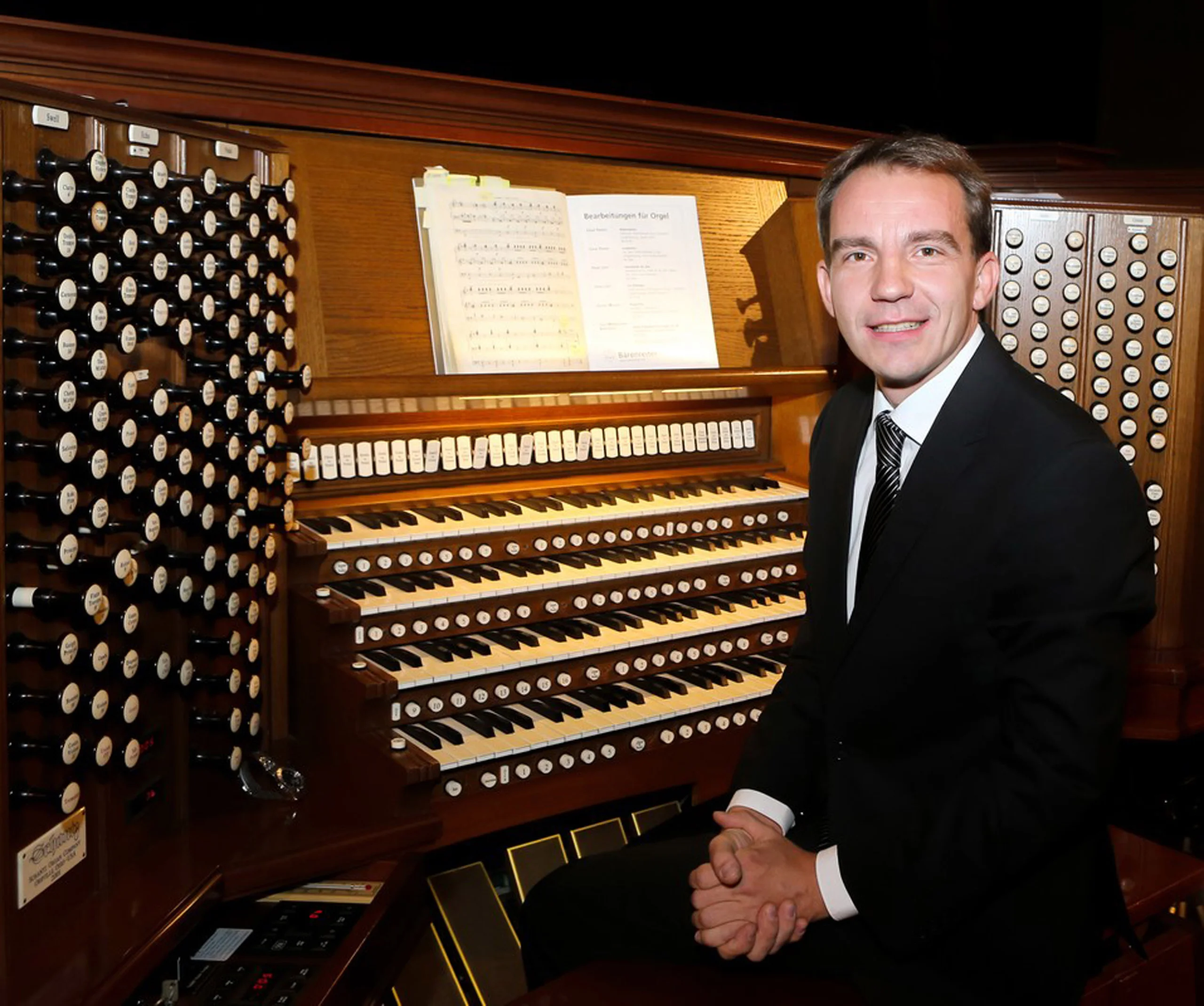
Pavel Kohout
 Czechia
Birthday
July 20, 1928
Birth Sign
Cancer
Birthplace
Prague, Czechoslovakia
Age
98 years old
About
Pavel Kohout is a Czech-Austrian novelist, playwright, poet, and director whose life and work straddle two nations and two political eras. Born in Prague in 1928, he first gained prominence as a loyal voice of the communist regime, then became one of its most fearless critics, a transformation that cost him his homeland. As of 2026, at 98, he remains a towering figure in Central European letters, with a body of work that includes dozens of plays, novels, and essays translated into over 30 languages. His plays The Firebird and Poor Murderer are staples of European theater, and his novel Katyně is studied as a classic of dissident literature.
Kohout's role as a founding signatory of Charter 77 in 1977 cemented his status as a moral authority. After the Velvet Revolution, he split his time between Vienna and Prague, writing in both Czech and German. Fans admire his refusal to simplify his own history, and his recent work continues to draw parallels between Cold War-era dissent and today's political pressures. He is a rare figure who has lived through regime change, exile, and reconciliation, and his voice remains sharp and relevant.
Early Life & Background
Pavel Kohout grew up in Prague during the 1930s and 1940s, coming of age under Nazi occupation and then the post-war communist takeover. His father, a bank clerk, and his mother, a housewife, were not politically active, but the family's middle-class background would later mark him as suspect to the regime. He joined the Communist Party in 1945, at 17, genuinely believing in the socialist project after the war's devastation. He studied dramaturgy and directing at the Academy of Performing Arts (AMU), where he absorbed the avant-garde theater ideas that would shape his early work.
In the early 1950s, Kohout wrote poetry and journalism that lined up with Socialist Realism, and he rose quickly through the cultural bureaucracy. He worked as an editor at the literary magazine Květen and wrote propagandistic plays like Dobrá píseň (A Good Song). His first major success came with the play Zářijové noci (September Nights) in 1955, which won state approval. For a decade, he was a model cultural functionary, even traveling to the Soviet Union to study Soviet theater. But by the early 1960s, he began to chafe against censorship, and his work started to carry subtle critiques of the system. The thaw of the Prague Spring in 1968 gave him room to push further, but the Soviet invasion in August of that year shattered his loyalty to the regime.
Career Growth
Kohout's career took a dramatic turn after the Prague Spring. In 1969, he was expelled from the Communist Party and his works were banned in Czechoslovakia. He continued writing underground, and in 1973, while on a trip to Austria, he was stripped of his citizenship and barred from returning. He settled in Vienna, where he began writing in German as well as Czech, reaching a new audience. His play The Firebird (1977) premiered in Germany and became a touchstone for dissident theater, using a fairy-tale frame to explore the cost of speaking truth to power. Poor Murderer (1976), a dark comedy about a man who confesses to a crime he didn't commit, was staged across Europe and later on Broadway.
His novel Katyně (1980), about a female executioner in a totalitarian state, was banned in Czechoslovakia but circulated widely in samizdat. After the Velvet Revolution in 1989, Kohout returned to Prague to a hero's welcome. He resumed publishing in Czech and continued to work in theater and film, directing productions of his own plays. In the 1990s and 2000s, he wrote novels like Hvězdná hodina vrahů (The Star Hour of Murderers) and Druhé kolo (The Second Round), which blended crime fiction with political history. In 2024, at 96, he joined the strategic team of the global consultancy VML, a surprising move that highlighted his enduring engagement with contemporary culture.
Career Timeline
Public Image & Style
Kohout's public image is that of a principled, slightly cantankerous elder statesman of letters. He is known for his sharp wit and his refusal to romanticize his own past, often admitting that he was once a true believer in communism. In the Czech Republic, he is respected as a moral compass who paid a heavy price for his convictions. In Austria, he is seen as a bridge figure who brought Central European concerns into the German-speaking literary world. He rarely gives interviews, but when he does, he speaks with a directness that fans find refreshing. His official website, pavel-kohout.com, serves as an archive of his work and speeches. He has no social media presence, and he prefers handwritten drafts to computers, a quirk that endears him to traditionalists.
Fame & Fandom (iFAMOUS Rankings)
Pavel Kohout commands a devoted but quiet audience, distinct from the frenzied adoration reserved for pop icons. His readers and theatergoers are scholars, dissidents, and lovers of Central European literature who engage with his work through study and performance rather than fan clubs or viral campaigns. There is no formal name for this collective; they are simply those who follow the trajectory of a man who walked the line between state propaganda and fearless opposition. The mythology surrounding him is built on historical weight, the Prague Spring, the signing of Charter 77, and his literary exile, rather than stadium-filling moments or internet-driven rituals. While he lacks a branded fandom, his influence permeates academic circles and stages across Europe where his plays remain staples. This enduring relevance is quantified by recent global metrics that track attention across media coverage, search activity, and cultural consumption signals worldwide. According to the iFANN Global Fame Rankings, Pavel Kohout is currently the 52nd most famous person in Czechia and stands as the 86th most famous person from Czechia, holding steady positions that reflect his status as a towering figure in letters.
Interesting Facts and Legends
Pavel Kohout's surname translates to "rooster" in Czech, an image he occasionally wielded in his early pro-regime writings before turning it into a symbol of resistance. During the Prague Spring, he penned a poem likening Soviet tanks to a "giant rooster" crushing the garden of freedom, a metaphor that became legendary within samizdat circles. He writes fluently in both Czech and German, noting that he dreams in both languages. An avid chess player, he drew inspiration from a specific chess move for his play Poor Murderer. Trained as a director, he has staged his own works in Vienna, Prague, and Berlin. In 2018, he appeared on a Czech postage stamp to mark his 90th birthday. A lifelong smoker until his 80s, he attributes his longevity to "stubbornness and red wine." Historical records confirm his role as a founding signatory of Charter 77, transforming him from a regime loyalist into a symbol of human rights opposition.
Notable Quotes
“Freedom is not a gift; it is a responsibility that must be claimed every day.”
“The truth is the only weapon that cannot be confiscated.”
“I am a writer, not a politician. But when politics kills the soul, the writer must speak.”
Family & Personal Life
Kohout's parents were middle-class Prague residents; his father worked as a bank clerk, and his mother was a housewife. He had one younger sister, who died in the 1990s. His first wife was actress Alena Vránová, whom he married in the early 1950s; they had no children and divorced in the mid-1960s. His second wife, Anna Kohoutová, was a teacher; they married in the late 1960s and divorced in the 1970s, also without children. His third wife, Jelena Mašínová, was a fellow dissident and translator; they married in 1978 in Vienna and remained together until her death in 2020. She was his companion through the long exile and his return to Prague. Kohout has no biological children, but he has been a mentor to younger Czech writers, and he maintains close ties with his stepchildren from Mašínová's first marriage.
Notable Connections
Kohout's closest collaborator and friend was Václav Havel, with whom he co-authored the Charter 77 manifesto. He also admired Nobel laureate Jaroslav Seifert, whose poetry influenced his early work. His first wife, Alena Vránová, was a celebrated actress, and his third wife, Jelena Mašínová, was a translator who helped bring his work to German readers. In 2024, he worked with Zuzana Foktová at VML.
Relationships & Dating History
Kohout's first marriage was to actress Alena Vránová in the early 1950s. They met through the Prague theater scene, where she was a rising star. The marriage ended in divorce in the mid-1960s, and they had no children. His second wife, Anna Kohoutová, was a teacher from a literary family. They married in the late 1960s, but the political turmoil of 1968 put strain on the relationship, and they divorced in the mid-1970s. His third and longest marriage was to dissident and translator Jelena Mašínová, whom he married in Vienna in 1978. She was his anchor through exile and his return to Prague. They remained together until her death in 2020. As of 2026, Kohout is widowed and has not remarried.
- MarriedAlena Vránová1952 - 1965Met through Prague theater; divorced without children.
- MarriedAnna Kohoutová1968 - 1975Married during political turmoil; divorced amicably.
- MarriedJelena Mašínová1978 - 2020Companion through exile; remained together until her death.
Salary, Net Worth In 2026
$3 Million
iFANN Editorial Team estimate
Per iFANN's editorial analysis, Pavel Kohout's net worth in 2026 is estimated at $3 million. This figure reflects a lifetime of literary royalties and theater licensing fees rather than commercial ventures. His primary income comes from book sales, with The Firebird and Katyně still selling steadily in multiple languages. Theater productions of his plays, particularly in Germany and Austria, generate ongoing royalties. He also owns a modest apartment in Vienna and a cottage in the Czech countryside, both acquired after 1989. He has never pursued endorsements or business deals, and his estate is managed by his literary agent in Prague. Over the years, his net worth has grown gradually, driven by the resurgence of interest in dissident literature and the continued staging of his plays.
Awards Won (3)
Pavel Kohout has received numerous honors for his literary and human rights work. In 2013, he was awarded the Medal of Merit by Czech President Miloš Zeman. He has also received honorary doctorates from Charles University in Prague and the University of Vienna. His play The Firebird won the German Critics' Prize in 1978, and his novel Katyně was shortlisted for the Austrian State Prize in 1981. He was inducted into the European Academy of Sciences and Arts in 2005.
2013 · State Honor
Lifetime achievement
1978 · Theater
The Firebird
Known For
The Firebird
1977 · Playwright
Poor Murderer
1976 · Playwright
Katyně
1980 · Author
Keywords
Sources
Quick Facts
- Profession
- writer, director, playwright
- Born
- July 20, 1928
- Birthplace
- Prague, Czechoslovakia
- Gender
- Male
- Spouse
- Alena Vránová, Anna Kohoutová, Jelena Mašínová
- Birth Sign
- Cancer
Personal Details
- Full Name
- Pavel Kohout
- Spouse
- Jelena Mašínová
- Education
- Academy of Performing Arts in Prague (AMU)
Filmography
12
Total
8
Film
4
TV
Frequently Asked Questions
How old is Pavel Kohout in 2026?
Why was Pavel Kohout exiled from Czechoslovakia?
What is Pavel Kohout's most famous work?
Was Pavel Kohout a communist?
How many times has Pavel Kohout been married?
Similar People
Join the community
fans discussing