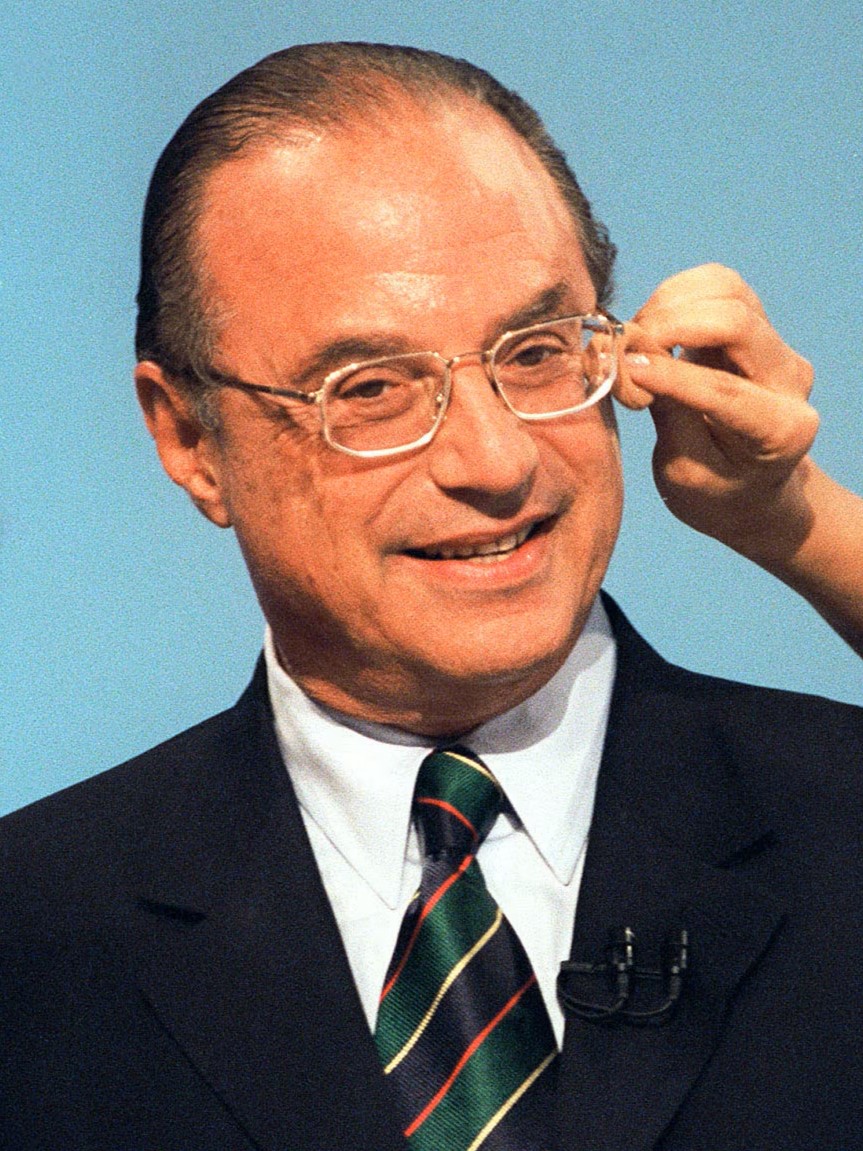
Paulo Maluf
 Brazil
civil engineer•businessperson•politician
Birthday
September 3, 1931
Birth Sign
Virgo
Birthplace
São Paulo, Brazil
Age
95 years old
About
Paulo Salim Maluf is a Brazilian civil engineer, businessman, and politician whose public career stretched across more than four decades. Born in São Paulo, he served as governor of São Paulo state, mayor of the city of São Paulo, and a federal congressman, building a reputation for ambitious infrastructure projects and a populist style. His name remains a fixture in Brazilian political history, both for the scale of his public works and for the corruption allegations that trailed him for years.
Maluf's political trajectory peaked during Brazil's military regime and the early democratic era. He led the São Paulo branch of the Progressive Party (PP), a successor to the military-era National Renewal Alliance (ARENA). In 2017, he was convicted of money laundering and sentenced to prison, though his advanced age and health problems later moved him to house arrest. An Interpol Red Notice had sought his extradition to the United States on related charges. As of 2026, he remains a controversial figure, remembered for his engineering legacy and his legal battles.
Early Life & Background
Paulo Salim Maluf was born on September 3, 1931, in São Paulo, Brazil, into a family of Lebanese descent. He studied civil engineering, a background that would shape his political focus on large-scale construction. Details of his early life and schooling are sparse, but his engineering training positioned him for a career in public works.
Maluf entered politics during the military dictatorship that ruled Brazil from 1964 to 1985. His first major role came in 1969 when he was appointed mayor of São Paulo by the military government, a position he held until 1971. This appointment marked the beginning of a long association with the regime's infrastructure-driven development model. His early years in office were defined by a push for major urban projects, setting the tone for his later campaigns.
Career Growth
Maluf's breakthrough came with his appointment as mayor of São Paulo in 1969, a role he used to launch ambitious public works. He later served as governor of São Paulo from 1979 to 1982, overseeing the construction of hundreds of miles of roads and other infrastructure. His tenure was marked by a focus on large projects, which won him popular support but also drew scrutiny over cost overruns and corruption allegations.
After his governorship, Maluf ran for president in 1985 and 1989, though he did not win. He returned to the mayor's office in 1993, serving until 1996, and remained active in national politics as a federal congressman. His career continued to be dogged by legal troubles, culminating in his 2017 conviction for money laundering. In February 2025, the Supreme Court archived an investigation against him due to the statute of limitations, effectively closing a long chapter of legal battles.
Public Image & Style
Paulo Maluf's public image is a study in contrasts. To his supporters, he was a builder who got things done, a man who could point to concrete achievements like highways and bridges. To his critics, he embodied the corruption that plagued Brazilian politics, a figure who used public office for private gain. His style was old-school populist: confident, sometimes abrasive, and always focused on the tangible results of his projects.
Media coverage of Maluf has been overwhelmingly negative in recent decades, focusing on his legal battles and the billions allegedly siphoned from public coffers. Yet he maintained a base of loyal followers who appreciated his directness and his focus on development. His name has become a byword for a certain kind of political impunity, but also for the infrastructure that shaped modern São Paulo.
Fame & Fandom (iFAMOUS Rankings)
Paulo Maluf commands a unique place in the Brazilian cultural landscape, though not through the adoration reserved for entertainers. His legacy is defined by a complex mix of infrastructural ambition and enduring controversy, creating a public figure who is studied more for his political maneuvers than celebrated as a pop icon. There is no organized fanbase with rituals, birthday campaigns, or official names dedicated to him; interactions surrounding Maluf remain strictly within the realms of political discourse, legal analysis, and historical review. The stories that circulate are not tales of viral moments or crowd-shutdowns but rather documented accounts of financial impropriety and high-stakes legal battles that have shaped modern Brazilian politics. From the Jersey bank account revelations to his eventual conviction for electoral fraud, his life provides a case study in power and consequence rather than a narrative of fandom worship. Despite the absence of a traditional following, his name remains a fixture in global political commentary. According to the latest evaluation from iFANN, Paulo Maluf is currently evaluated but does not hold a placement in the published Global Top 1,000 rankings. This status reflects a profile where fame is derived from infamy and historical significance rather than current mass consumption metrics. While he lacks a specific ordinal rank in the global hierarchy, his presence in the records confirms a sustained level of recognition among those tracking international political history.
Interesting Facts and Legends
Maluf's name became shorthand for a certain kind of political cynicism in Brazil. A phrase often attributed to him, though he denied saying it, is "Rouba, mas faz" ("Steal, but get things done"), which captures the trade-off some voters seemed willing to accept. The saying has outlived his career and remains a reference point in Brazilian political commentary. He appeared in the documentary The Edge of Democracy (2019) and in an episode of the Brazilian talk show Roda Viva in 1986. Maluf also holds a place in the public record for his lavish lifestyle, which was a subject of media fascination. His Facebook page has attracted over 28,000 followers, a modest digital footprint for a politician of his era. The lore surrounding Maluf includes the dramatic revelation of his hidden millions in a Jersey bank account, an incident that cemented his reputation for financial secrecy. Another defining chapter occurred when he was jailed for corruption, marking a definitive end to his ability to evade long-standing allegations. By 2018, the Supreme Federal Court convicted him of electoral fraud, further solidifying his status as a figure of legal infamy. In 2020, reports indicated that an inheritance worth R$ 128 million would be seized to indemnify São Paulo, turning his final assets into restitution for the state.
Family & Personal Life
Paulo Maluf has been married to Sylvia Lutfalla Maluf, and the couple has remained together through the ups and downs of his political career. Their marriage has been a rare constant in a life otherwise defined by public scrutiny. While details about his children are not widely publicized, his family has occasionally appeared in the media, particularly during his legal troubles. The Maluf family has connections to the business world, with his son Flavio Maluf involved in the company Eucatex, a wood panel manufacturer. The family's private life has largely stayed out of the headlines, though his wife has been a supportive presence at public events.
Relationships & Dating History
Paulo Maluf has been married to Sylvia Lutfalla Maluf for most of his adult life. The couple's relationship has been stable, with Sylvia standing by him through his political rise and his eventual conviction. There is no public record of any other significant romantic relationships, and the marriage appears to have been a cornerstone of his personal life.
As of 2026, Maluf remains married to Sylvia, and the couple continues to live together, though his health has been a concern in recent years. Their long marriage stands in contrast to the turmoil of his public career, offering a glimpse of a private life that was largely free of scandal.
- MarriedSylvia Lutfalla Maluf1955 - presentCurrentLong-term marriage that has endured through his political career and legal troubles.
Salary, Net Worth In 2026
$50 Million
iFANN Editorial Team estimate
As of 2026, iFANN currently estimates Paulo Maluf's net worth at $50 Million. This figure reflects the accumulation of wealth generated over decades of work as a civil engineer, businessman, and politician. His financial standing stems from diverse sources including his engineering firm, various investments, and the economic advantages gained through his political positions. In 2014, Forbes identified him as one of Brazil's richest politicians, though the exact figure was not disclosed at that time. Maluf's financial history is deeply intertwined with corruption scandals that have impacted his asset base. A court ruled in 2012 that he had accepted bribes related to public construction projects, and he was subsequently convicted of money laundering in 2017. These legal proceedings likely reduced his holdings, yet his family's business interests, particularly Eucatex, have maintained a steady income stream. The total valuation in 2026 represents a blend of legitimate commercial ventures and proceeds from a political career that frequently faced investigation.
Awards & Accolades
Known For
Governor of São Paulo
1979-1982 · Governor
Mayor of São Paulo
1993-1996 · Mayor
Federal Congressman
1983-2007 · Congressman
Keywords
Sources
Quick Facts
- Profession
- civil engineer, businessperson, politician
- Born
- September 3, 1931
- Birthplace
- São Paulo, Brazil
- Gender
- Male
- Spouse
- Sylvia Lutfalla Maluf
- Birth Sign
- Virgo
Personal Details
- Full Name
- Paulo Salim Maluf
- Spouse
- Sylvia Lutfalla Maluf
- Children
Filmography
2
Total
1
Film
1
TV
Frequently Asked Questions
What is Paulo Maluf's profession?
When was Paulo Maluf born?
What major political positions has Paulo Maluf held?
What legal issues has Paulo Maluf faced?
Who is Paulo Maluf married to?
Social Media
Join the community
fans discussing