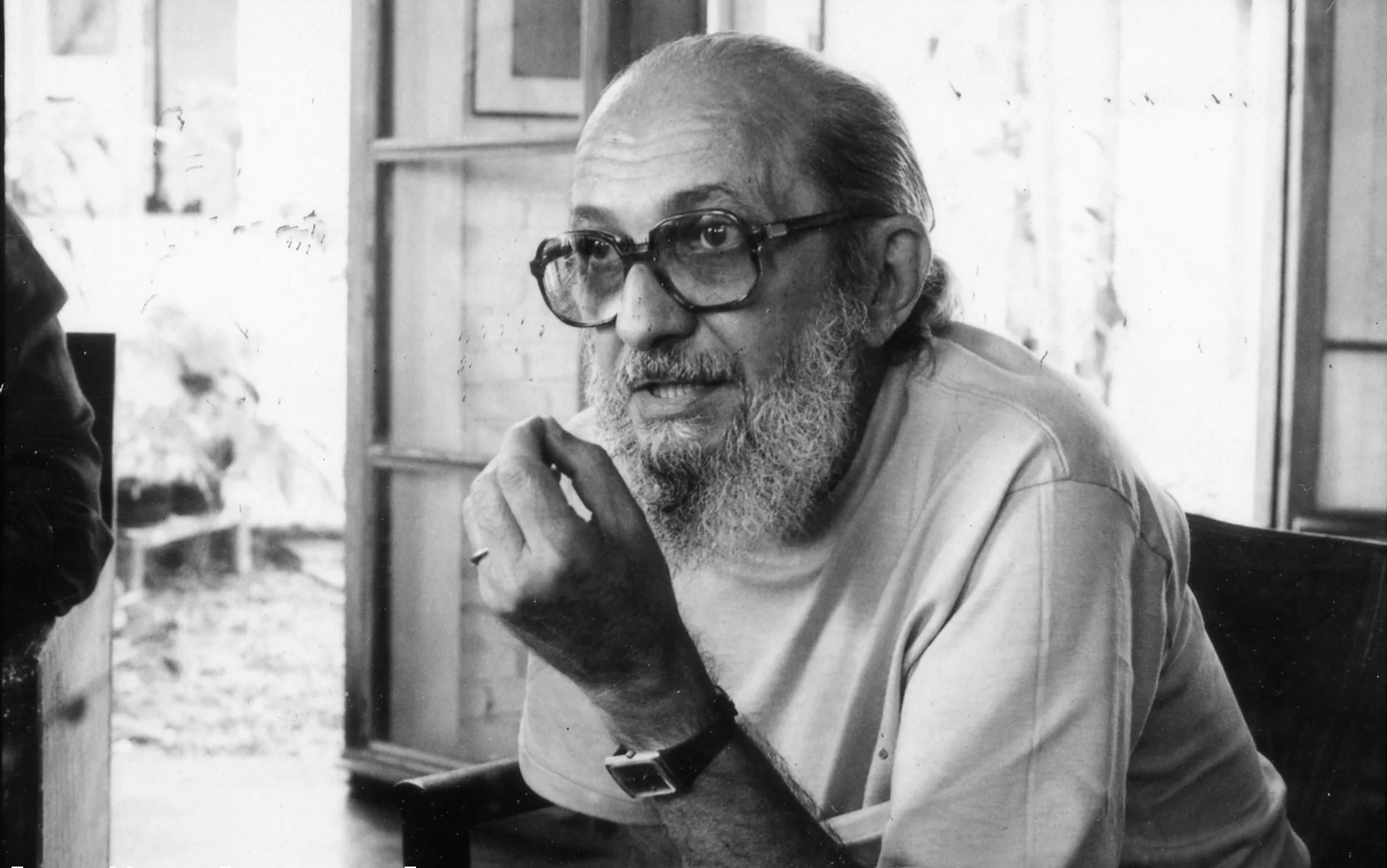
Paulo Freire
 Brazil
Also known as: Paulo Reglus Neves Freire
Birthday
September 19, 1921
Birth Sign
Virgo
Birthplace
Recife, Pernambuco, Brazil
Age
Died at 75
About
Paulo Freire was a Brazilian educator and philosopher whose ideas reshaped how the world thinks about teaching and learning. He is best known for developing critical pedagogy, an approach that treats education as a political act capable of liberating people from oppression. His landmark book, Pedagogy of the Oppressed, published in 1970, has sold millions of copies and remains a touchstone in education, sociology, and political theory. Freire's work influenced literacy campaigns across the globe, from Brazil to Guinea-Bissau, and his name is often spoken alongside John Dewey and Maria Montessori as one of the most important educational thinkers of the twentieth century.
His ideas continue to resonate with teachers, activists, and scholars who see education as a tool for social change. Freire's insistence on dialogue, mutual respect, and critical questioning challenged the traditional model of teacher as authority and student as passive recipient. He died on May 2, 1997, in São Paulo, but his intellectual legacy lives on in classrooms and movements worldwide. The Instituto Paulo Freire, founded to preserve his work, keeps his vision active in contemporary educational debates.
Early Life & Background
Paulo Reglus Neves Freire was born on September 19, 1921, in Recife, the capital of Brazil's northeastern state of Pernambuco. He was one of four children in a middle-class family that fell into hardship when the Great Depression struck in 1929. His father, a military officer with a heart condition, was forced into early retirement and died on October 31, 1934, leaving the family to survive on a modest widow's pension. Freire experienced hunger and poverty firsthand, and he later recalled, "I didn't understand anything because of my hunger. I wasn't dumb. It wasn't lack of interest. My social condition didn't allow me to have an education." He dropped out of elementary school to work and help support the family, but eventually earned a scholarship to attend secondary school at Oswaldo Cruz in Recife.
Freire enrolled in law school at the University of Recife in 1943, while also studying philosophy, particularly phenomenology, and the psychology of language. He was admitted to the bar but never practiced law, instead working as a secondary school Portuguese teacher. In 1944, he married Elza Maia Costa de Oliveira, a fellow teacher who deeply influenced his intellectual development. Freire graduated in 1947 with a thesis on adult literacy, showing an early commitment to educational reform. In 1946, he was appointed director of the Pernambuco Department of Education and Culture, where he worked among the illiterate poor. For about ten years, he worked for SESI, the Social Service of Industry, gathering experiences that shaped his doctoral dissertation and his later theories. His time in these roles, set against a Brazil where literacy was a requirement for voting, gave him direct insight into how education and power intersect.
Career Growth
Freire's breakthrough came in the early 1960s when his literacy methods were tested on a large scale. In 1962, working with 300 sugar cane workers, he enabled them to read and write in just 45 days. His programs, which ran under slogans like "Bare feet can also learn to read," caught the attention of the Brazilian government, and in 1963 he was appointed director of the Brazilian National Literacy Program. Plans were made to establish thousands of "culture circles" to reach millions of illiterate Brazilians, but the military coup of 1964 ended these efforts. Freire was jailed for his work, and after his release he went into exile.
During his exile, which lasted until 1979, Freire spent time in Chile and later in Geneva, where he served as an education advisor to the World Council of Churches. He wrote Pedagogy of the Oppressed in 1968, and it was published in 1970 to international acclaim. The book's core idea is that education should be a dialogue between teacher and student, not a one-way transfer of knowledge, and that this dialogue can help oppressed people understand and transform their world. Freire's methods proved effective: learners often achieved literacy in as little as 30 hours. He also worked on education reforms in former Portuguese colonies like Mozambique and Guinea-Bissau.
After returning to Brazil in 1979, Freire joined the Workers' Party and supported Lula, the future president. He oversaw Brazil's adult literacy project for over five years and collaborated on works such as A Pedagogy for Liberation (1987) and Literacy: Reading the Word and the World (1987). In 1989, he was appointed Secretary of Education for São Paulo, where he implemented his ideas in a major urban school system. He continued writing and teaching until his death in 1997, leaving behind a body of work that spans critical pedagogy, literacy, and social theory.
Career Timeline
Public Image & Style
Freire is widely regarded as the father of critical pedagogy, a term that has become central to progressive education. His public persona is that of a gentle but radical thinker, deeply committed to social justice. He was known for his humility and his ability to listen, traits that informed his pedagogical method. In Brazil, he is a national figure, honored for his contributions to literacy and democracy. Internationally, he is a touchstone for educators and activists, often cited in discussions of liberation theology, postcolonial theory, and social justice education. His face appears on stamps and in murals, and his name is attached to institutes and schools across the globe. Fans and followers, many of whom call themselves "Freireans," celebrate his birthday and his death anniversary with conferences and readings.
Fame & Fandom (iFAMOUS Rankings)
The legacy of Paulo Freire is not carried by a chorus of screaming fans or digital stans, but by the quiet, relentless dedication of educators, scholars, and activists who treat his texts as living documents. While there is no formal fandom name for this global movement, the community that keeps his work alive operates with the fervor of a religious order, gathering in university halls and literacy campaigns to dissect his ideas on liberation. This audience does not seek celebrity gossip; they seek tools for social transformation, making their engagement distinct from any pop-culture following. Their devotion is measured in syllabi additions, union votes at schools bearing his name, and the enduring power of his methods in postcolonial studies. The reach of this intellectual lineage is so vast that it has been quantified by the iFANN Global Fame Rankings. These rankings confirm that Freire remains a towering figure whose influence spans borders and generations without fading. He is currently the 22nd most famous person in Brazil, a standing confirmed by the same ranking. His prominence extends beyond national lines, placing him as the 66th most famous person from Brazil in the broader context of origin. Furthermore, his impact resonates deeply across the continent, securing his position as the 74th most famous person in Latin America. These placements reflect a steady hold on public consciousness, holding steady from the previous cycle.
Interesting Facts and Legends
Paulo Freire's first wife, Elza, served as his key intellectual partner, with biographer Moacir Gadotti crediting her for pushing him to pursue his studies and helping shape his pedagogical methods. A devout Catholic throughout his life, Freire blended Christian faith with Marxist analysis, drawing significant influence from liberation theology which emphasizes freedom and justice as central biblical themes. Before becoming a renowned philosopher, he worked as a grammar teacher in high school despite not finishing his own secondary education. His favorite analogy for oppressive education was the 'banking concept,' describing how teachers deposit knowledge into passive students rather than engaging them critically. One of his most quoted insights remains: 'Reading is not walking on the words; it's grasping the soul of them.' His contributions were formally recognized when he received the UNESCO Prize for Education for Peace in 1986, and in 1985 he and Elza jointly won the Prize for Outstanding Christian Educators. Beyond these accolades, his life included dramatic historical moments that became part of his lore. He was imprisoned and subsequently exiled by the Brazilian military dictatorship in the 1960s, spending years abroad before returning to implement his literacy programs on a municipal scale as Secretary of Education for São Paulo in 1989. Another legendary aspect of his legacy involves his successful work teaching illiterate Brazilian peasants to read through interactive methods, viewing literacy as a vehicle for social change that fundamentally reshaped how the world thinks about teaching and learning.
Notable Quotes
“The oppressed, having internalized the image of the oppressor and adopted his guidelines, are fearful of freedom.”
“Reading is not walking on the words; it's grasping the soul of them.”
“The educator has the duty of not being neutral.”
“The greatest humanistic and historical task of the oppressed: to liberate themselves...”
“Because love is an act of courage, not of fear, love is a commitment to others. No matter where the oppressed are found, the act of love is commitment to their cause--the cause of liberation.”
“The oppressors do not perceive their monopoly on having more as a privilege which dehumanizes others and themselves. They cannot see that, in the egoistic pursuit of having as a possessing class, they suffocate in their own possessions and no longer are; they merely have.”
Family & Personal Life
Freire's father, a military officer, died when Paulo was 13, leaving the family in financial strain. His mother supported the household on a widow's pension. Freire had three siblings, though details about them are scarce in public records. He married Elza Maia Costa de Oliveira in 1944, and the couple had five children, three of whom became educators. Elza died in 1986. In 1988, Freire remarried Ana Maria Araújo Freire, an educator who continues to promote his work. She has been active in preserving his legacy and has written about their life together. Freire's household in his later years, in São Paulo, was a hub of intellectual activity, with students and colleagues frequently visiting.
Notable Connections
Paulo Freire's life was intertwined with several key figures. His first wife, Elza Maia Costa de Oliveira, was a fellow educator who profoundly influenced his work. His second wife, Ana Maria Araújo Freire, continues to preserve his legacy. Moacir Gadotti, a Brazilian educator and biographer, wrote extensively about Freire's life and ideas. Freire also supported Luis Inácio Lula da Silva, the future president of Brazil, and his work was shaped by collaborations with scholars like Carlos Alberto Torres.
Relationships & Dating History
Paulo Freire's personal life was marked by two significant marriages. In 1944, he married Elza Maia Costa de Oliveira, an elementary school teacher he met while studying law. Elza was a crucial intellectual partner, and biographers credit her with encouraging his studies and helping him develop his educational methods. The couple had five children together and worked side by side for over four decades. In 1985, they jointly received the Prize for Outstanding Christian Educators. Elza died in 1986, a loss that deeply affected Freire.
Two years later, in 1988, Freire remarried Ana Maria Araújo Freire, an educator who shared his commitment to radical education. Their marriage lasted until his death in 1997. Ana Maria has since been a devoted steward of his legacy, editing his works and writing about their life together. At the time of his death, Freire was married to Ana Maria, and she continues to live in São Paulo, keeping his intellectual flame alive.
- MarriedElza Maia Costa de Oliveira1944 - 1986Fellow teacher and intellectual partner; had five children together.
- MarriedAna Maria Araújo Freire1988 - 1997CurrentEducator; married until Freire's death in 1997.
Death & Aftermath
Died
May 2, 1997 (aged 75)
Death Place
São Paulo, São Paulo, Brazil
Cause of Death
Pancreatic cancer
The news of Paulo Freire's passing sent a profound wave of mourning through educational circles worldwide, with tributes pouring in from UNESCO and Brazilian political leaders alike. His death triggered an immediate surge in the sales of his works, cementing his status as a foundational figure in critical pedagogy just as his legacy was being solidified for future generations. Schools globally observed moments of silence, while murals depicting the educator began to appear in São Paulo and other cities associated with his literacy campaigns. Freire passed away on May 2, 1997, at the Hospital das Clínicas in São Paulo, Brazil, at the age of 75. He had been serving as the Director of the Department of Education for the City of São Paulo when pancreatic cancer, diagnosed shortly before his final months, claimed his life.
Despite his declining health, he remained active in correspondence and administrative duties until his hospitalization. A public funeral service took place the following day, May 3, 1997, at the Capela do Morumbi in São Paulo. Thousands of students, teachers, union members, and political figures attended the event, including former President José Sarney and various ministers of education. Freire was subsequently buried in the Cemitério da Consolação, where speeches emphasized his lifelong commitment to social justice and the rights of the marginalized. Posthumous releases such as Pedagogy of Hope were widely distributed, and the Instituto Paulo Freire was established to preserve his intellectual property and support educational initiatives.
Net Worth (Estate Value)
$5 Million
iFANN Editorial Team estimate
Per iFANN's editorial analysis, the financial value of Paulo Freire's estate stands at $5 Million as of 2026. This valuation stems primarily from his intellectual property, specifically the continued commercial success of his landmark book, Pedagogy of the Oppressed, which remains a bestseller in education and social theory decades after its publication. Translated into dozens of languages and utilized in university courses globally, the text generates steady royalties for his heirs. The estate is overseen by his second wife, Ana Maria Araújo Freire, alongside the Instituto Paulo Freire, which manages licensing of his name and works for educational purposes. The institute also organizes events and publications that contribute to the estate's income. Although Freire himself was never wealthy by conventional standards during his lifetime, his posthumous earnings have grown steadily as his influence expanded into fields like critical pedagogy, postcolonial studies, and social justice education. Revenue streams include book royalties, speaking fees for representatives, and licensing of his name for educational programs. The net worth in 2026 reflects the enduring commercial and cultural value of his ideas.
Awards Won (3)
Paulo Freire received the UNESCO Prize for Education for Peace in 1986 and the King Balduin Prize for International Development. He and his first wife Elza jointly won the Prize for Outstanding Christian Educators in 1985. He also held numerous honorary doctorates from universities around the world.
1986 · Education
Lifetime achievement
1980 · International Development
Lifetime achievement
Known For
Pedagogy of the Oppressed
1970 · Author
Critical Pedagogy
1960 · Founder
Brazilian National Literacy Program
1963 · Director
Keywords
Sources
Quick Facts
- Profession
- educator, philosopher, writer
- Born
- September 19, 1921
- Birthplace
- Recife, Pernambuco, Brazil
- Died
- May 2, 1997
- Death Place
- São Paulo, Brazil
- Gender
- Male
- Birth Sign
- Virgo
- Notable Work
- Pedagogy of the Oppressed
- Awards
- UNESCO Prize for Education for Peace (1986)
Personal Details
- Full Name
- Paulo Reglus Neves Freire
- Spouse
- Ana Maria Araújo Freire
- Children
- 5
- Education
- University of Recife (law degree, 1947)
Frequently Asked Questions
What is Paulo Freire best known for?
Why was Paulo Freire exiled from Brazil?
How many children did Paulo Freire have?
Did Paulo Freire practice law?
What is critical pedagogy?
Similar People
Join the community
fans discussing