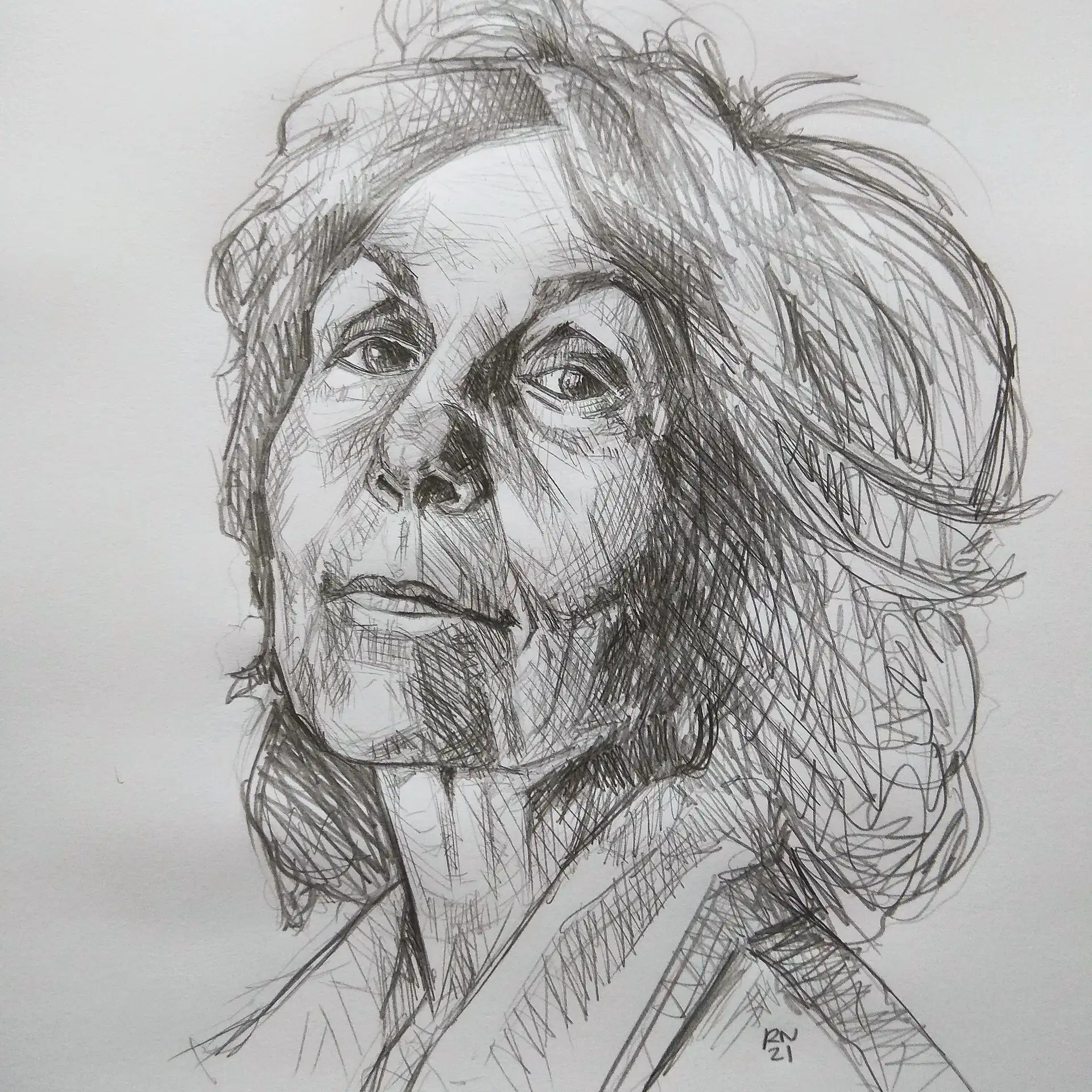
Paula Rego
 Portugal
painter•visual artist•printmaker
Also known as: Dame Paula Rego, Maria Paula Figueiroa Rego
Birthday
January 26, 1935
Birth Sign
Aquarius
Birthplace
Lisbon, Portugal
Age
Died at 87
About
Paula Rego was a Portuguese-born British painter and printmaker whose stark, story-driven images made her one of the most distinctive figurative artists of the late 20th and early 21st centuries. She is known for narrative paintings and pastels that draw on Portuguese folk tales, nursery rhymes, feminism, and political critique, often centering women as subjects rather than symbols. Her work is held in major collections worldwide, including Tate Britain and the Metropolitan Museum of Art, and she exhibited for years with Victoria Miro in London. In 2021 the BBC framed her as a candidate for Britain's greatest living artist. Rego died in London on 8 June 2022 at 87, and her estate continues to mount major exhibitions, including a 2026 drawing survey at Victoria Miro and a planned Courtauld retrospective in 2027. Her reinvention of narrative painting, with women at the center of the story rather than at its edges, is the achievement that critics return to again and again.
Early Life & Background
Maria Paula Figueiroa Rego was born in Lisbon on 26 January 1935 into a family that would soon feel the weight of António Salazar's totalitarian regime. Her father, an electrical engineer, was Anglophile and anti-fascist, and the household was cultured but politically tense. Rego's childhood was divided between Portugal and England: she was sent to boarding school in Kent as a young girl, a separation she later described as painful, and she grew up fluent in both languages and at home in neither country entirely.
She moved to London in 1951 to study art, enrolling first at the Slade School of Fine Art. At the Slade she met the painter Victor Willing, who would become her husband, and mixed with a cohort that included David Hockney and Frank Auerbach. She was part of The London Group, an artists' collective, and her early work leaned toward abstraction, influenced by the prevailing styles of the 1950s. A turning point came in the early 1960s when she began building invented scenes from Portuguese stories and her own memory, moving decisively toward representation. Pastels became her signature medium, giving her figures a raw, tactile presence that oil rarely matched. By the time she returned to London permanently in the mid-1970s, after years in Portugal, she had found the narrative voice that would define her career. From the 1950s onward she played a key role in redefining figurative art in Britain and abroad, long before the wider art world caught up with her.
Career Growth
Rego's breakthrough came with a series of works in the 1980s that drew on storybooks and folklore, including Peter Pan and Jane Eyre, and the Dance cycle. These paintings brought her wide attention for their unsettling, theatrical tableaux. In 1989 she became the second artist-in-residence at the National Gallery in London after the scheme restarted, following Jock McFadyen in 1981. The residency led to a body of work that cemented her reputation. Works such as The Policeman's Daughter and Possession showed her gift for turning personal memory into charged imagery. Her prints and pastels entered major collections worldwide, and she exhibited with Victoria Miro gallery for decades. The Metropolitan Museum of Art highlighted the deeply political character of her prints, portraying women's experience under political oppression. In 2021 the BBC framed her as a candidate for Britain's greatest living artist. Posthumously, her career has only gained momentum, with major surveys at Victoria Miro and MUNCH in 2026 and a Courtauld retrospective announced for 2027.
Career Timeline
Public Image & Style
Rego's public image was that of a fiercely independent, uncompromising artist who refused to follow fashion. She was known for her direct gaze, often photographed in her studio surrounded by pastels and drawings, and for her insistence on figuration when abstraction dominated. Her work was seen as feminist and political, and she was respected for tackling difficult subjects, including abortion, in series like Triptych (1998). She spoke with a Portuguese accent and a dry wit, and her interviews often emphasized the importance of drawing and storytelling. In the art world she was regarded as a peerless storyteller, and her gallery, Victoria Miro, called her "an artist of uncompromising vision." The BBC's 2021 framing of her as "the artist who helped change the world" captured how the press read her late career: less a nostalgia act than a living provocation.
Fame & Fandom (iFAMOUS Rankings)
iFANN has not yet collected fame data for Paula Rego, so she does not appear in the current published rankings. She is not on the September 2026 iFAMOUS Rankings flagship list. Her audience is primarily institutional and art-world based, with no formal fandom name or organized fan campaigns documented. Followers of her official Instagram, @paularegostudio, engage with posts about exhibitions and works, but the fanbase remains informal, centered on museum goers, collectors, and students of figurative art.
Interesting Facts and Legends
Rego kept a studio in north London that World of Interiors described in 2026 as a "mad, puppet-filled" space, her "private playroom." She was a keen storyteller who often worked from nursery rhymes and folk tales, and her Dog Woman pastels, made in the 1990s, are among her most retold works: a story fans still repeat is that she made them while listening to music and working on the floor. Tate has produced a dedicated video on the story behind The Dance, another painting that carries its own lore. She was a mentor to younger artists, and a 2021 Artnet op-ed by a mentee described what she taught about feminism, drawing, and storytelling. In 2026, an unearthed painting revealed Edvard Munch's formative influence on her work, a discovery reported by The Guardian. A November 2025 Financial Times interview with Martin McDonagh discussed his creative collaboration with Rego. Her official Instagram, @paularegostudio, has around 65,000 followers.
Notable Quotes
“I always work from stories. I can't invent anything without a story.”
“Drawing is the basis of everything.”
“I am a feminist, but I don't like to be called a feminist artist. I am an artist.”
“I don't like to be called a Portuguese artist or a woman artist. I am an artist.”
Family & Personal Life
Rego married the painter Victor Willing in 1959, and the couple had three children: a son and two daughters. Willing was diagnosed with multiple sclerosis in the 1970s, and Rego cared for him until his death in 1988. The family lived in London for most of their life together, with a period in Portugal in the 1950s and 1960s. Rego's household was creative and political; her father's anti-fascist views shaped her outlook. She was private about her family life, and few details of her children's lives are public. She was widowed at the time of her own death in 2022. She held the title Dame Commander of the Order of the British Empire, and the post-nominal letters RA as a Royal Academician, alongside Portuguese honours including GCSE, GOSE and GColCa, distinctions her family and country shared in.
Notable Connections
Relationships & Dating History
Paula Rego's romantic life was closely tied to her art. She met the painter Victor Willing at the Slade School of Fine Art in the early 1950s, and they married in 1959. The couple had three children and lived in London and Portugal. Willing was diagnosed with multiple sclerosis in the 1970s, and Rego cared for him until his death in 1988. She was widowed at the time of her own death in 2022. No other long-term relationships are documented in reliable sources. The marriage to Willing remains the principal confirmed relationship in the available record.
- MarriedVictor Willing1959 - 1988Fellow painter; met at Slade School of Fine Art; died in 1988.
Death & Aftermath
Died
June 8, 2022 (aged 87)
Death Place
London, England, UK
Cause of Death
Not publicly disclosed
Paula Rego died at her home in London on 8 June 2022, aged 87. The medical cause was not made public, and her family kept the death private, issuing no detailed statement beyond confirming the loss. No inquest or public investigation followed.
Tributes arrived from the institutions that had long supported her. Tate, which holds key works including the Dog Woman pastels, maintained a dedicated artist page and programming. The Metropolitan Museum of Art published an appreciation calling her one of the most important British artists of the twentieth century. Victoria Miro, her London gallery, described her as "an artist of uncompromising vision and a peerless storyteller." The Paula Rego Estate was established to manage her archive and promote her work, and it has driven a steady programme of exhibitions and publications since.
Posthumous activity has been vigorous. In 2026, Paula Rego: Story Line at Victoria Miro presented the most comprehensive display of her drawings, reviewed by The Guardian in April as "tantalising drawings with the shoeprints left on them." Paula Rego: Dance Among Thorns opened at MUNCH in Oslo, her largest survey in years. A Guardian report in March 2026 revealed an unearthed painting that showed Edvard Munch's formative influence on her work. The Observer ran a feature, "Inside the mind of Paula Rego," in March 2026, and World of Interiors profiled her "mad, puppet-filled north London studio" in May. Anthony Rudolf's memoir Office Hours in the Studio of Paula Rego and Paula Rego: The Sketchbooks from Pallant House added to the literature. A major retrospective, Paula Rego: Dog Woman, was announced for the Courtauld Gallery in February 2027.
The funeral was not publicly disclosed. No estate disputes have been reported; the Paula Rego Estate continues to manage her legacy.
Net Worth (Estate Value)
$5 Million
iFANN Editorial Team estimate
Paula Rego's estate is valued at approximately $5 million as of 2026, according to iFANN's own editorial research. The figure reflects the ongoing market for her paintings, prints, and pastels, which continue to sell at auction and through Victoria Miro. Her estate, managed by the Paula Rego Estate, earns from exhibition fees, licensing, and sales of works. Major posthumous exhibitions, including the 2026 shows at Victoria Miro and MUNCH and the planned 2027 Courtauld retrospective, have kept her market active. No specific auction records or estate valuations were publicly disclosed, so this estimate is based on the scale of her exhibition activity and secondary market sales. The estate's own site, paularego.com, serves as the public face of that operation, pointing collectors and institutions toward current shows and available publications.
Awards Won (3)
Paula Rego received a Dame Commander of the Order of the British Empire (DBE) in 2010 for services to art. She was elected a Royal Academician and received Portuguese honours including the Grand Cross of the Order of Prince Henry and the Order of Camões. She won the Celeste Art Prize and was shortlisted for the Turner Prize in 1989.
2010 · Honour
Services to art
2004 · Portuguese honour
Cultural contributions
Known For
Dog Woman
1994 · Artist
The Dance
1988 · Artist
Peter Pan series
1992 · Artist
Jane Eyre series
2002 · Artist
Possession
2004 · Artist
The Policeman's Daughter
1987 · Artist
Keywords
Sources
Quick Facts
- Profession
- painter, visual artist, printmaker
- Born
- January 26, 1935
- Birthplace
- Lisbon, Portugal
- Died
- June 8, 2022
- Death Place
- London, England, UK
- Gender
- Female
- Spouse
- Victor Willing
- Birth Sign
- Aquarius
Personal Details
- Full Name
- Dame Maria Paula Figueiroa Rego
- Spouse
- Victor Willing
- Children
- 3
- Education
- Slade School of Fine Art
Frequently Asked Questions
What is Paula Rego famous for?
Where can I see Paula Rego paintings?
Was Paula Rego a feminist?
How old was Paula Rego when she died?
What is Paula Rego's net worth in 2026?
Social Media
Similar People
Join the community
fans discussing