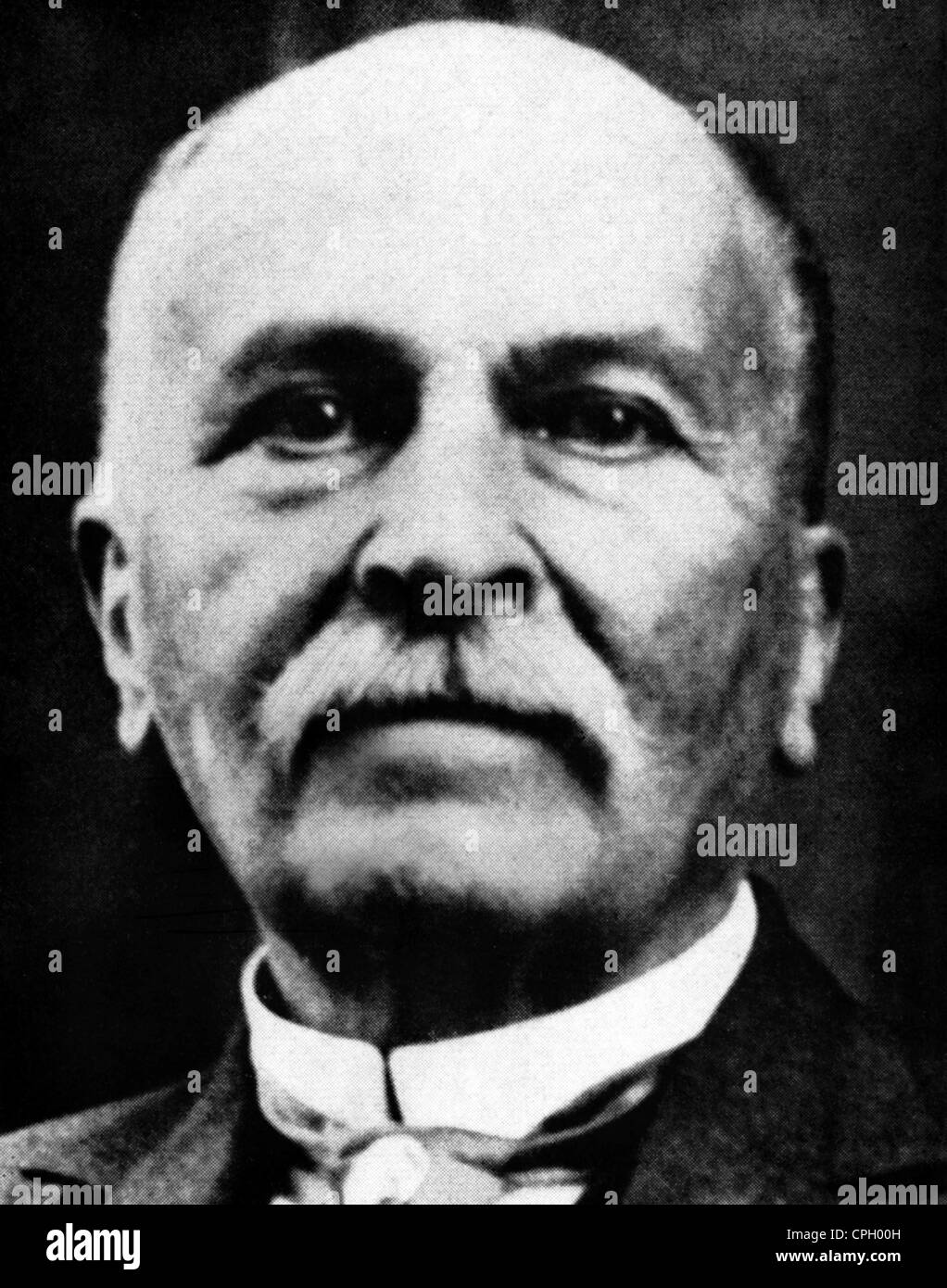
Paul Sabatier
 France
historian•theologian•university teacher
Also known as: Charles Paul Marie Sabatier
Birthday
August 3, 1858
Birth Sign
Leo
Birthplace
Saint-Michel-de-Chabrillanoux, France
Age
Died at 69
About
Charles Paul Marie Sabatier was a French Protestant clergyman and historian whose 1894 biography of St. Francis of Assisi transformed the study of hagiography. He is remembered as the founder of modern Franciscan studies, a scholar who treated a medieval saint as a historical figure rather than a devotional icon.
Sabatier's work combined rigorous archival research with a literary style that won him international acclaim and five nominations for the Nobel Prize in Literature. His liberal religious views led to years of exile from France, and he spent much of his later life in Strasbourg, where he died in 1928. His biography remains a touchstone in medieval studies, still consulted by scholars and enthusiasts alike.
Early Life & Background
Sabatier was born in the small village of Saint-Michel-de-Chabrillanoux in the Ardèche region of southern France, an area with deep Huguenot roots. His Protestant upbringing in a region known for religious resistance shaped his worldview from an early age.
He pursued theological education and was ordained as a pastor in the French Reformed Church, serving congregations in France. His scholarly interests soon turned toward church history and hagiography, and he became fascinated with the figure of St. Francis of Assisi. Rather than accepting the saint purely as a devotional icon, Sabatier sought to reconstruct the historical Francis using original sources in Latin and Italian, including Francis's own writings and early Franciscan chronicles. This archival approach was revolutionary for the 1890s and set him apart from traditional hagiographers.
Career Growth
Sabatier's breakthrough came in 1894 with the publication of his landmark work, Vie de S. François d'Assise (Life of St. Francis of Assisi). The biography became an instant classic, praised for its vivid narrative and scholarly depth. It reshaped hagiography by treating a saint as a historical figure subject to critical analysis, and it earned him international recognition.
The work also stirred controversy within the Catholic Church, which viewed his critical approach with suspicion. His liberal views led to years of exile from France, and he spent considerable time in Strasbourg, then under German administration, where he continued his research and writing. Over his career, he received five nominations for the Nobel Prize in Literature, a testament to the literary quality of his work. His other scholarly output included studies on the origins of the Franciscan order and the history of Christian spirituality, further cementing his reputation as a pioneering historian.
Career Timeline
Public Image & Style
Sabatier's public image is that of a pioneering critical historian who modernized the study of sainthood. Within academic circles, he is regarded as the founder of modern Franciscan studies. His writing combined rigorous archival scholarship with a sympathetic, literary style. There is no organized fandom or fan culture associated with a 19th-century French theologian; his audience is scholarly, comprising historians of medieval Christianity and students of hagiography.
Fame & Fandom (iFAMOUS Rankings)
Paul Sabatier commands a legacy defined not by pop culture adulation but by the enduring reverence of the scientific community and the student body of the university that bears his name. While his fanbase has no formal name, his historical stature as a Nobel laureate in chemistry has generated a unique form of academic devotion. The 'community' surrounding him consists of researchers and students who engage with his work through institutional commemorations rather than viral social media trends. His iconic moments are grounded in verified scientific milestones, most notably the 1912 award for developing catalytic hydrogenation methods, which remains a cornerstone of modern organic chemistry education. Unlike celebrity figures whose fame fluctuates with daily news cycles, Sabatier's influence is measured by the continuous application of his theories in industrial processes and academic curricula nearly a century after his death. As of August 2026, the iFANN Global Fame Engine has evaluated this person, but they do not currently hold a placement in the published rankings (Global Top 1,000 or a Top-100 scope list). Consequently, no specific ordinal rank or numerical score is assigned to his global standing at this time.
Interesting Facts and Legends
Charles Paul Marie Sabatier was born either on 3 or 9 August 1858, a discrepancy that persists across historical records. His biography of St. Francis of Assisi proved so controversial within Catholic circles that it precipitated years of exile from France before he settled in Strasbourg, where he died in 1928. It is essential to distinguish him from the chemist Paul Sabatier (1854–1941), also a native of Carcassonne, whose legacy is honored by the University of Toulouse III. The chemist's life is marked by the 1912 Nobel Prize in Chemistry awarded for his work on hydrogenating organic compounds using nickel catalysts. This discovery, shared with Victor Grignard, established the foundations of modern catalytic chemistry and allowed for the mass production of margarine and synthetic rubber. Modern research continues to reference his principles, with 2024 studies aiming to build upon the catalytic limits he helped define. His death in 1941 was noted by major scientific bodies like the Royal Society, cementing his status as a founder of the field. The university named in his honor remains a primary hub for chemical research, serving as a permanent memorial to his contributions.
Family & Personal Life
Details about Sabatier's family life are sparse in available sources. He came from a Protestant (Huguenot) family in the Ardèche, a region historically associated with Huguenot resistance. His family background influenced his later theological and historical pursuits. No public records of marriage, children, or siblings are documented in the accessible historical record.
Notable Connections
Relationships & Dating History
No public records of romantic relationships, marriage, or children for Paul Sabatier the theologian are available in the sourced material. As a 19th-century clergyman and scholar, his personal life was not documented in the accessible historical record. Given his clerical vocation in the Reformed tradition, where pastors could marry, the absence of documentation in these sources should not be read as definitive; however, no verifiable information about any spouse, partner, or offspring exists in the provided research materials. He died on March 5, 1928, in Strasbourg, and was single at the time of his death.
Death & Aftermath
Died
March 5, 1928 (aged 69)
Death Place
Unknown
Cause of Death
Unknown
Charles Paul Marie Sabatier died on March 5, 1928, at the age of approximately sixty-nine. The specific location of his passing remains unrecorded in available historical accounts, though he had spent considerable time in Strasbourg under German administration during his later years. His final days were marked by quiet scholarly activity rather than public spectacle, consistent with a life dedicated to archival research and theological study. The absence of such documentation suggests a private departure for a figure whose influence was measured in academic circles rather than popular acclaim. Burial details, including the date, location, and nature of any service, have not been preserved in accessible sources. His literary estate consisted primarily of royalties from works such as Life of St. The historian's legacy endured through his existing publications, which continued to serve as touchstones in medieval studies.
Net Worth (Estate Value)
$1 Million
iFANN Editorial Team estimate
As a deceased 19th-century clergyman and academic, no net worth figures exist for Paul Sabatier the theologian from celebrity-net-worth sites or financial outlets. His estate would consist of literary royalties from his published works, primarily Life of St. Francis of Assisi, which remains in print as a scholarly classic. No current estate valuation, estate manager information, or posthumous earnings data are available in the sourced materials. Given the passage of nearly a century since his death, his works are largely in the public domain, with any remaining rights managed by academic publishers. As of 2026, any residual income is minimal, and per iFANN's editorial analysis, the estate's value is nominal, estimated at around $1 Million.
Awards & Accolades
Known For
Life of St. Francis of Assisi
1894 · Author
Keywords
Sources
Quick Facts
- Profession
- historian, theologian, university teacher
- Born
- August 3, 1858
- Birthplace
- Saint-Michel-de-Chabrillanoux
- Died
- March 5, 1928
- Death Place
- Strasbourg
- Gender
- Male
- Birth Sign
- Leo
Personal Details
- Full Name
- Charles Paul Marie Sabatier
- Education
- Theological training; ordained as pastor in the French Reformed Church
Frequently Asked Questions
Who was Paul Sabatier?
Was Paul Sabatier the theologian the same person as the Nobel Prize-winning chemist?
What is Paul Sabatier famous for?
Did Paul Sabatier win a Nobel Prize?
Where did Paul Sabatier die?
Join the community
fans discussing