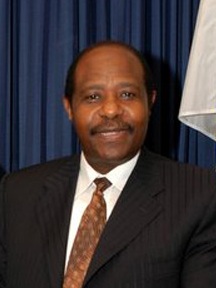
Paul Rusesabagina
 Belgium
human rights activist•former hotel manager•author
Birthday
June 15, 1954
Birth Sign
Gemini
Birthplace
Murama, Rwanda
Age
72 years old
About
Paul Rusesabagina is a Rwandan human rights activist and former hotel manager, best known for sheltering 1,268 people at the Hôtel des Mille Collines during the 1994 Rwandan genocide. His story was dramatized in the 2004 film Hotel Rwanda, with Don Cheadle portraying him, which brought him international recognition. Today, he is a vocal critic of the Rwandan government and continues to advocate for human rights and democracy.
After the genocide, Rusesabagina fled to Belgium and later divided his time between Brussels and San Antonio, Texas. He founded the Hotel Rwanda Rusesabagina Foundation to support survivors and established the political party PDR-Ihumure. His life took a dramatic turn in 2020 when he was kidnapped and imprisoned in Rwanda on terrorism charges, only to be released in 2023 after international pressure. As of 2026, he remains a symbol of moral courage and a controversial figure in Rwandan politics.
Early Life & Background
Paul Rusesabagina was born on June 15, 1954, in Murama, Rwanda, into a Hutu family during the final years of Belgian colonial rule. Growing up in a society marked by ethnic divisions, he pursued training in hotel management, a field that would later place him at the center of history. He rose through the ranks of Rwanda's hospitality industry, eventually becoming the manager of the Hôtel des Mille Collines in Kigali, one of the country's most prestigious hotels.
His professional reputation rested on his ability to navigate the delicate social and political dynamics of Rwandan society, relationships that proved vital during the genocide. He married Tatiana, a Tutsi woman, which put his own family in grave danger when ethnic violence erupted. In the months before the 1994 genocide, Rusesabagina used his position to quietly assist friends and colleagues, building the network of trust and influence that would later save over a thousand lives.
Career Growth
The 1994 Rwandan genocide became the defining chapter of Rusesabagina's life. As the temporary manager of the Hôtel des Mille Collines, he sheltered 1,268 Hutu and Tutsi refugees, bargaining with militia leaders and using his connections to keep them safe. His actions were later immortalized in the 2004 film Hotel Rwanda, which brought him global fame and sparked debate about his legacy.
After fleeing Rwanda in 1996, he established the Hotel Rwanda Rusesabagina Foundation in 2006 to support genocide survivors, focusing initially on education for girls. That same year, he founded the political party PDR-Ihumure, becoming a prominent critic of President Paul Kagame. His activism led to his kidnapping in 2020 and imprisonment on terrorism charges, but he was released in 2023 after his sentence was commuted. Since then, he has resumed his advocacy work, giving interviews and speaking at conferences.
Career Timeline
Public Image & Style
In Western media, Rusesabagina is often portrayed as a hero of moral courage, a reluctant savior who used his wits to outmaneuver extremists. His public speaking style is measured and dignified, focusing on themes of non-violence and reconciliation. Within Rwanda, however, his image is more contested, with the government framing him as a political opponent linked to armed groups. He does not have a traditional fandom, but his supporters include human rights advocates and academics who admire his resilience.
Fame & Fandom (iFAMOUS Rankings)
Paul Rusesabagina commands a global profile defined less by celebrity metrics and more by his enduring role as a symbol of moral courage during the 1994 Rwandan Genocide. While his story resonates deeply with human rights advocates and historians, he does not currently hold a placement in the iFANN Global Top 1,000 or any Top-100 scope list. The iFANN Global Fame Engine has evaluated this person, but they do not currently hold a placement in the published rankings. Consequently, no ordinal rank or numerical score is assigned at this time. His audience consists primarily of academics, activists, and those following geopolitical history rather than a traditional fanbase seeking entertainment or pop culture engagement. There is no documented fandom name for Paul Rusesabagina, reflecting the serious nature of his public life which centers on advocacy, legal battles, and historical documentation rather than fan interaction or celebrity worship. Unlike figures whose fame fluctuates with chart performance or box office returns, Rusesabagina's standing remains anchored in the verified historical record of his actions at the Hôtel des Mille Collines and the subsequent film adaptation, Hotel Rwanda. His recent imprisonment and release have further cemented his status as a complex figure in modern human rights discourse, yet this narrative has not translated into a formalized fan community with rituals or organized campaigns. The scale of attention he receives is consistent and driven by news cycles regarding his legal status and advocacy work, maintaining a steady presence in media coverage without entering the volatile rankings of general global fame.
Interesting Facts and Legends
Beyond his public duties, Rusesabagina finds solace in gardening, maintaining a small vegetable garden at his Brussels home that offers a quiet contrast to his turbulent political life. He is fluent in four languages: Kinyarwanda, French, English, and Swahili. Close friends often refer to him by the nickname 'Polo,' a familiar moniker rarely seen in formal interviews. The most defining legend surrounding him remains his heroic sheltering of over 1,200 people at the Hôtel des Mille Collines during the genocide, an event that served as the foundation for the 2004 film Hotel Rwanda. This specific act of diplomacy and bravery transformed him from a hotel manager into an international icon of non-violent resistance. A second major chapter in his personal mythology emerged from the dramatic events of 2020 to 2023, where his abduction in Dubai and subsequent 25-year prison sentence sparked a massive global outcry. The narrative of a man who saved lives only to be imprisoned by the very government he once protected has become a focal point of modern human rights stories. His release in March 2023 marked the end of this contentious chapter, yet the contrast between his 1994 heroism and his 2021 conviction continues to fuel discussion among scholars and activists worldwide.
Notable Quotes
“No one can silence me.”
“I was not a hero. I was just a hotel manager who did what he had to do.”
“We must never forget that the genocide happened because good people did nothing.”
Family & Personal Life
Paul Rusesabagina is married to Tatiana Rusesabagina, a Tutsi woman whose life he saved during the genocide by sheltering her at the Hôtel des Mille Collines. The couple has children together, and their family's survival is a central part of his story. They currently split their time between Brussels, Belgium, and San Antonio, Texas. Not much is publicly known about his parents or siblings, as he rarely discusses them in interviews.
Notable Connections
Paul Rusesabagina is closely associated with Don Cheadle, who portrayed him in Hotel Rwanda, and director Terry George. His wife Tatiana is a central figure in his story. He is also linked to Rwandan President Paul Kagame, his political opponent who ordered his prosecution and later commuted his sentence.
Relationships & Dating History
Paul Rusesabagina has been married to Tatiana Rusesabagina for decades. Their marriage is notable because Tatiana is Tutsi, and during the 1994 genocide, Paul sheltered her and their children at the Hôtel des Mille Collines, saving their lives. The couple's bond has been a cornerstone of his story, symbolizing the personal stakes of his actions. There are no public records of other romantic relationships. As of 2026, they remain married, living between Belgium and the United States.
- MarriedTatiana Rusesabagina1980 - presentCurrentMarried for decades; she is Tutsi and was sheltered by him during the genocide.
Salary, Net Worth In 2026
$5 Million
iFANN Editorial Team estimate
Per iFANN's editorial analysis, Paul Rusesabagina's net worth in 2026 is estimated at around $5 Million. This figure reflects his earnings derived from his former career in hotel management, various public speaking engagements, and royalties from book deals. Following his release from prison in 2023, he has resumed his advocacy work, which includes paid appearances at universities and conferences. His high-profile legal battles concerning his kidnapping have drawn significant attention, though specific financial details regarding these proceedings remain private. Unlike celebrities in the entertainment industry whose wealth is extensively tracked through public filings and endorsements, his financial portfolio has been less transparent. These income streams, however, support his family's lifestyle across their residences in Brussels and San Antonio, Texas.
Awards Won (2)
Paul Rusesabagina has been honored for his humanitarian actions with the Wallenberg Medal from the University of Michigan in 2005 and the Lantos Human Rights Prize in 2011. These awards recognize his extraordinary moral courage and his continued advocacy for human rights.
2005 · Humanitarian
Humanitarian actions during the Rwandan genocide
2011 · Human Rights
Human rights advocacy
Known For
Hotel Rwanda
2004 · Subject of the film
Hôtel des Mille Collines
1994 · Manager who sheltered refugees
Keywords
Sources
Quick Facts
- Profession
- Human rights activist, former hotel manager, author
- Born
- June 15, 1954
- Birthplace
- Murama, Rwanda
- Gender
- Male
- Spouse
- Tatiana Rusesabagina
- Net Worth
- $5 Million
Personal Details
- Spouse
- Tatiana Rusesabagina
Frequently Asked Questions
Is Paul Rusesabagina still alive?
What happened to Paul Rusesabagina?
How many people did Paul Rusesabagina save?
Is Hotel Rwanda a true story?
Where is Paul Rusesabagina now?
Join the community
fans discussing