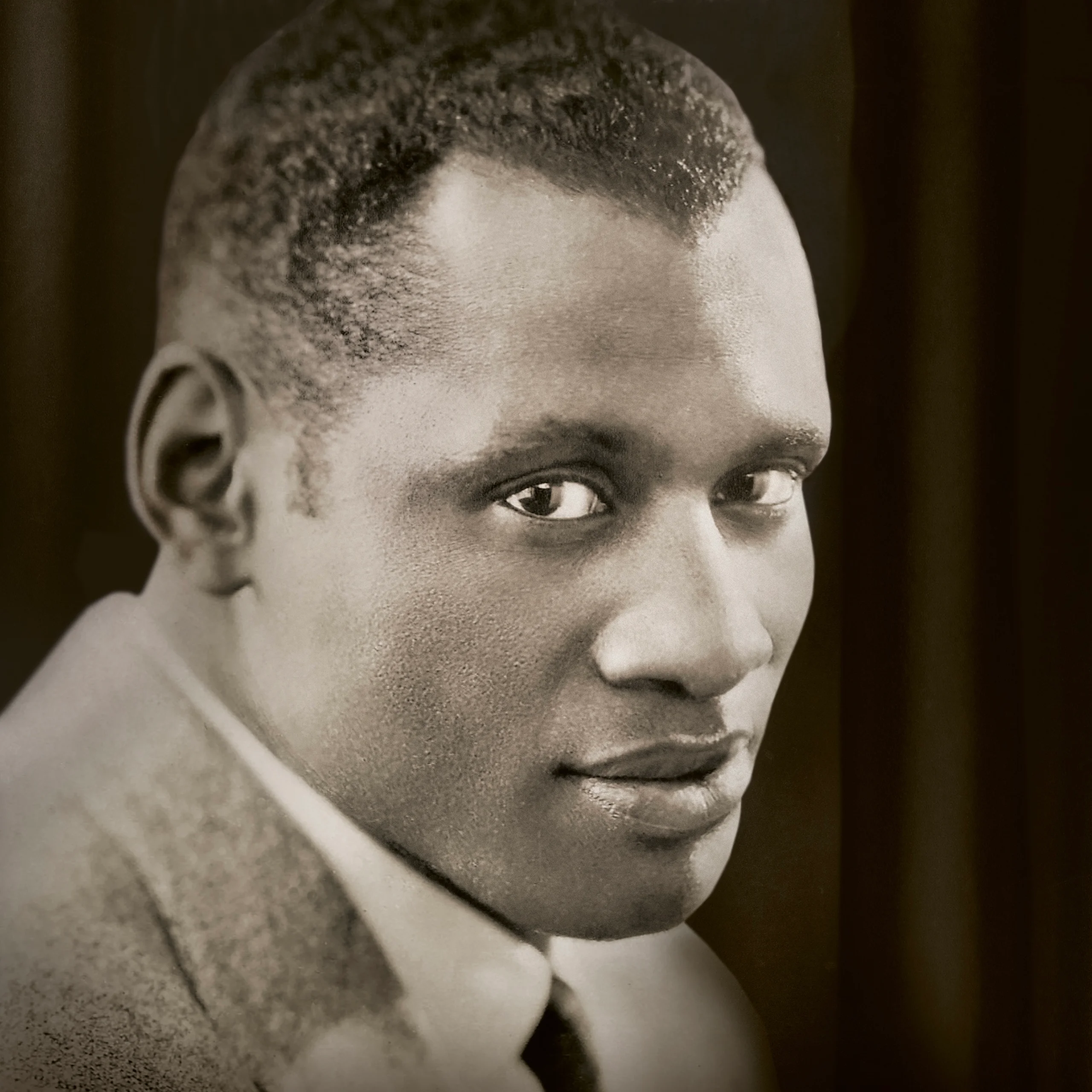
Paul Robeson
 United States
Also known as: PL Robeson, The Black Giant
Birthday
April 9, 1898
Birth Sign
Aries
Birthplace
Princeton, New Jersey, USA
Age
Died at 77
Height
6 ft 2 in (1.88 m)
About
Paul Leroy Robeson was an American bass-baritone concert artist, actor, and activist who became a central figure of the Harlem Renaissance and a global symbol of civil rights and anti-colonialism. He was born in Princeton, New Jersey, to Reverend William Drew Robeson and Maria Louisa Bustill, and his life story is defined by extraordinary achievements across multiple disciplines before he faced intense political persecution.
Robeson graduated valedictorian from Rutgers College in 1919 as its only African-American student while simultaneously becoming a two-time consensus All-American football player. He later earned a law degree from Columbia University but chose a career in the arts where his deep voice and powerful stage presence captivated audiences worldwide. His legacy remains that of a man who used his immense talent to fight for human dignity against the backdrop of racial segregation and Cold War hysteria.
Early Life & Background
The childhood of Paul Robeson was marked by both profound tragedy and remarkable resilience. Born on April 9, 1898, in Princeton, New Jersey, he was the youngest of five surviving children. His father, William Drew Robeson, had escaped slavery and become a prominent Presbyterian minister, while his mother came from a family of free African Americans with deep roots in New Jersey's Quaker community. When Paul was just six years old, his mother died of a stroke in 1904, leaving him to be raised largely by his father and grandmother during a time of significant financial struggle.
Despite these hardships, his father ensured Paul received a quality education. He attended Rutgers College in 1915 as its only African-American student. The university environment was often hostile, yet Robeson excelled academically, graduating valedictorian in 1919. Simultaneously, he dominated the football field, earning the nickname "The Black Giant" for his athletic prowess as a two-time consensus All-American in 1917 and 1918. After graduation, he continued his academic journey at Columbia Law School, balancing legal studies with professional football play in the National Football League before fully committing to the arts in the late 1910s.
Career Growth
Robeson's breakthrough into the world of serious drama came in 1925 with his performance in Eugene O'Neill's The Emperor Jones, which established him as a formidable dramatic actor. In 1928, he starred in O'Neill's All God's Chillun Got Wings and made his London premiere in the musical Show Boat. His rendition of "Ol' Man River" in that production became an anthem for the oppressed, transcending the stage to resonate with labor movements and civil rights activists globally.
He transitioned to film in the 1930s, appearing in Sanders of the River (1935) and The Proud Valley (1940). His most celebrated film role was as the lead in Othello (1951), though this project was controversial due to the political climate of the era. In music, Robeson released numerous albums featuring spirituals, folk songs, and international anthems. His voice was renowned for its depth and power, making him one of the first black artists to achieve international fame. He performed globally, including in the Soviet Union, South Africa, and across Europe, often using his platform to advocate for human rights and against colonialism.
Career Timeline
Public Image & Style
Robeson is portrayed as a "Renaissance Man" and a martyr for civil rights. His aesthetic was characterized by his dignified demeanor, deep voice, and unwavering commitment to social justice. Media portrayals often emphasize his struggle against the red scare and his refusal to compromise his principles despite the personal cost. He was seen not just as an entertainer but as a statesman of the soul who demanded equality and peace.
Fame & Fandom (iFAMOUS Rankings)
iFANN has not yet collected fame data for this person. While there is no single official fandom name documented in current rankings, fans often refer to themselves as "Robesonians" or simply as admirers of the Robeson legacy. The Paul Robeson House & Museum and the Paul Robeson Foundation organize fan campaigns, educational programs, and commemorative events to keep his memory alive.
Fan-led initiatives include streaming his music, organizing lectures, and supporting the preservation of his homesite in Princeton. These efforts ensure that new generations understand the scope of his contributions to art and activism. The fanbase is deeply organized around educational outreach rather than pop culture consumption, reflecting the serious nature of his work and the historical importance of his message.
Interesting Facts and Legends
Paul Robeson spoke over 20 languages fluently, including Russian, Spanish, French, and Chinese, which allowed him to connect with diverse audiences across the globe. He was the first African American to be named a consensus All-American in football, playing for Rutgers before the NFL existed as a major league. His passport was revoked in 1950 by the U.S. State Department, preventing him from traveling abroad for eight years until it was reinstated in 1958 after a Supreme Court ruling.
A widely retold legend involves the Peekskill Riots of 1949, where a violent mob attacked attendees of Robeson's concert, throwing rocks and bottles and causing injuries. This event remains a significant part of his cultural mythology. Another iconic moment was his performance of "Ol' Man River," which transformed a song about a riverboat worker into a universal cry for freedom. His inclusion on the Hollywood blacklist in the 1950s effectively ended his American film career, a story frequently referenced in discussions of political censorship.
Notable Quotes
“I am not a communist, but I am a human being.”
“My voice is my weapon.”
“The people's voices are the truest voices.”
Family & Personal Life
Paul Robeson was married only once to Eslanda Goode Robeson (née Eslanda Cardozo Goode). They met while both were students at Columbia University, where she was a medical student and he was a law student. She was a physician, anthropologist, and served as his manager for much of their life. The couple had one son, Paul Robeson Jr., born in 1927, who also became an activist and actor. They traveled extensively together, and she managed his career and legal affairs. Their marriage ended only with her death from cancer in 1963.
After Eslanda's death, Robeson remained widowed until his own passing. He lived in Philadelphia during his final years, surrounded by the memory of his wife and the legacy of his work. The Paul Robeson House & Museum in Princeton preserves the home where he spent parts of his childhood and early adulthood, serving as a testament to his family's deep roots in the area.
Notable Connections
Relationships & Dating History
Paul Robeson was married only once. He wed Eslanda Goode Robeson (née Eslanda Cardozo Goode) in 1921. They met while both were students at Columbia University, where she was pursuing a medical degree and he was studying law. Eslanda was a physician, anthropologist, and served as his manager for much of their life. The couple had one son, Paul Robeson Jr., born in 1927. They traveled extensively together, and she managed his career and legal affairs.
Their marriage lasted until Eslanda's death from cancer in 1963. There are no credible records of other romantic relationships or marriages outside of this union. While rumors occasionally surfaced regarding his sexuality due to his close friendships with men and his political associations, no public evidence of dating, engagement, or divorce exists in historical records. He remained widowed from 1963 until his own death in 1976.
- MarriedEslanda Goode Robeson1921 - 1963Met at Columbia University; she was his manager and the mother of his son.
Death & Aftermath
Died
January 23, 1976 (aged 77)
Death Place
Philadelphia, Pennsylvania
Cause of Death
Unknown
Public tributes to Paul Robeson emerged from peers and institutions recognizing his enduring legacy as a singer, actor, and activist following his passing. The scale of mourning reflected the deep respect held for a figure who had navigated intense political persecution while maintaining global prominence in the arts. On January 23, 1976, Robeson died at the age of 77 within his home in Philadelphia, Pennsylvania, where he had resided since returning from exile in 1963. His final years were marked by severe health issues, including a stroke in 1963 that left him partially paralyzed, yet he passed peacefully.
Historical records indicate no specific official ruling on the immediate mechanism of death was released to the public, leaving the cause undetailed in available sources. Posthumously, Robeson has been honored through various releases, awards, and dedications, including induction into multiple halls of fame and the operation of the Paul Robeson House & Museum in West Philadelphia. A Broadway production titled "Paul Robeson" ran in 1995 to commemorate his life, and the Paul Robeson Legacy Awards continue to honor Penn State students for leadership and service.
Net Worth (Estate Value)
$5 Million
iFANN Editorial Team estimate
As Paul Robeson died in 1976, his net worth is reported as the value of his estate. Estimates vary, but his estate is valued in the millions today due to posthumous royalties, licensing, and intellectual property. The iFANN Editorial Team estimates the current value of the Paul Robeson estate at approximately $5 million.
This valuation reflects ongoing revenue streams including royalties from music recordings, film rights, book sales, and licensing of his image and likeness. The estate has seen increased revenue from recent documentaries and re-releases of his work. Management of the estate is handled by the Paul Robeson Foundation and his descendants. While specific annual earnings fluctuate based on licensing deals and media projects, the estate continues to generate income that supports the preservation of his legacy and educational initiatives dedicated to his life and work.
Awards Won (4)
While Robeson did not win mainstream competitive awards like Oscars or Grammys during his lifetime due to the blacklist, he received numerous honorary distinctions. He was awarded the Lenin Peace Prize in 1953 by the Soviet Union for his peace activism. Posthumously, he received the National Medal of Arts in 1977. He was inducted into the Rutgers University Hall of Fame and the NAACP Hall of Fame. The Guinness World Records recognized him for being the first black man to star in a major motion picture and for his vocal range.
1977 · Arts
Lifetime Achievement
1953 · Peace
Activism
Known For
Show Boat
1928 · Joe
The Emperor Jones
1925 · Brutus Jones
Othello
1951 · Othello
The Proud Valley
1940 · Paddy
Keywords
Sources
Quick Facts
- Profession
- singer, lawyer, activist
- Born
- April 9, 1898
- Birthplace
- Princeton, New Jersey
- Died
- January 23, 1976
- Death Place
- Philadelphia, Pennsylvania
- Gender
- Male
- Spouse
- Eslanda Goode Robeson
- Birth Sign
- Aries
Personal Details
- Full Name
- Paul Leroy Robeson
- Height
- 6 ft 2 in (1.88 m)
- Spouse
- Eslanda Goode Robeson
- Children
- Paul Robeson Jr.
- Education
- Rutgers College; Columbia Law School
Filmography
12
Total
10
Film
2
TV
Frequently Asked Questions
Who was Paul Robeson?
Did Paul Robeson have any children?
Why was Paul Robeson blacklisted?
What happened at the Peekskill concert?
Is Paul Robeson still alive?
Similar People
Join the community
fans discussing