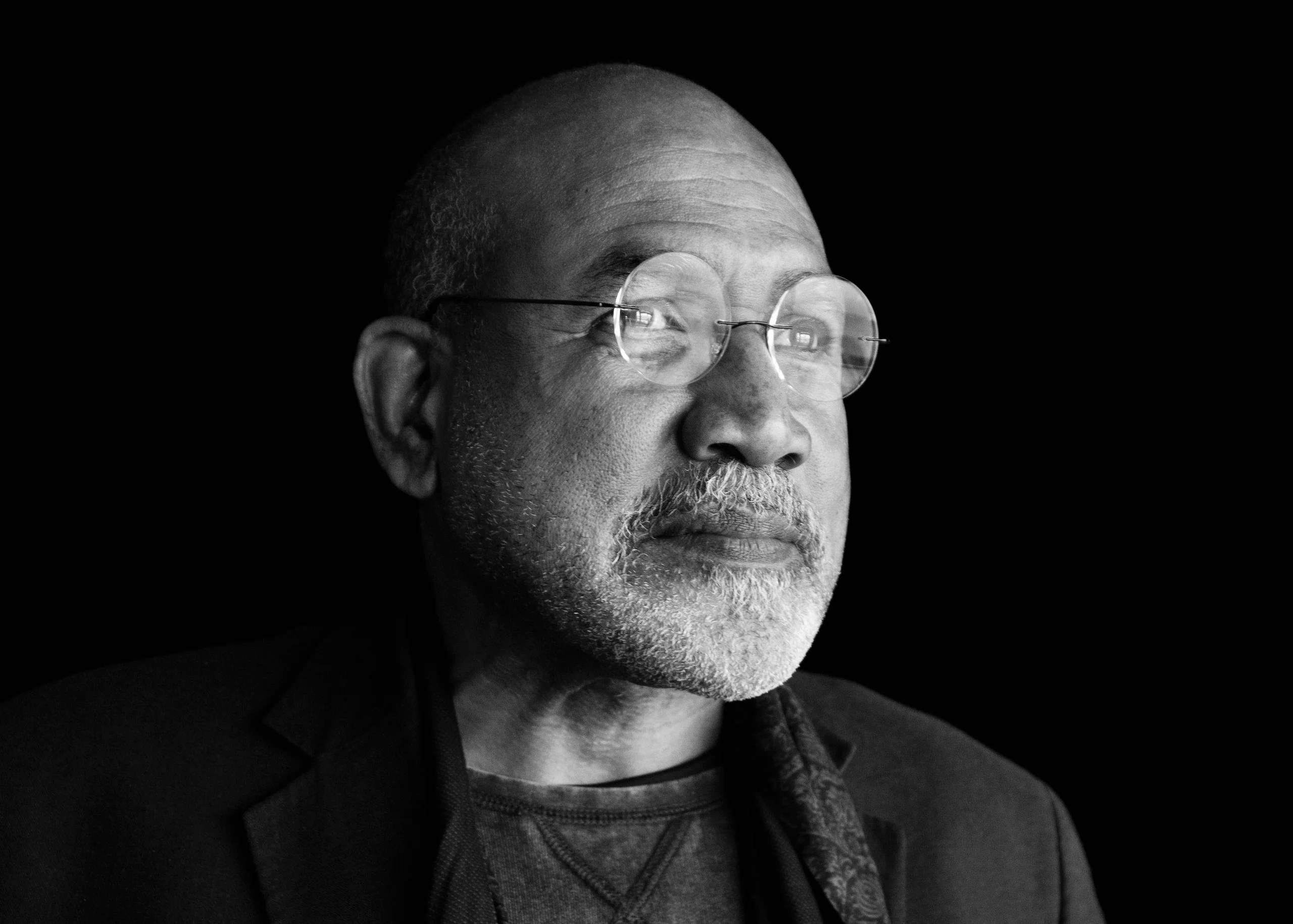
Patrick Chamoiseau
 France
Writer•poet•playwright•screenwriter
Birthday
December 3, 1953
Birth Sign
Sagittarius
Birthplace
Fort-de-France, Martinique
Age
72 years old
About
Patrick Chamoiseau is a Martinican writer, poet, and playwright, widely recognized as a leading voice of the créolité movement, which celebrates the richness of Creole languages and cultures. His work spans novels, essays, children's literature, and scripts for film and theater, consistently exploring themes of Caribbean identity, history, and memory. Chamoiseau's most famous novel, Texaco, won the Prix Goncourt in 1992, bringing him international acclaim. He remains a vital figure in contemporary literature, known for his lyrical prose and deep engagement with the social and political realities of the Caribbean.
Early Life & Background
Patrick Chamoiseau was born on December 3, 1953, in Fort-de-France, the capital of Martinique, a French overseas department in the Caribbean. Growing up in this vibrant Creole-speaking environment, he was immersed in the oral traditions and cultural richness that would later infuse his writing. He studied law in Martinique and then in Paris, but his path took a turn when he became a social worker, a role that brought him close to the marginalized communities he would later champion in his fiction.
His early literary efforts were shaped by the créolité movement, which he co-founded with Jean Bernabé and Raphaël Confiant. Their 1989 manifesto, In Praise of Creoleness, called for a literature that embraced the unique Creole identity, blending African, European, and Caribbean influences. Before his breakthrough, Chamoiseau published several works, including Chronique des sept misères (1986), a novel about the struggles of market vendors in Fort-de-France, and Solibo Magnifique (1988), which explored the death of a storyteller. These early works, though not widely known internationally, established his signature style and thematic concerns.
Career Growth
Patrick Chamoiseau's breakthrough came in 1992 with the publication of Texaco, a sprawling novel that chronicles the history of Martinique through the eyes of a woman named Marie-Sophie Laborieux. The novel won the Prix Goncourt, France's most prestigious literary prize, catapulting Chamoiseau to international fame. Texaco was praised for its fusion of oral and written traditions, its vivid portrayal of Creole life, and its innovative narrative structure.
Following this success, Chamoiseau continued to produce a diverse body of work. His 2018 novel Slave Old Man, translated into English by Linda Coverdale, tells the story of an enslaved man's escape through the Martinican rainforest, and was met with critical acclaim. He has also written essays, such as French Guiana: Memory Traces of the Penal Colony (2020), and contributed to screenwriting, including the film Biguine. In 2023, he published an op-ed in Le Monde about the Caribbean's adaptation to climate change. Chamoiseau has also been involved in academia, serving as a writer-in-residence at Sciences Po in Paris, and in 2024, he was honored with a Lifetime of Excellence in Fiction Award.
Career Timeline
Public Image & Style
Patrick Chamoiseau is perceived as a literary giant in the Caribbean and Francophone world, known for his lyrical and politically engaged writing. His public persona is that of a thoughtful intellectual who champions the marginalized and celebrates Creole culture. He is often seen at literary festivals and academic events, where he speaks passionately about language, identity, and the environment. Fans and critics alike admire his ability to weave together history, memory, and fantasy in a way that feels both deeply personal and universally resonant.
Fame & Fandom (iFAMOUS Rankings)
Patrick Chamoiseau has never cultivated a pop-culture fandom in the traditional sense, lacking organized campaigns, specific fan rituals, or a collective moniker like "Chamoisians." His audience consists primarily of academics, students of Caribbean literature, and readers deeply engaged with French-language fiction rather than a mobilized mass following. The legendary status surrounding him is rooted in intellectual milestones rather than viral moments or crowd disruptions. The defining event of his career remains the 1992 Prix Goncourt victory for *Texaco*, a landmark achievement that validated Caribbean identity on a global stage. Additionally, his co-founding of the *créolité* movement stands as a central pillar of his legacy, challenging metropolitan cultural dominance through rigorous theoretical work. While he is a celebrated figure at literary festivals and academic events, his influence is exerted through his lyrical prose and social engagement rather than celebrity spectacle. There are no documented instances of fan-funded projects or direct mass interactions typical of entertainment stars. According to the August 2026 evaluation by the iFANN Global Fame Engine, Patrick Chamoiseau does not currently hold a placement in the published rankings (Global Top 1,000 or a Top-100 scope list). Consequently, no numerical rank or score is assigned to his current fame standing.
Interesting Facts and Legends
Patrick Chamoiseau is a devoted advocate for linguistic diversity who once stated, "We must have the wealth of all the languages of the world." Before finding fame as a writer, he worked as a trained social worker, a background that profoundly shaped his early narratives. His versatility extends beyond novels into children's books and comic scripts. He maintains an active presence on X (formerly Twitter) under the handle @PCHAMOISEAU, where he shares insights on culture and literature. One of his more obscure contributions is *L'empreinte à Crusoé* (2012), a Caribbean retelling of the Robinson Crusoe story. The most significant legend attached to his name is his historic 1992 win of the Prix Goncourt for *Texaco*. This victory marked the first time a Martinican author received this prestigious French award, instantly elevating Creole literature from regional interest to international acclaim. It was a moment that shifted the literary landscape, proving that stories from the Caribbean could command the highest honors in Parisian letters. Another enduring chapter of his lore involves the founding of the *créolité* movement alongside Jean Bernabé and Raphaël Confiant. This intellectual revolution redefined Caribbean identity by celebrating Creole language and culture against the backdrop of French colonialism, creating a mythos that continues to define his scholarly reputation today.
Notable Quotes
“We must have the wealth of all the languages of the world.”
“We Caribbeans are not ready but have the resources to adapt to unavoidable climate mutations.”
Family & Personal Life
Details about Patrick Chamoiseau's family life remain largely private. He is known to be based in Martinique, where he continues to live and work. While specific information about his parents, siblings, or children is not publicly documented, his writing often reflects the familial and communal bonds of Caribbean society. He has occasionally mentioned his upbringing in Fort-de-France, which was steeped in the oral storytelling traditions of his culture.
Notable Connections
Relationships & Dating History
Patrick Chamoiseau has kept his personal relationships largely out of the public eye. There is no widely reported information about his dating history, marriage, or children. He appears to be a private individual who prefers to let his work speak for itself. As of 2026, his relationship status is not publicly known.
Salary, Net Worth In 2026
$10 Million
iFANN Editorial Team estimate
Per iFANN's editorial analysis, Patrick Chamoiseau's net worth is estimated at $10 million as of 2026. This financial standing is built upon a robust foundation of book royalties derived from his best-selling novel *Texaco* and advances for his extensive catalog of essays, novels, and children's literature. Additional revenue streams include his work as a screenwriter and playwright, alongside fees from speaking engagements and academic residencies. His long and celebrated career has provided a steady income flow, while his continued literary output ensures his earnings remain strong. The combination of critical acclaim and consistent publication has secured his financial position as a leading figure in contemporary literature.
Awards Won (2)
Patrick Chamoiseau's most prestigious award is the Prix Goncourt, which he won in 1992 for his novel Texaco. This prize is the highest literary honor in France and brought him international recognition. He has also received a Lifetime of Excellence in Fiction Award in 2024, celebrating his enduring contribution to literature.
1992 · Novel
Texaco
2024 · Lifetime Achievement
Entire body of work
Known For
Texaco
1992 · Author
Slave Old Man
2018 · Author
In Praise of Creoleness
1989 · Co-author
Keywords
Sources
Quick Facts
- Profession
- Writer, poet, playwright, screenwriter
- Born
- December 3, 1953
- Birthplace
- Fort-de-France, Martinique
- Gender
- Male
- Birth Sign
- Sagittarius
- Nationality
- French
- Notable Work
- Texaco
- Awards
- Prix Goncourt (1992)
Personal Details
- Full Name
- Patrick Chamoiseau
- Education
- Studied law in Martinique and Paris
Frequently Asked Questions
What is Patrick Chamoiseau known for?
How old is Patrick Chamoiseau?
What is Patrick Chamoiseau's net worth in 2026?
Is Patrick Chamoiseau still writing?
What is the créolité movement?
Social Media
Similar People
Join the community
fans discussing