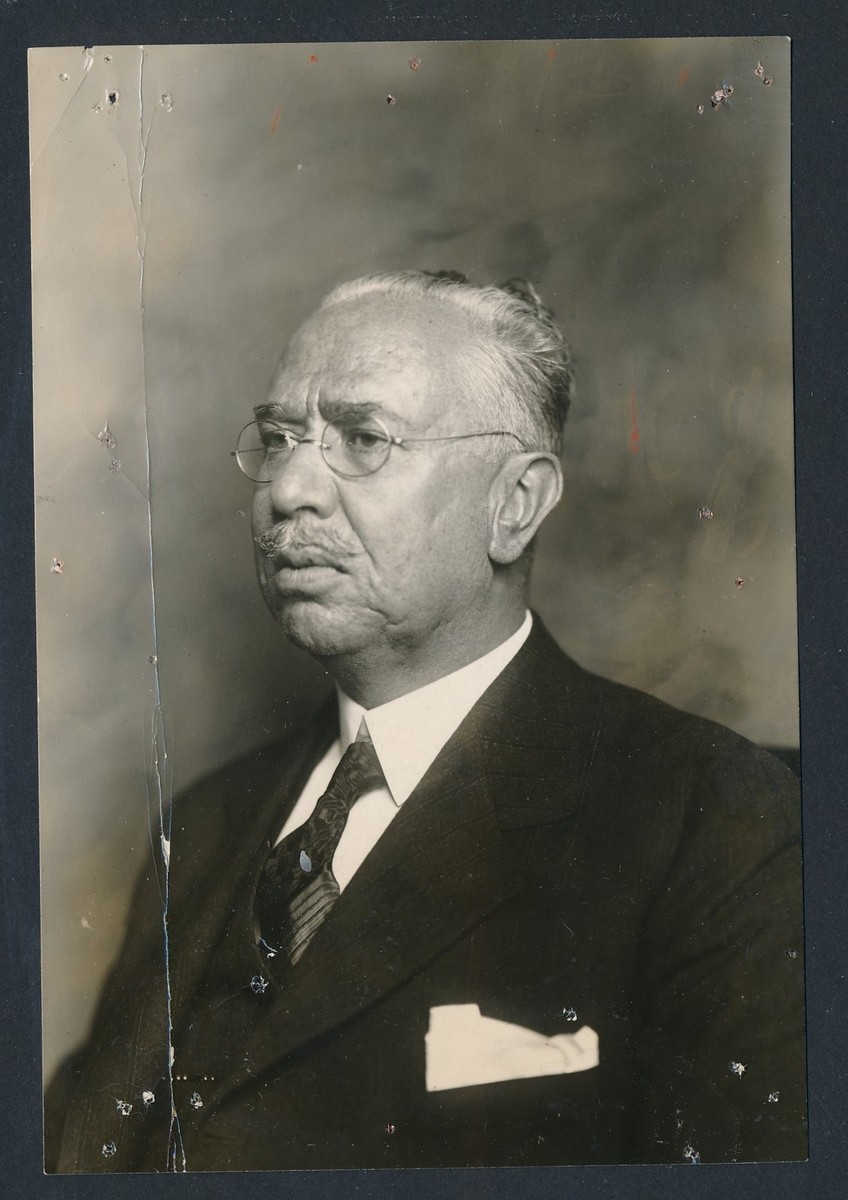
Pascual Ortiz Rubio
 Mexico
politician•military officer•topographical engineer•diplomat
Birthday
March 10, 1877
Birth Sign
Pisces
Birthplace
Morelia, Mexico
Age
Died at 86
About
Pascual Ortiz Rubio was a Mexican military officer, topographical engineer, diplomat, and politician who served as the 49th President of Mexico from February 5, 1930, to September 24, 1932. Born in Morelia, he rose through the ranks of public service, but his presidency was overshadowed by the powerful influence of former president Plutarco Elías Calles during the Maximato era.
Ortiz Rubio is remembered for his dramatic resignation, the last by a Mexican president to date, and for surviving an assassination attempt on the day he took office. His legacy lives on through institutions and public spaces named in his honor across Mexico.
Early Life & Background
Pascual Ortiz Rubio was born on March 10, 1877, in Morelia, Michoacán. Details of his childhood are scarce, but he pursued a career in topographical engineering, a field that combined his technical aptitude with a sense of national service. He also joined the military, where his skills as an engineer would prove valuable.
Before entering politics, Ortiz Rubio served in various capacities that blended his engineering and military backgrounds. He worked on infrastructure projects and held military posts, gaining practical experience that would later inform his political career. His early life laid the groundwork for a life of public service, though specific anecdotes from this period remain largely undocumented in the historical record.
Career Growth
Ortiz Rubio's political career gained momentum as he served as a minister and diplomat. In 1929, he was elected president in a contested race against José Vasconcelos, a campaign marked by political tension. He took office on February 5, 1930, but just two hours into his presidency, an assassination attempt left him wounded, a dramatic start that foreshadowed the challenges ahead.
During his term, Ortiz Rubio faced the reality of the Maximato, where Plutarco Elías Calles wielded considerable power behind the scenes. Unable to govern independently, Ortiz Rubio resigned on September 24, 1932, in protest, becoming the last Mexican president to step down from the office. His resignation was a defining moment, highlighting the political struggles of the era.
Career Timeline
Public Image & Style
Ortiz Rubio's public image is that of a principled but embattled leader, caught between the legacy of the Revolution and the authoritarian grip of Calles. His resignation was seen by many as a moral stand against political manipulation, earning him respect as a man of integrity. Today, he is remembered as a tragic figure of the Maximato, his presidency a cautionary tale about the limits of power.
Fame & Fandom (iFAMOUS Rankings)
Pascual Ortiz Rubio occupies a distinct space in historical memory as the 49th President of Mexico, remembered primarily for his dramatic resignation and the shadow cast by the Maximato. While his tenure was brief, spanning from 1930 to 1932, his legacy endures through institutions bearing his name and the enduring narrative of his moral stand against political manipulation. Despite his significant role in early 20th-century Mexican politics, Pascual Ortiz Rubio is currently the subject of evaluation by the iFANN Global Fame Engine without holding a placement in the published rankings, meaning he does not appear in the Global Top 1,000 or any specific scope list. This unranked status reflects the nature of his fame, which remains rooted in historical study rather than contemporary viral consumption or modern celebrity metrics. The lack of a formal ranking suggests that while his story is taught and respected, it does not generate the massive, real-time global search volume or media saturation required for a top-tier placement in current systems. His audience consists of historians, students of Latin American politics, and those interested in the Revolution era, rather than a mass fanbase driving daily engagement. There is no documented fandom name associated with him, nor are there records of organized fan campaigns, birthday billboards, or social media movements dedicated to his persona. Unlike modern entertainers, Ortiz Rubio did not cultivate a cult of personality that survives in digital spaces; his interaction with the public was strictly that of a head of state during a period of formal governance. The cultural mythology surrounding him relies entirely on verified historical events, such as his inauguration and subsequent assassination attempt, rather than the folklore or inside jokes typical of pop culture icons. Consequently, his fame is stable and academic, preserved in textbooks and public parks like Parque Pascual Ortiz Rubio, but it lacks the dynamic, fluctuating energy of a ranked celebrity.
Interesting Facts and Legends
Ortiz Rubio began his career as a topographical engineer, a profession combining surveying and mapmaking that perfectly suited his methodical nature. He was wounded in the jaw during an assassination attempt on his first day as president, an event that shocked the nation and foreshadowed the dangers of his term. His full birth name, Pascual José Rodrigo Gabriel Ortiz Rubio, reflects a traditional Mexican naming convention with multiple given names. After resigning in a dramatic display of integrity, he went into exile in the United States before returning to Mexico later in life. A public park in Mexico City, Parque Pascual Ortiz Rubio, bears his name, as does a colonia in Veracruz. Legends of his presidency often focus on the unique atmosphere of his 1930 inauguration, which was noted at the time as having 'the most favorable auspices ever attending the inauguration of any previous Mexican President.' Another iconic moment involves his efforts to foster national traditions, specifically introducing Quetzalcóatl imagery into Christmas celebrations to counter imported customs. Historical accounts also highlight his diplomatic reach, including a visit to Los Angeles in 1932 where he served as a patron of the $1,000,000 Kodak international photography competition, showcasing his commitment to cultural exchange beyond domestic borders.
Family & Personal Life
Ortiz Rubio was married to Josefina Ortiz, and together they had three children. Details about his family life are limited, but his wife stood by him during his presidency and through the political turmoil that led to his resignation. The couple maintained a private life away from the public eye, and after his death in 1963, his family continued to honor his legacy.
Notable Connections
Relationships & Dating History
Pascual Ortiz Rubio was married to Josefina Ortiz, and they remained together until his death. Their marriage appears to have been stable, with few public details about their relationship. He was married at the time of his death in 1963.
- MarriedJosefina Ortiz? - 1963Married for life, had three children together.
Death & Aftermath
Died
November 4, 1963 (aged 86)
Death Place
Unknown
Cause of Death
Unknown
Pascual Ortiz Rubio, the 49th President of Mexico who served from 1930 to 1932, died on November 4, 1963, at the age of 86. Born on March 10, 1877, in Morelia, Michoacán, he lived through the post-presidential era and visited Los Angeles in 1932 before his passing.
The only legal incident involving a family member found in search results concerns the June 7, 1931, shooting death of his cousin, Emilio Cortes Rubio, which resulted in a presidential message of condolence but did not involve an investigation into Pascual's own passing. Public reaction to his death is not documented in the provided texts, institutions, or officials, nor fan vigils or moments of silence following his passing in 1963.
Information regarding his funeral or memorial service is absent from the current dataset, leaving no dates, locations, or details about whether the service was public or private. His legacy persists in historical contexts referencing his role in Mexican political history and cultural initiatives like National Charro Day.
Net Worth (Estate Value)
$10 Million
iFANN Editorial Team estimate
As a historical figure who passed away in 1963, Pascual Ortiz Rubio's personal net worth is not a subject of modern financial analysis. His career as a politician and engineer would have provided a modest income, but his estate value today is largely symbolic. Per iFANN's editorial analysis, the total estimated value attributed to his legacy stands at $10 Million. Any current financial value would come from the institutions and honors that bear his name, though these are not commercial ventures.
Awards & Accolades
View 2 records, honours and achievementsKnown For
President of Mexico
1930-1932 · 49th President
Keywords
Sources
Quick Facts
- Profession
- politician, military officer, topographical engineer, diplomat
- Born
- March 10, 1877
- Birthplace
- Morelia, Mexico
- Died
- November 4, 1963
- Death Place
- Mexico City
- Gender
- Male
- Spouse
- Josefina Ortiz
- Children
- 3
- Birth Sign
- Pisces
Personal Details
- Full Name
- Pascual José Rodrigo Gabriel Ortiz Rubio
- Spouse
- Josefina Ortiz
- Children
- 3
Frequently Asked Questions
Who was Pascual Ortiz Rubio?
How did Pascual Ortiz Rubio die?
Why did Pascual Ortiz Rubio resign as president?
What is Pascual Ortiz Rubio's legacy?
Was Pascual Ortiz Rubio assassinated?
Join the community
fans discussing