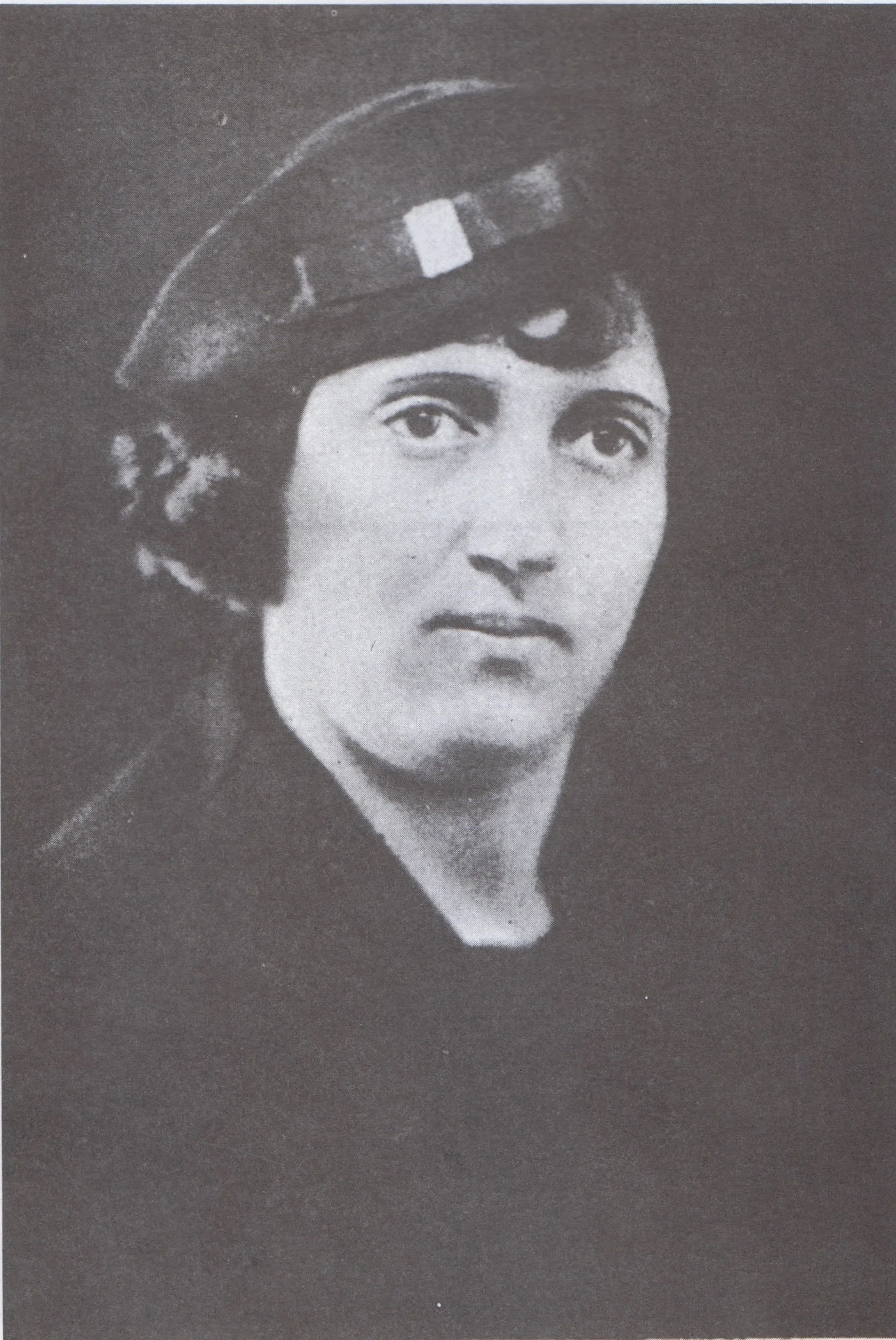
Parvin E'tesami
 Iran
poet•literary scholar•librarian
Also known as: Rakhshandeh E'tesami, Parvīn Etesami
Birthday
March 17, 1907
Birth Sign
Pisces
Birthplace
Tabriz, Iran
Age
Died at 34
About
Parvin E'tesami was a seminal figure in 20th-century Persian literature and the most renowned female poet in Iranian history. Born Rakhshandeh E'tesami in Tabriz, she adopted the pen name Parvin to bridge classical poetic forms with sharp social commentary. Her brief life ended in 1941, yet her collected works remain a cornerstone of Iranian education and cultural identity. She is remembered not only for her artistic mastery but for her unwavering commitment to moral integrity and justice.
Today, her legacy endures through mandatory reading lists in schools across Iran and numerous translations into languages like English, French, and Armenian. Her poetry continues to inspire discussions on gender roles and social ethics, cementing her place as a timeless icon whose voice resonates nearly a century after her death.
Early Life & Background
Rakhshandeh E'tesami entered the world on March 17, 1907, in Tabriz, a city known for its rich intellectual heritage. She was born into a family deeply immersed in the arts and journalism. Her father, Yousef E'tesami, was a respected writer and the editor of the newspaper Sedaye Vatan, while her mother, Mahin, was also well-educated. This environment provided Rakhshandeh with an early and rigorous introduction to literature. By the age of eight, she had already begun composing poetry, displaying a natural facility for classical forms like the Masnavi and Ghazal.
Despite her father's encouragement, he initially hesitated to let her publish under her own name due to the conservative social norms of early 20th-century Iran. Instead, he guided her studies privately, ensuring she mastered the intricacies of Persian prosody before stepping into the public sphere. She received her formal education at home before attending the University of Tehran, then known as Dar al-Funun. There, she studied literature and librarianship, skills that would later define her professional life. Before her rise to fame, she worked as a librarian at the National Library of Iran. This role allowed her to immerse herself in historical texts and classical poetry, deepening her understanding of the literary tradition she would soon help revitalize.
Career Growth
Parvin E'tesami's career was defined by a singular, powerful mission: to revive the monazereh, a traditional Persian poetic genre featuring dialogues between opposing abstract concepts. While others had used this form, she elevated it to new heights, infusing it with contemporary relevance and a distinct female perspective. Her work tackled complex issues including women's rights, class disparity, corruption, and the human condition with a clarity that was rare for her time.
She published three major collections during her lifetime, establishing herself as a serious scholar and poet. Her most famous work, Divan-e Parvin, includes iconic pieces like Payam-e Azadi (Message of Freedom) and Dastan-e Del-e Shokhan (Story of the Wounded Heart). These poems were not merely artistic exercises; they were moral arguments wrapped in beautiful verse. After her death, her collected works were compiled and published as Divan-e Parvin E'tesami. This volume became a staple in Iranian schools and universities, ensuring her voice reached generations of students. Her work has since been translated into multiple languages, including an audio version released in Armenian in 2016, extending her influence far beyond Iran's borders.
Career Timeline
Public Image & Style
Parvin E'tesami is portrayed as a paragon of intellect, morality, and feminine strength. The media and academic communities view her as a pioneer who challenged patriarchal norms without compromising her artistic integrity. Her aesthetic is associated with the classical Persian tradition, yet her themes remain strikingly modern. She is often depicted in portraits wearing simple, modest clothing, reflecting her humility and devotion to her work rather than material wealth.
Fame & Fandom (iFAMOUS Rankings)
According to the September 2026 data from the iFANN Global Fame Rankings, she holds the position of the 68th most famous person in Iran. This placement has remained steady from the previous cycle, reflecting a consistent level of national recognition despite the absence of contemporary promotional activity. The ranking underscores her status as a foundational figure whose influence persists through educational curricula and continued translation efforts.
Parvin E'tesami possesses no modern fandom in the conventional sense, as her passing in 1941 predates the era of digital celebrity culture, organized fan clubs, and interactive social media rituals. Her enduring audience consists primarily of scholars, students, and literary enthusiasts who engage with her work through academic study rather than commercial campaigns or grassroots chart pushes. While there is no formal collective noun for her supporters, nor any documented fan-funded projects or viral internet movements bearing her name, her legacy functions as a shared cultural literacy within Iran and the global Persian-speaking community. Generations of students memorize her verses, creating a stable foundation of knowledge that parallels the common ground found in modern fandoms.
Interesting Facts and Legends
Parvin E'tesami chose the pen name "Parvin," meaning Venus or the Pleiades, to reflect her celestial stature in the literary world. For much of her early career, she published anonymously or under her father's name to navigate societal restrictions on women writers. Although widely reported as dying of tuberculosis, some sources have occasionally confused her cause of death with typhoid fever, though medical consensus confirms tuberculosis. In recent decades, her image has become a flashpoint in modern Iranian politics, with debates over whether her likeness should appear on public billboards alongside other prominent women. A theatrical production titled "Poet Parvin Etesami to come back to life" was staged in Tehran in 2022, symbolizing her enduring cultural relevance.
Notable Quotes
“The heart is a mirror that reflects the truth of the world.”
“Virtue is not a gift, but a choice we make every day.”
Family & Personal Life
Parvin E'tesami remained unmarried throughout her life, dedicating her entire existence to her family and her literary pursuits. She lived with her father, Yousef E'tesami, until his death, and continued to reside in Tehran with her extended family members until her own passing. Her mother, Mahin, was also a significant presence in her life. The absence of a spouse and children is often cited by scholars as a factor that allowed her to focus entirely on her art and intellectual development. Her personal life was characterized by seclusion and dedication to her craft, particularly in her later years as her health declined.
Notable Connections
Yousef E'tesami, Mahin E'tesami, Forough Farrokhzad
Relationships & Dating History
Parvin E'tesami remained unmarried throughout her life. Historical records indicate that she dedicated her entire life to her family, her father, and her literary pursuits. There are no documented romantic relationships, engagements, or marriages associated with her. The absence of a spouse and children is a defining aspect of her biography, often cited by scholars as a factor that allowed her to focus entirely on her art and intellectual development. She lived with her father until his death and continued to reside in Tehran with her family members until her own passing. Consequently, there are no kids, divorce, or dating history to report. Her personal life was characterized by seclusion and dedication to her craft, particularly in her later years as her health declined.
Death & Aftermath
Died
April 4, 1941 (aged 34)
Death Place
Tehran, Iran
Cause of Death
Tuberculosis (consumption)
By the late 1930s, Parvin E'tesami had retreated from public life in Tehran as tuberculosis consumed her health. She spent her final months in seclusion, unable to participate in the literary circles that had once celebrated her work. On April 4, 1941, she passed away at the age of 34, ending a brilliant career that spanned less than two decades. The official cause was recorded as consumption, a disease for which there was no effective cure at the time.
Her death sent shockwaves through the Iranian intellectual community. Peers and students immediately began gathering to mourn the loss of a voice that had dared to address social inequality and women's rights with such clarity. Within days, her father and friends worked to compile her scattered manuscripts into a single volume. This posthumous collection, titled Divan-e Parvin, became an instant classic and solidified her status as a national treasure. While the exact location of her grave remains somewhat obscure due to the modest nature of her burial wishes, annual commemorations on her birthday and death anniversary have become a staple of Iranian cultural life. Scholars recite her verses, and institutions host panels discussing her impact on modern Persian literature. In recent years, her image has also reappeared in political debates regarding women's visibility in public spaces, proving that her legacy continues to evolve long after her passing.
Net Worth (Estate Value)
$0
iFANN Editorial Team estimate
As a historical figure who passed away in 1941, Parvin E'tesami did not accumulate personal wealth in the modern sense. Her estate consists primarily of her literary rights and the ongoing royalties from her published works. The value of her estate is derived from the continuous publication of her poetry in Iran and international translations. Academic institutions and publishers license her works for educational materials, generating steady income that supports the preservation of her legacy. The iFANN Editorial Team estimates the current value of her estate and literary rights at approximately $0, reflecting the non-commercial nature of her primary legacy compared to modern celebrities. Her financial impact is measured instead by the cultural capital she generates for Iranian literature and education.
Awards & Accolades
View 6 records, honours and achievementsKnown For
Divan-e Parvin
1935 · Author
Payam-e Azadi
1930 · Poet
Dastan-e Del-e Shokhan
1932 · Poet
Keywords
Sources
Quick Facts
- Profession
- poet, literary scholar, librarian
- Born
- March 17, 1907
- Birthplace
- Tabriz, Iran
- Died
- April 4, 1941
- Death Place
- Tehran, Iran
- Gender
- Female
- Birth Sign
- Pisces
Personal Details
- Full Name
- Rakhshandeh E'tesami
- Children
- Education
- University of Tehran (Dar al-Funun)
Frequently Asked Questions
What was Parvin E'tesami's real name?
How did Parvin E'tesami die?
Was Parvin E'tesami married?
What is Parvin E'tesami famous for?
Is Parvin E'tesami still relevant today?
Similar People
Join the community
fans discussing