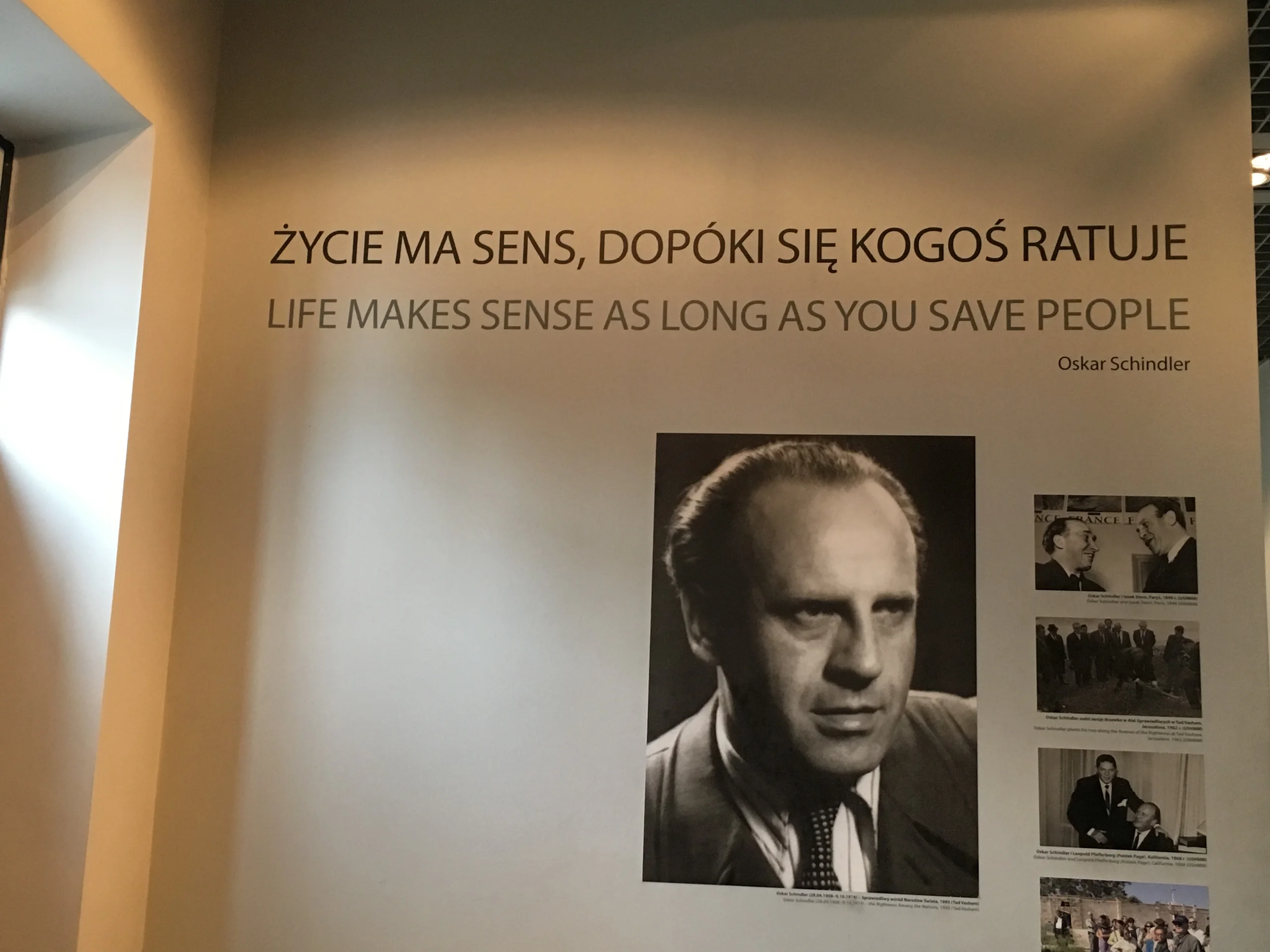
Oskar Schindler
 Germany
entrepreneur•industrialist•salesperson
Also known as: Oskar Schindler, The Polish Schindler
Birthday
April 28, 1908
Birth Sign
Sagittarius
Birthplace
Svitavy, Austro-Hungarian Empire (now Czech Republic)
Age
Died at 66
Height
5 ft 10 in (178 cm)
About
Oskar Schindler was a German industrialist and member of the Nazi Party who is globally renowned for saving the lives of approximately 1,200 Jews during the Holocaust. Born in Svitavy in 1908, he initially built a career as a salesman and entrepreneur before leveraging his connections within the Nazi regime to establish factories in occupied Poland. Unlike modern celebrities whose careers are defined by public performances or commercial releases, Schindler's life story is one of wartime opportunism that evolved into profound humanitarian intervention. His actions, immortalized by Steven Spielberg's 1993 film Schindler's List, remain a central touchstone for discussions on morality, complicity, and redemption.
At the time of his death in 1974, Schindler had spent his entire fortune bribing officials to protect his workers, leaving him in poverty. He died in Hildesheim, West Germany, supported only by the charity of the very people he had saved. Today, his legacy is sustained through educational institutions, Holocaust remembrance organizations, and the enduring cultural impact of the film that bears his name. The story of his transformation from a war profiteer to a savior continues to resonate with audiences worldwide, serving as a testament to the possibility of moral growth even in the darkest of times.
Early Life & Background
Oskar Schindler was born on April 28, 1908, in Svitavy, then known as Zwittau, in the Austro-Hungarian Empire. He was the son of Johann Schindler, a factory owner who manufactured agricultural machinery, and Franziska Schindler. The family environment was bilingual, with both German and Czech spoken in the household, a skill that would later prove advantageous in his business dealings across the border regions. Schindler attended local schools where he excelled in languages but struggled with mathematics and sciences. He enrolled at the Realschule in Brno but did not complete his secondary education due to financial difficulties following his father's death in 1919.
The collapse of the Austro-Hungarian Empire after World War I left his family in a precarious financial state. Young Oskar was forced to leave school early and seek employment to support himself. He worked various odd jobs before securing a position as a salesman for a firm selling farm equipment. This early experience in sales cultivated his charm, persuasion skills, and ability to navigate complex social hierarchies, traits that would later define his survival strategy and his ability to bribe Nazi officials. By his late teens, he had moved to Brünn (Brno) to work in the automotive industry, eventually becoming a successful car salesman.
Before his rise to infamy, Schindler was known as a womanizer, a heavy drinker, and a man of considerable ambition. He joined the Nazi Party in 1936, partly for career advancement and partly out of genuine ideological alignment, though historical records suggest his motivations were often pragmatic rather than purely ideological. In 1936, he was recruited by the Abwehr, the German military intelligence service, to gather information on troop movements and railways in Czechoslovakia. He faced arrest for espionage in 1938 but was released following the Munich Agreement, which allowed Germany to annex the Sudetenland. These early years shaped a man who understood the value of information and the power of manipulation, setting the stage for his future actions in Poland.
Career Growth
Schindler's breakthrough occurred in 1939 when he arrived in Kraków, Poland, and established a porcelain enamelware factory known as Emalia. Initially, he sought to profit from the war by producing kitchen utensils and cookware for the German army. However, as the war progressed, he recognized the potential of Jewish labor, which was cheaper and more expendable to the Nazis. By 1944, his factory employed around 1,750 people, approximately 1,000 of whom were Jewish. Schindler used his connections within the Abwehr and the SS to shield his workers from deportation to extermination camps.
He bribed Nazi officials with luxury goods, gold, and cash, often sourcing these items from the black market. His most significant project was the relocation of his factory to Brněnec in July 1944, followed by the transport of his workers to Brünnlitz in October 1944. There, he continued to protect them until the end of the war in May 1945. After the war, Schindler attempted to rebuild his business in Germany but failed due to lack of capital and post-war restrictions. He spent the remainder of his life in relative obscurity, supported by the Jewish survivors he had saved. His efforts were finally recognized posthumously with numerous awards, including the Presidential Medal of Freedom and Righteous Among the Nations.
Career Timeline
Public Image & Style
Oskar Schindler is portrayed as a complex figure, a man of contradictions. He was a Nazi Party member and a war profiteer who became a hero. His image is one of redemption, illustrating the possibility of moral growth even in the darkest of times. Media portrayals often emphasize his charm, charisma, and eventual sacrifice, while also acknowledging his flaws and initial self-interest. The public perception of Schindler has evolved from a simple narrative of a good man doing good deeds to a more nuanced understanding of a flawed individual who made extraordinary choices. His legacy is often discussed in the context of moral ambiguity and the capacity for change.
Fame & Fandom (iFAMOUS Rankings)
The audience surrounding Oskar Schindler is defined not by frenzied adoration or organized rituals, but by a solemn, global reverence that transcends traditional fandom. There is no formal name for his supporters, nor are there fan clubs gathering to celebrate his birthday; instead, the collective memory of his life is sustained through historical education and the enduring cultural impact of Steven Spielberg's 1993 film, Schindler's List. This unique dynamic transforms him from a subject of celebrity worship into a figure of moral instruction, where the public engages with his legacy through the lens of Holocaust remembrance rather than pop culture consumption. While modern discussions occasionally touch upon the commercialization of his name, such as protests against using similar surnames for real estate marketing, the core reaction remains one of deep respect for his complex journey from war profiteer to savior. The narrative of his redemption, particularly the emotional breakdown during his final departure and the presentation of the gold ring inscribed with the Talmudic quote, serves as the primary anchor for this worldwide attention. These stories are retold not as viral moments but as essential historical truths that continue to shape how humanity understands courage and complicity. The scale of this engagement is tracked across media coverage, search trends, and cultural consumption signals worldwide, ensuring his story remains relevant decades after his death. According to the iFANN Global Fame Rankings, Oskar Schindler is currently the 72nd most famous person from Germany, a position he has held steady from the previous cycle.
Interesting Facts and Legends
Oskar Schindler began his career as a salesman before joining the Abwehr in 1936, where he gathered intelligence on troop movements and railways in Czechoslovakia prior to the German occupation. He faced arrest for espionage before being released under the Munich Agreement, eventually moving to Poland in 1939 to acquire an enamelware factory in Kraków. While initially motivated by profit, he spent his fortune bribing Nazi officials to protect Jewish workers employed in his factories between 1939 and 1945. A defining moment in his legend occurred during his final departure from Kraków, when his Jewish employees presented him with a gold ring inscribed with the Talmudic quote, "Whoever saves one life saves the world entire." This artifact became the symbol of his redemption, marking his shift from war profiteer to savior. The cultural mythology surrounding these events was solidified by Steven Spielberg's 1993 film, Schindler's List, which popularized specific visual tropes and the scene where Schindler breaks down sobbing over the failure to save more lives. In 2026, an original copy of the list mentioned in the film was noted as being up for sale on eBay for $3 million, underscoring its status as a historical artifact rather than mere merchandise. Discussions also emerged regarding the commercialization of his name, including protests from a daughter of a different Chinese Schindler against using her father's legacy to sell real estate. Recent biographical inquiries continue to challenge the simplified hero narrative, exploring his earlier flaws as an opportunistic businessman who drank heavily and sought personal gain before his moral awakening.
Notable Quotes
“I could have got more out... I didn't do enough.”
“Whoever saves one life saves the world entire.”
Family & Personal Life
Oskar Schindler married Emilie Schindler (née Pelzl) in 1928. Their relationship was complex; Emilie was initially hesitant about Oskar's involvement with the Nazi Party but ultimately supported him throughout their marriage. They had no biological children together. However, Oskar had several extramarital affairs during his lifetime, including relationships with Jewish women in Poland, which were kept secret at the time. Despite having no children of his own, Oskar and Emilie treated many of the Jewish workers they saved as extended family. After the war, they lived in Hildesheim, Germany, where Oskar spent his final years in poverty, relying on the generosity of the "Schindlerjuden" (Schindler's Jews) to survive. Emilie died in 1973, just months before Oskar.
Notable Connections
Relationships & Dating History
Oskar Schindler's romantic history is documented through biographical accounts rather than modern celebrity gossip. His primary relationship was with his wife, Emilie Schindler (née Pelzl). They married in 1928 and remained together until her death in 1973. They met through mutual acquaintances in Brno. Their marriage was characterized by a mix of loyalty and tension, particularly regarding Oskar's Nazi affiliations. Emilie played a crucial role in protecting Jewish workers, often acting as a buffer between her husband and the Nazi authorities. They had no children together.
Historical records indicate that Oskar Schindler had numerous affairs with women, including some of his Jewish employees in Poland. These relationships were often brief and kept secret due to the dangers of the era. No specific names or dates of these affairs are widely documented in credible sources, as they were not public knowledge at the time and have been largely obscured by the focus on his humanitarian efforts. As of 2026, Oskar Schindler is deceased, and his widow, Emilie, also passed away in 1973. There are no current partners or ongoing relationships.
- MarriedEmilie Schindler1928 - 1973Married until her death; no biological children.
Death & Aftermath
Died
October 9, 1974 (aged 66)
Death Place
Hildesheim, West Germany
Cause of Death
Heart failure
Oskar Schindler died on October 9, 1974, in Hildesheim, West Germany, at the age of 66. The official cause of death was recorded as heart failure, though historical accounts suggest his long-term alcohol abuse and poor health contributed to his decline. He was buried in the Catholic cemetery in Hildesheim, where he had lived in relative obscurity for nearly three decades. His funeral was a unique event that drew dozens of the "Schindlerjuden," the Jewish survivors he had saved. Despite his past as a Nazi Party member and war profiteer, these men and women honored him with a traditional Jewish service, a powerful display of gratitude that transcended his earlier political affiliations.
His wife Emilie had passed away just months prior in 1973, leaving Oskar alone in his final years. Their graves were placed side by side, symbolizing their shared journey through a tumultuous era. In the decades following his death, Schindler's legacy underwent a dramatic transformation. While he died in poverty with almost no assets, the release of Steven Spielberg's film Schindler's List in 1993 brought his story to a global audience. This cinematic masterpiece turned a relatively obscure figure into a universal symbol of moral courage and redemption. Tributes poured in from world leaders, religious institutions, and Holocaust survivors, cementing his place in history not as a hero by choice, but as a man who found redemption in the darkest of times.
The cultural impact of his life continues to grow. The handwritten list he created to save over 1,200 Jews is now considered a priceless historical artifact, with reproductions displayed in museums worldwide. New documentaries released in 2025 and 2026 continue to explore the complexities of his character, challenging the simplified hero narrative often presented in popular media. Debates persist regarding the commercialization of his name, with recent protests in 2026 highlighting tensions between honoring his legacy and exploiting it for commercial gain. Yet, the core of his story remains one of profound human resilience against unimaginable evil.
Net Worth (Estate Value)
$0
iFANN Editorial Team estimate
Oskar Schindler died in poverty in 1974. At the time of his death, he had almost no assets, having spent his entire fortune bribing Nazi officials to save his workers. His estate was valued at less than $1,000 USD. Since his death, there has been no estate value accumulation attributable to him personally, as he had no surviving heirs to manage a fortune. However, the cultural and commercial legacy of his name has generated significant revenue through film royalties, merchandising, and museum revenue. The film Schindler's List has earned over $320 million worldwide, generating substantial royalties for the Spielberg estate and Universal Pictures. Various products bearing the "Schindler" name or images from the film generate millions annually. The Schindler Factory Museum in Kraków attracts hundreds of thousands of visitors annually, contributing to the local economy. iFANN Editorial Team research confirms that while the personal net worth at death was negligible, the legacy value is estimated in the hundreds of millions, belonging to the estates of the filmmakers and the institutions managing the legacy, not to Schindler's descendants.
Awards Won (4)
Oskar Schindler received significant posthumous recognition for his humanitarian efforts, including the Righteous Among the Nations award in 1962, the Order of Merit of the Federal Republic of Germany in 1958, and the Honorary Citizenship of Jerusalem in 1963. He was also posthumously awarded the Presidential Medal of Freedom in 1994. While the film Schindler's List won seven Academy Awards, these honors belong to Steven Spielberg and the production team, not to Oskar Schindler himself.
1962 · Humanitarian
Saving Jews during the Holocaust
1958 · Civil Honor
Contributions to society
Known For
Schindler's List
1993 · Subject of Film
Keywords
Sources
Quick Facts
- Profession
- entrepreneur, industrialist, salesperson
- Born
- April 28, 1908
- Birthplace
- Svitavy
- Died
- October 9, 1974
- Death Place
- Hildesheim
- Gender
- Male
- Spouse
- Emilie Schindler
- Birth Sign
- Sagittarius
Personal Details
- Full Name
- Oskar Schindler
- Height
- 5 ft 10 in (178 cm)
- Spouse
- Emilie Schindler
- Children
- Education
- Realschule in Brno (incomplete)
Filmography
1
Total
1
Film
0
TV
Frequently Asked Questions
How did Oskar Schindler die?
What is Oskar Schindler's net worth?
Did Oskar Schindler have any children?
Why is Oskar Schindler famous?
Where is Oskar Schindler buried?
Similar People
Join the community
fans discussing