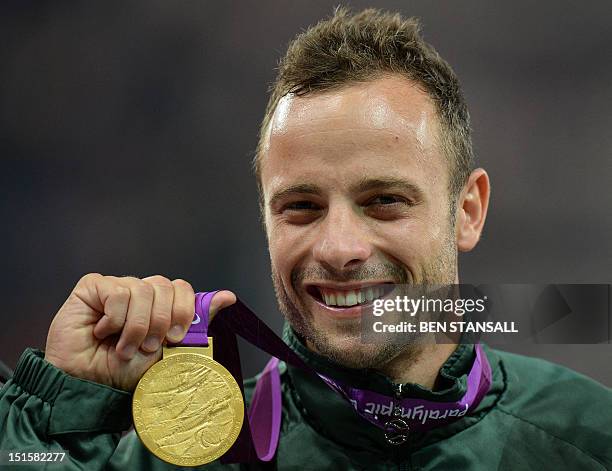
Oscar Pistorius
 South Africa
Also known as: Blade Runner, Oscar Leonard Carl Pistorius
Birthday
November 22, 1986
Birth Sign
Sagittarius
Birthplace
Sandton, South Africa
Age
39 years old
Height
5 ft 2 in (1.60 m)
About
Oscar Pistorius is a South African former sprinter who made history as the first double amputee to compete in both the Paralympic and Olympic Games. Born in Sandton on November 22, 1986, he overcame the amputation of both legs below the knee at 11 months old to become a world-class athlete, earning the nickname "Blade Runner" for his carbon-fiber prosthetic blades. His athletic achievements were unprecedented, but his career and public life were shattered by the murder of his girlfriend Reeva Steenkamp in 2013.
Pistorius's conviction for murder in 2016 and subsequent 15-year prison sentence marked a dramatic fall from grace. He was released on parole on January 5, 2024, after serving about 8.5 years. Today, he remains a deeply polarizing figure, remembered both for his groundbreaking athletic feats and for the tragedy that ended his career.
Early Life & Background
Oscar Pistorius was born with a congenital condition that left him without fibula bones in both legs, leading to their amputation below the knee when he was just 11 months old. Within six months, he learned to walk on prosthetic legs, an early sign of the determination that would define his life. His parents, Sheila and Henke Pistorius, encouraged him to participate in sports, and he grew up playing cricket, wrestling, boxing, rugby, and tennis alongside his older brother and younger sister.
The family lived in Johannesburg, and his mother, Sheila, was a major influence before her death when Oscar was 15. His parents divorced when he was six, and his mother's passing left a deep impact. At Pretoria Boys High School, a knee injury during a rugby match sidelined him, and running was part of his rehabilitation. That decision changed everything. He started sprinting and soon found his calling, training seriously with coach Ampie Louw.
Pistorius's first major competition came at the 2004 Athens Paralympics, where he won gold in the 200 meters and a bronze in the 100 meters. That breakthrough set the stage for a career that would push the boundaries of what was considered possible for an amputee athlete.
Career Growth
Pistorius's career skyrocketed after Athens. He dominated Paralympic sprinting, winning three gold medals at the 2008 Beijing Games in the 100, 200, and 400 meters. In 2011, he became the first amputee to win a medal at a non-disabled world championship, taking bronze in the 200 meters at the Daegu World Championships. That same year, he won three golds at the IPC World Championships.
The pinnacle came at the 2012 London Olympics, where he made history as the first double amputee to compete in an Olympic track event, running in the 400 meters and the 4x400 meter relay. Though he didn't medal, his presence on the track was a global story. He also competed in the London Paralympics, adding more medals to his tally.
His career stalled after the shooting of Reeva Steenkamp in 2013. He officially retired from athletics in 2018 while serving his prison sentence. His legal battles, including the initial culpable homicide conviction in 2014 and the murder conviction upgrade in 2016, consumed his life and overshadowed his athletic legacy.
Career Timeline
Public Image & Style
Before 2013, Pistorius was celebrated as a symbol of perseverance and inspiration, a man who had overcome disability to compete at the highest level. His public image was that of the "Blade Runner," a sleek, futuristic athlete who seemed to defy the limits of the human body. He was a global ambassador for para-sport and a role model for millions.
That image collapsed after the shooting of Reeva Steenkamp. The media narrative shifted from triumph to tragedy, and public opinion turned sharply against him. His trial became a global spectacle, and he was vilified in the press. Even after his release, he remains a polarizing figure, with many viewing him as a convicted murderer rather than a fallen sports hero.
Fame & Fandom
Oscar Pistorius never cultivated a formal fanbase with a specific name, rituals, or organized campaigns. During his athletic peak, public enthusiasm flowed through mainstream sports channels rather than a dedicated community of enthusiasts. His supporters were general admirers of elite athletics who followed his journey from the Paralympics to the Olympics, but no collective identifier emerged to unify them. The intense scrutiny surrounding his 2013 conviction and subsequent imprisonment effectively dissolved any remaining informal support structure. In the years since his release, his presence has been described as ghost-like, with reports indicating he lives in near-total obscurity, avoiding media interactions and public life. There are no documented fan-funded projects, birthday tributes, or streaming campaigns associated with him today. Despite this lack of an organized fandom, his global recognition remains immense, driven by the sheer scale of his notoriety across decades of media coverage, search activity, and cultural consumption worldwide. According to the latest iFANN Global Fame Rankings, he is the 38th most famous person in South Africa, holding steady from the previous cycle. He ranks as the 9th most famous person from South Africa overall. Within his professional sphere, he stands as the 23rd most famous person in Olympic Sports, maintaining his position in the rankings.
Interesting Facts and Legends
Pistorius lived by the motto: "You're not disabled by the disabilities you have, you are able by the abilities you have." A native Afrikaans speaker fluent in English, he often highlighted his partial Italian ancestry in interviews. While he embraced the nickname "Blade Runner" for his carbon-fiber prosthetics, the moniker sparked early controversy regarding potential unfair advantages. In 2007, the IAAF initially banned him from able-bodied events over these concerns, though the Court of Arbitration for Sport later overturned the decision. His life story was chronicled in a 2011 documentary and multiple books. One of the most enduring legends involves his semifinal race at the London 2012 Olympics, where he finished last in his heat yet received a standing ovation from 80,000 spectators, a moment broadcast globally that cemented his place in sporting history. Another defining narrative centers on the murder of Reeva Steenkamp on February 14, 2013. The trial produced iconic imagery of Pistorius breaking down in court, while his claim of mistaking her for an intruder became a subject of widespread debate and parody. Recent lore even includes reports from 2026 describing his quiet post-prison life and a new relationship with a woman rumored to be a "Reeva lookalike," adding a final chapter to his complex public mythology.
Notable Quotes
“You're not disabled by the disabilities you have, you are able by the abilities you have.”
Family & Personal Life
Oscar Pistorius was born to Sheila and Henke Pistorius in Sandton, South Africa. His mother, Sheila, was a homemaker who died in 2002 when Oscar was 15; her influence on his resilience was profound. His father, Henke, worked in the mining industry. He has an older brother, Carl, and a younger sister, Aimee. The family was Christian and of Afrikaner descent.
Pistorius's parents divorced when he was six, and he was raised primarily by his mother until her death. He has spoken about the pain of losing her and how it shaped him. As of his parole in 2024, he lives a quiet life, reportedly with his family, though he has no children. His brother Carl was also involved in a legal case, but details are scarce.
Notable Connections
Oscar Pistorius is most closely associated with Reeva Steenkamp, his girlfriend whom he killed in 2013. His parents, Sheila and Henke Pistorius, and his siblings also figure prominently. In the athletic world, he was linked with fellow sprinters like Demetrius Pinder, but his name became synonymous with the legal case that overshadowed his sporting achievements.
Relationships & Dating History
Oscar Pistorius's most significant relationship was with Reeva Steenkamp, a model and law graduate. They began dating in late 2012, and their relationship was private but seemed happy. On February 14, 2013, Pistorius shot and killed Steenkamp at his home, claiming he mistook her for an intruder. He was convicted of her murder in 2016.
Before Steenkamp, Pistorius had a few short-lived romances, but none were publicly documented. Since his release on parole in 2024, he has remained single and has not been linked to anyone publicly.
- DatedReeva Steenkamp2012 - 2013Pistorius shot and killed Steenkamp on February 14, 2013.
Salary, Net Worth In 2026
$500 Thousand
iFANN Editorial Team estimate
Oscar Pistorius's financial standing has been heavily impacted by legal battles and incarceration. Before his conviction, he accumulated wealth through sponsorship deals with major brands like Nike and Oakley, along with appearance fees and prize money. At the height of his career, annual earnings were estimated in the hundreds of thousands of dollars. Following his arrest, most corporate partners severed ties, and substantial legal fees drained his savings significantly. Per iFANN's editorial analysis, his net worth as of 2026 stands at $500 Thousand, derived primarily from past earnings and residual income related to his story. He has not re-entered the public sphere in a manner that generates significant revenue, and his parole release in 2024 has not resulted in new commercial ventures.
Awards Won (6)
Pistorius won six gold medals at the Paralympic Games, along with one silver and one bronze. He also won three golds at the 2011 IPC World Championships and a bronze at the 2011 World Championships in Athletics, a historic first for an amputee.
2012 · 400m T44
London 2012 Paralympics
2008 · 100m T44
Beijing 2008 Paralympics
2008 · 200m T44
Beijing 2008 Paralympics
2008 · 400m T44
Beijing 2008 Paralympics
2004 · 200m T44
Athens 2004 Paralympics
2011 · 200m
Daegu 2011
Known For
2012 London Olympics
2012 · First double amputee to compete in Olympic track event
2011 World Championships
2011 · First amputee to win a non-disabled world track medal
Keywords
Sources
Quick Facts
- Profession
- Former sprinter
- Born
- November 22, 1986
- Birthplace
- Sandton, South Africa
- Gender
- Male
- Birth Sign
- Sagittarius
- Height
- 5 ft 2 in (1.60 m)
- Net Worth
- $500 Thousand
Personal Details
- Full Name
- Oscar Leonard Carl Pistorius
- Height
- 5 ft 2 in (1.60 m)
- Education
- University of Pretoria
Frequently Asked Questions
How old is Oscar Pistorius?
Where was Oscar Pistorius born?
Why were Oscar Pistorius's legs amputated?
What was Oscar Pistorius convicted of?
When was Oscar Pistorius released from prison?
Social Media
Similar People

Join the community
fans discussing