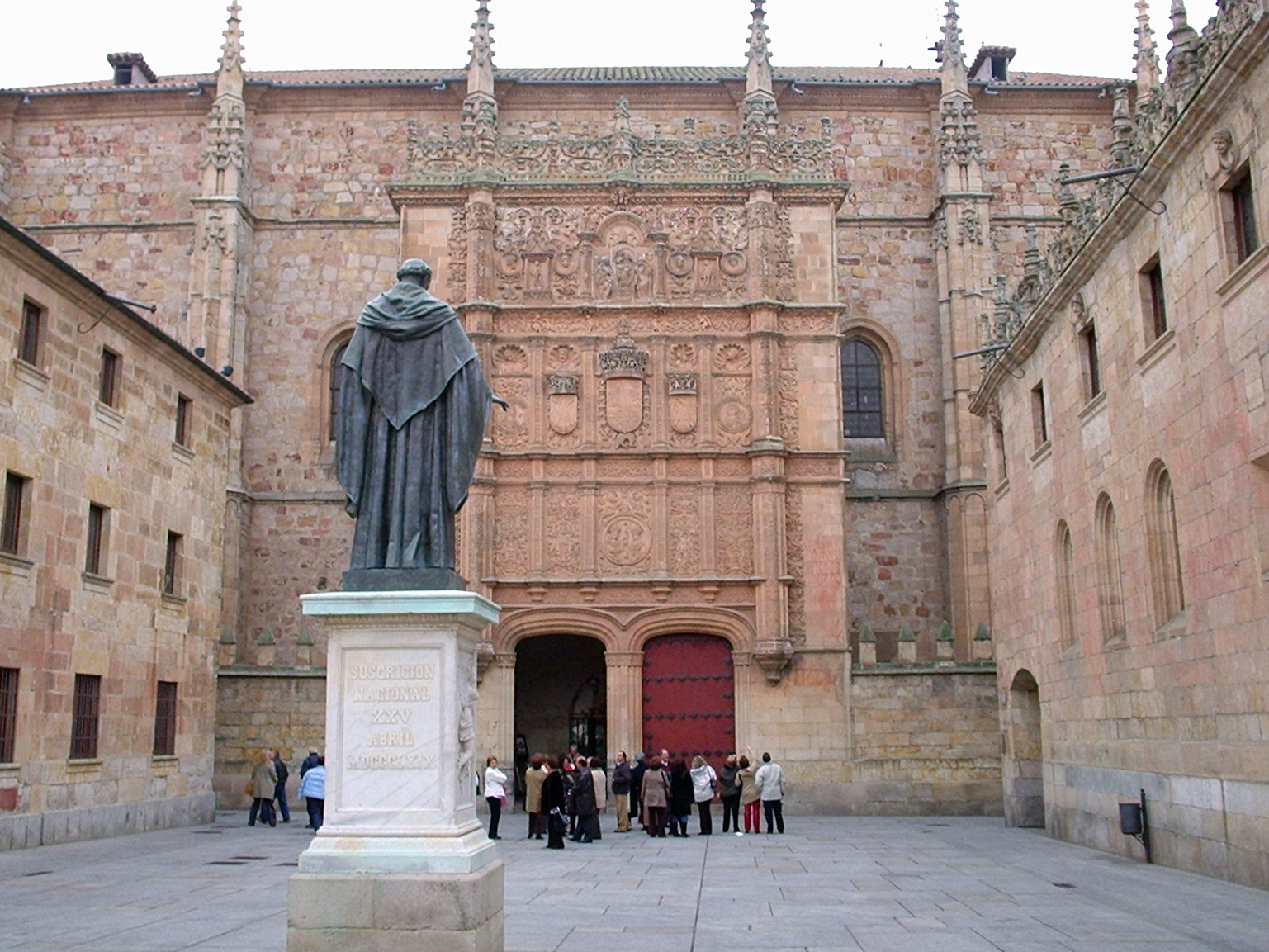
University of Salamanca
 Spain
Spain"The oldest university in the Hispanic world, where history meets innovation."
About
Founded in 1218 by King Alfonso IX of León, the University of Salamanca is the oldest institution of higher learning in the Hispanic world and one of the oldest continuously operating universities in Europe. Its royal charter was later confirmed by Pope Alexander IV in 1255, granting its degrees universal validity. At its peak in 1584, enrollment neared 7,000 students, making it a major intellectual hub during the Spanish Golden Age.
Today, the university enrolls over 30,000 students from roughly 50 nationalities, blending centuries of tradition with a modern, international outlook. Its main campus sits in the historic city of Salamanca, a UNESCO World Heritage Site, where the Plateresque facade of the historic building draws visitors from around the globe. The institution has shaped Spanish and Latin American intellectual life, counting Miguel de Cervantes among its alumni and Francisco de Vitoria, a founding father of international law, among its faculty.
The university is organized into faculties and schools spanning humanities, sciences, and social sciences. It is especially known for its Spanish language programs for international students, including teacher training, DELE certification, and MOOCs. With a strong commitment to research and innovation, the University of Salamanca remains a vital force in higher education, balancing its rich heritage with forward-looking pursuits.
Mission
The University of Salamanca's mission is to advance knowledge, preserve Spanish and Latin American intellectual traditions, and educate future leaders. It aims to blend its centuries-old heritage with a modern, international outlook, fostering research, innovation, and cultural exchange. The institution is dedicated to serving society through high-quality education and scholarship, while maintaining its role as a bridge between Spain and the wider world.
History
King Alfonso IX of León founded the University of Salamanca in 1218 as a 'General Study' for the kingdom. The institution gained papal recognition in 1255 when Pope Alexander IV issued a bull that made its degrees valid throughout Christendom. During the 16th century, Salamanca became a leading center of learning, particularly in law, theology, and philosophy. Francisco de Vitoria's lectures in the 1530s laid the groundwork for modern international law, and the university's influence extended to the Americas, where it served as a model for early colonial universities.
The university's enrollment peaked at nearly 7,000 students in 1584, reflecting its status as a major intellectual hub. Over the centuries, it has weathered political upheavals, including the Napoleonic Wars and the Spanish Civil War, yet it has maintained continuous operation. In the 20th century, it expanded its faculties and embraced internationalization, becoming a top destination for Spanish language learners. A notable recent event occurred on October 3, 2025, when the university awarded an honorary doctorate to tennis legend Rafael Nadal, marking the first time an athlete received this honor from the institution.
Notable People
Miguel de Cervantes
Alumnus · 1568-1569
Author of Don Quixote, widely considered the first modern novel.
Francisco de Vitoria
Professor · 1526-1546
Developed foundational concepts of international law.
Rafael Nadal
Honorary Doctorate Recipient · 2025
First athlete to receive an honorary doctorate from the university.
Milestones
1218
Founded by King Alfonso IX of León.
1255
Pope Alexander IV confirmed the university's degrees as universally valid.
1584
Enrollment reached nearly 7,000 students.
2025
Rafael Nadal received an honorary doctorate, the first athlete to do so.
2026
Sharjah Arabic Language Hall opened at the university.
Sources
Organization Info
- Founded
- 1218
- Headquarters
- Salamanca
- Country
- Spain
- Type
- University
- Students
- 30,000+
- Nationalities
- 50
Official Website
www.usal.es/
Join the community
fans discussing