University of Notre Dame
 United States
"A powerful force for good in the world"
About
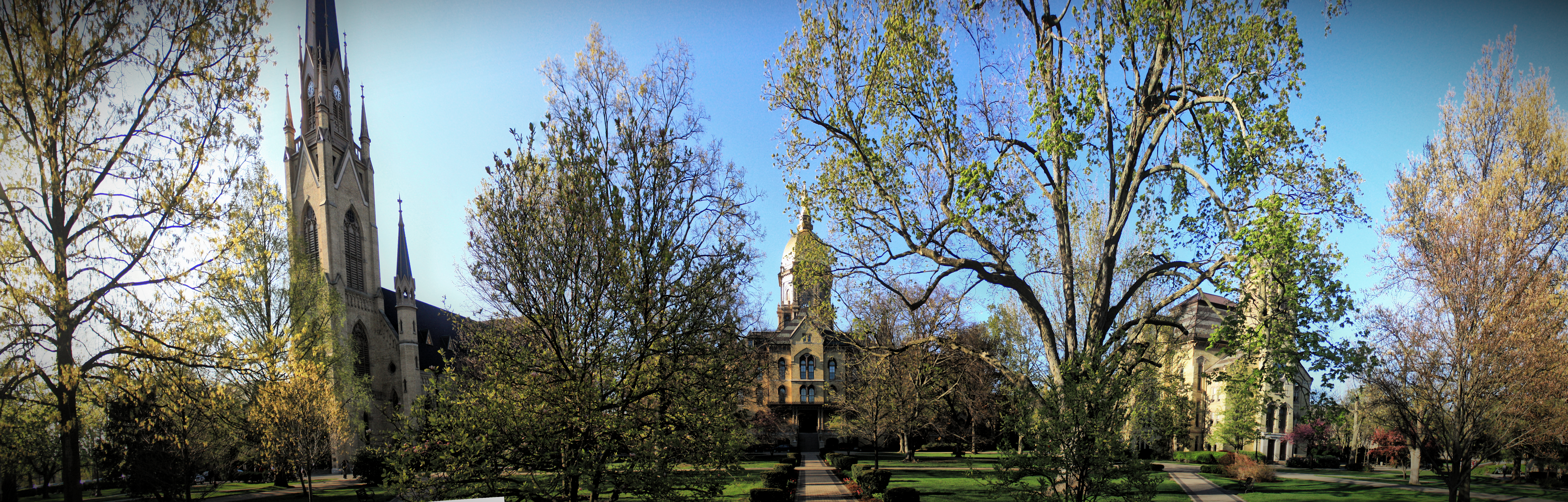
The University of Notre Dame du Lac, better known simply as Notre Dame, is a private Catholic research university in Notre Dame, Indiana. Founded in 1842 by the Congregation of Holy Cross, a Catholic religious order of priests and brothers, the university has grown into one of the most recognized institutions in American higher education. Its 1,261-acre suburban campus is marked by iconic landmarks: the Golden Dome atop the Main Building, the Basilica of the Sacred Heart, the Grotto of Our Lady of Lourdes, and the Word of Life mural, often called Touchdown Jesus. Notre Dame is not just a university; it's a cultural touchstone, especially for its storied football program, but its academic reputation spans across disciplines, from the Mendoza College of Business to the Notre Dame Law School. The university's endowment exceeds $20 billion, ranking among the largest in the world, and it consistently ranks in the top 20 of national universities. With a student body of around 13,000, it maintains a residential college system that fosters a tight-knit community. The university is led by Rev. John I. Jenkins, C.S.C., who has served as president since 2005, and it continues to blend rigorous research with a strong Catholic identity. Its alumni network is powerful, with figures like Condoleezza Rice, Regis Philbin, and numerous NFL stars, and its athletic teams compete in the NCAA Division I as the Fighting Irish, a name that reflects the school's immigrant heritage. Notre Dame's blend of tradition, faith, and academic excellence makes it a unique fixture in the landscape of American universities.
Mission
Notre Dame's stated mission is to be "a powerful force for good in the world," inspired by its Catholic character. The university aims to foster a community of scholars dedicated to the pursuit of truth, the development of the whole person, and service to others. Its Catholic identity shapes its commitment to integrating faith and reason, encouraging students to use their education for the betterment of society.
History
Notre Dame was founded on November 26, 1842, by Rev. Edward Sorin, C.S.C., a French priest of the Congregation of Holy Cross. Sorin and his companions arrived at a small plot of land in northern Indiana, near the Saint Joseph River, and named their settlement in honor of Our Lady. The university's full name, du Lac, means "of the lake," reflecting the nearby lakes that once dotted the landscape. From a modest log cabin, the institution grew steadily, surviving fires, financial crises, and the Civil War.
The late 19th century saw the construction of the iconic Main Building with its Golden Dome, completed in 1879 after a devastating fire destroyed the original. The university expanded its curriculum, adding graduate programs and professional schools. By the early 20th century, Notre Dame had become a national player in college football under coach Knute Rockne, whose "Fighting Irish" teams captured the public's imagination. The university's Catholic character remained central, but it welcomed students of all faiths.
Post-World War II, Notre Dame transformed into a major research institution, building its endowment and reputation. The 1960s brought significant expansion, and the university admitted its first female undergraduates in 1972. In recent decades, it has continued to grow, with initiatives like the Keough School of Global Affairs and a strong emphasis on international engagement. Today, it stands as one of the world's leading Catholic universities, blending tradition with innovation.
Subdivisions
College of Arts and Letters
The humanities and social sciences college, including the Department of Political Science.
College of Science
Offers programs in the natural sciences.
College of Engineering
Engineering programs across disciplines.
Mendoza College of Business
Business school known for ethical leadership and AI integration.
School of Architecture
Architecture program with a focus on traditional design.
Keough School of Global Affairs
Global policy and international relations school.
School of Nursing
Nursing education and research.
Notre Dame Law School
Law school with strong international programs.
School of Theology
Theological studies and ministry training.
Notable People
Condoleezza Rice
Alumna · 1975
Former U.S. Secretary of State, political scientist
Regis Philbin
Alumnus · 1953
Television host
Joe Montana
Alumnus · 1979
NFL Hall of Fame quarterback
Edward Sorin
Founder · 1842
Founded the university
Milestones
1842
Founded by Edward Sorin and the Congregation of Holy Cross.
1879
Main Building and Golden Dome rebuilt after fire.
1924
Knute Rockne's team wins national championship, boosting national profile.
1972
First female undergraduates admitted.
2005
Rev. John I. Jenkins becomes president.
2026
Shields Family Hall football facility dedicated; Mendoza College embeds AI in MBA.
Sources
Organization Info
- Founded
- November 26, 1842
- Headquarters
- Notre Dame, Indiana, United States
- Country
- United States
- President
- John I. Jenkins
- Type
- University
- Founder
- Edward Sorin
- Endowment
- $20 billion
- Students
- 13,000
- Campus Size
- 1,261 acres
- Tuition 2026-27
- $67,607
- US News Ranking
- #20 National Universities
Financials
- Revenue
- $1.4 billion
- Endowment
- $20 billion
- Employees
- 1396
Official Website
www.nd.edu/
Join the community
fans discussing