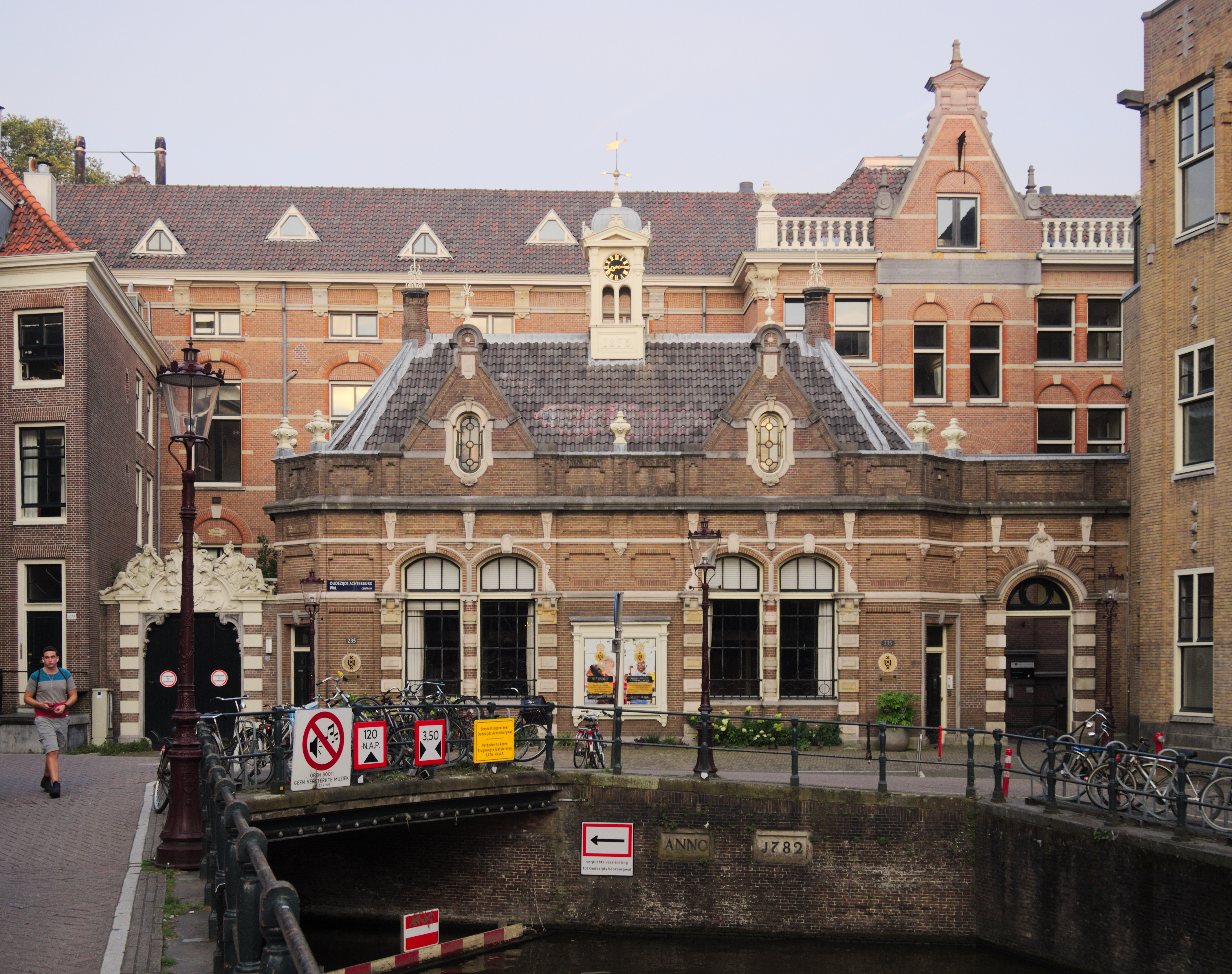
University of Amsterdam
 Netherlands
"Boundless curiosity: learning, research and innovation for a better world"
About
Amsterdam's municipal leaders founded the Athenaeum Illustre in 1632, a school for higher learning that eventually grew into the University of Amsterdam. Four centuries later, the UvA enrolls more than 44,000 students from over 100 countries, making it one of the largest research universities in Europe. Its seven faculties cover humanities, social sciences, law, economics, medicine, dentistry, and science, with programs taught in both Dutch and English.
The university's identity is tied to its home city. Campuses sit across Amsterdam, from the historic City Centre Campus to the modern Amsterdam Science Park, where the science faculty and numerous research institutes are based. The UvA shares the city with the Vrije Universiteit Amsterdam, but the two maintain separate governance and distinct academic profiles.
Research at the UvA is extensive and interdisciplinary. The university is a member of the League of European Research Universities and Universitas 21, and it consistently ranks among the top 100 universities globally. Its strengths include communication science, psychology, and geography. Alumni include six Nobel laureates and former Dutch Prime Minister Mark Rutte, reflecting the institution's broad impact on politics, science, and culture.
Mission
The University of Amsterdam's mission is to pursue 'boundless curiosity: learning, research and innovation for a better world.' It aims to educate students to become critical, independent thinkers and to produce research that addresses societal challenges. The university emphasizes international collaboration and open science, and it seeks to maintain a diverse and inclusive community where knowledge is shared across disciplines.
History
The Athenaeum Illustre opened its doors in 1632 in Amsterdam's former Agnietenkapel, a medieval chapel. The city's municipal government funded the institution, giving it a civic character distinct from the church-run universities common elsewhere in Europe. For more than two centuries, it offered courses in philosophy, history, and law, but it could not grant degrees, so students typically finished their studies at Leiden or Utrecht.
That changed in 1877, when the Dutch government granted the Athenaeum full university status. Renamed the University of Amsterdam, it gained the right to confer doctorates and expanded its faculties rapidly. The late nineteenth century brought new laboratories and institutes, and the university began to attract international researchers. By the early twentieth century, the UvA had become a leading center for physics and chemistry, with faculty and alumni earning Nobel Prizes in those fields.
The Second World War disrupted the university profoundly. The occupying German administration dismissed Jewish faculty and students, and many were deported and killed. After the war, the UvA rebuilt and grew steadily. Student numbers climbed through the 1960s and 1970s, and new campuses emerged, including the Amsterdam Science Park in the east of the city. In recent decades, the university has consolidated its position among Europe's elite research institutions, joining LERU and Universitas 21 and expanding its international student body.
Subdivisions
Faculty of Humanities
Covers languages, literature, history, philosophy, and media studies.
Faculty of Social and Behavioural Sciences
Includes psychology, sociology, communication science, and political science.
Faculty of Law
Focuses on Dutch and international legal studies.
Faculty of Economics and Business
Hosts the Amsterdam Business School, offering programs in economics, finance, and business administration.
Faculty of Medicine
Operates with Amsterdam UMC, training medical professionals and conducting clinical research.
Faculty of Dentistry (ACTA)
The Academic Centre for Dentistry Amsterdam, jointly run with the Vrije Universiteit.
Faculty of Science
Includes mathematics, physics, chemistry, biology, computer science, and astronomy, based at Amsterdam Science Park.
Notable People
Mark Rutte
Alumnus
Prime Minister of the Netherlands from 2010 to 2024
Tobias Asser
Alumnus
Nobel Peace Prize laureate (1911)
Jacobus van 't Hoff
Alumnus
Nobel Prize in Chemistry (1901)
Pieter Zeeman
Alumnus
Nobel Prize in Physics (1902)
Frits Zernike
Alumnus
Nobel Prize in Physics (1953)
Christiaan Eijkman
Alumnus
Nobel Prize in Physiology or Medicine (1929)
Milestones
1632
Athenaeum Illustre founded by Amsterdam's city council
1877
Granted university status and renamed University of Amsterdam
1901
First Nobel Prize awarded to an alum, Jacobus van 't Hoff in Chemistry
1961
Amsterdam Science Park established
1999
Joined the League of European Research Universities
2018
Opened the new University Library at Roeterseiland campus
Sources
Organization Info
- Founded
- 1632
- Headquarters
- Amsterdam
- Country
- Netherlands
- Type
- University
- Employees
- 6200
- Students
- 44,000+
- Faculties
- 7
Financials
- Employees
- 6200
Official Website
www.uva.nl/
Join the community
fans discussing