 Belgium
About
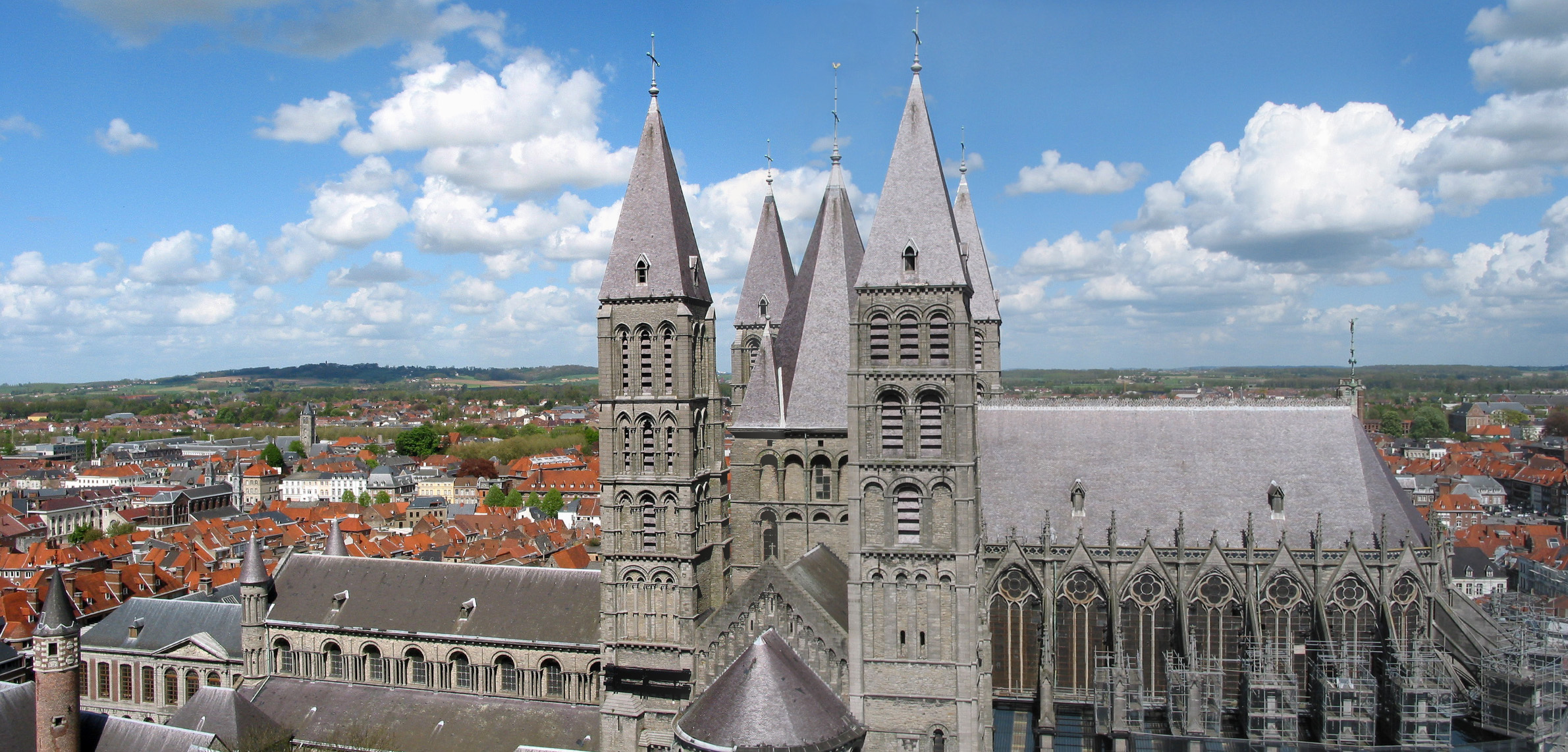
Tournai Cathedral, formally the Cathedral of Our Lady, stands as one of Belgium's most significant religious and architectural landmarks. This Roman Catholic cathedral serves as the seat of the Diocese of Tournai and has been a UNESCO World Heritage Site since 2000, recognized for its exceptional Romanesque nave and distinctive five-tower complex. The cathedral's history stretches back to the 12th century, making it a living chronicle of medieval craftsmanship.
While it may not have a director or cast in the cinematic sense, the cathedral's "production" involved generations of builders, masons, and artisans who shaped its evolution. Its construction began in the early 1100s, with the Romanesque nave and transept completed by 1213, followed by a Gothic choir rebuilt in the 13th century. The building's scale is impressive: the nave spans 134 meters in length, and the central tower rises to 83 meters, dominating the skyline of Tournai.
As a UNESCO site, Tournai Cathedral is not just a place of worship but a monument to the region's cultural heritage. Its architectural significance lies in its fusion of Romanesque solidity and Gothic lightness, a transition that marks a pivotal moment in European building history. For visitors and historians alike, it offers a rare glimpse into the artistic and spiritual life of medieval Flanders.
Mission
Tournai Cathedral serves as the seat of the Diocese of Tournai and functions as a living place of worship, a center for diocesan activities, and a steward of one of Belgium's most important cultural and architectural heritage sites. Its mission encompasses maintaining the liturgical life of the Catholic community, preserving the cathedral's historic fabric for future generations, and welcoming pilgrims and visitors who come to experience its architectural and spiritual significance.
History
Construction of Tournai Cathedral began on January 17, 1101, a date recorded in the cathedral's own chronicles. The Romanesque nave and transept were completed by 1213, and the Gothic choir followed in the 13th century. This layered construction gives the building its exceptional character, blending the solid, rounded forms of Romanesque architecture with the soaring, light-filled spaces of the Gothic style.
The cathedral's five towers, a feature unique among Belgian churches, were part of the original design and give Tournai its nickname, the "City of 5 Steeples." Over the centuries, the cathedral has witnessed significant historical events, including its role in the liberation of the city at the end of the First World War.
In 2000, UNESCO recognized the cathedral's outstanding universal value, citing its Romanesque nave, transept, and five bell towers as exceptional examples of medieval architecture. The cathedral has been under continuous restoration for over two decades, a testament to the ongoing effort to preserve its fabric for future generations.
Milestones
1101
Construction of the cathedral begins on January 17.
1213
Romanesque nave and transept completed.
13th century
Gothic choir rebuilt.
2000
Designated a UNESCO World Heritage Site.
2011
Belgium demands return of a Rubens painting seized during the French Revolution.
2021
Cathedral hosts a fashion show with historic priestly vestments.
Departments
Sources
Organization Info
- Founded
- 1101-01-17
- Headquarters
- Tournai, Belgium
- Country
- Belgium
- Parent
- Diocese of Tournai
- Type
- Religious
- UNESCO World Heritage
- 2000
- Nave length
- 134 meters
- Central tower height
- 83 meters
- Largest Romanesque church in Belgium
- Yes
Official Website
www.cathedrale-tournai.be
Join the community
fans discussing