 Turkey
About
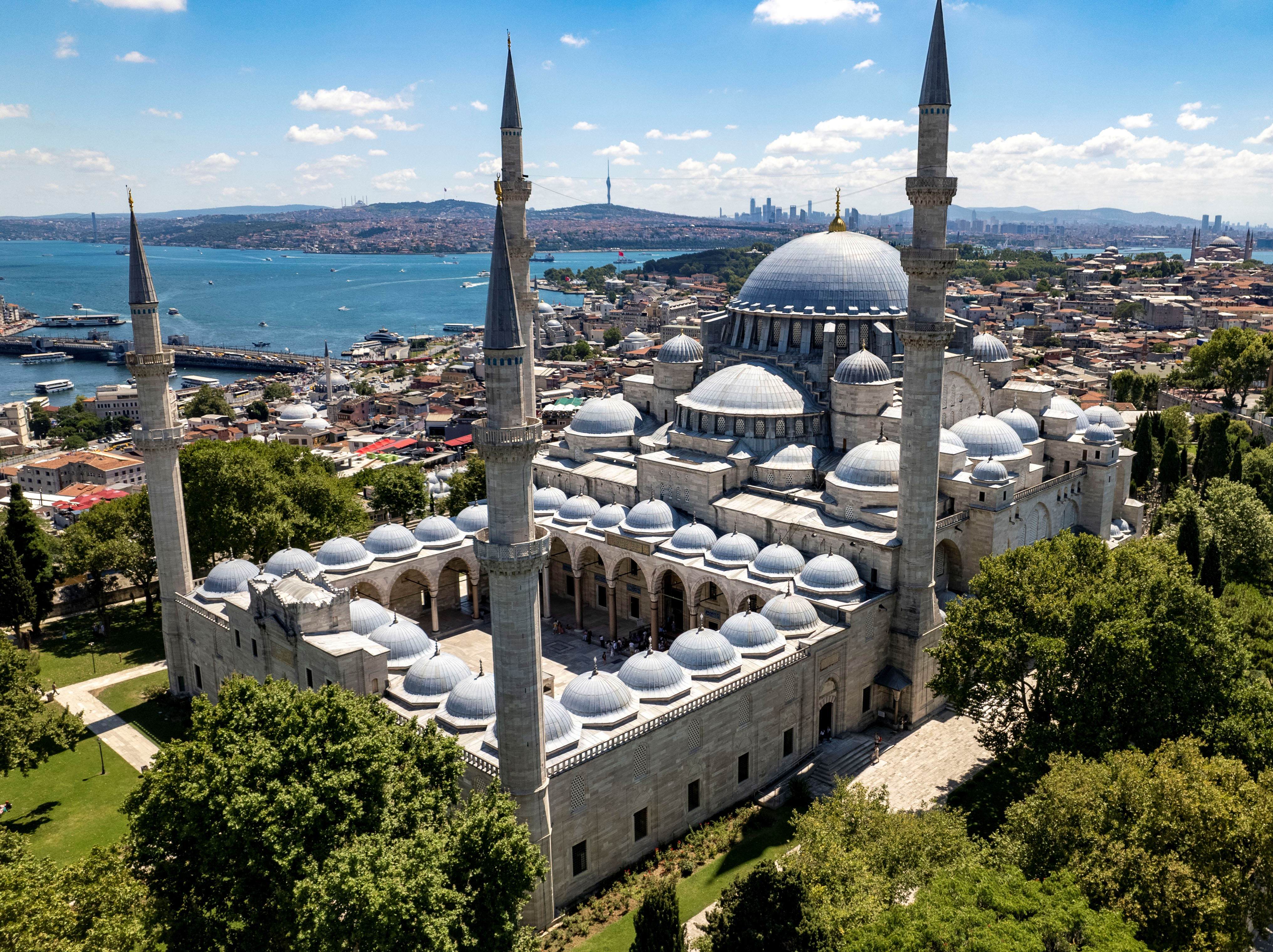
Perched on the Third Hill of Istanbul, the Süleymaniye Mosque is one of the Ottoman Empire's grandest architectural statements. Commissioned by Sultan Suleiman the Magnificent and designed by the imperial architect Mimar Sinan, this 16th-century masterpiece dominates the city's skyline. Construction began in 1550 and the mosque was inaugurated in 1557, though work on the surrounding complex likely continued for several more years. The building is a prime example of Ottoman religious architecture, blending Byzantine and Islamic influences into a harmonious whole.
The mosque was built as part of a larger külliye, or complex, that historically included schools, a library, a hospital, a public bath, kitchens, and a caravanserai. These institutions made it a major center of education and social welfare in the Ottoman Empire. The mosque itself is one of the largest in Istanbul, with a vast central dome and four minarets, and its design influenced countless later mosques across the region.
Today, the Süleymaniye Mosque remains an active place of worship and a vibrant center of community life, particularly during Ramadan. It is also one of Istanbul's most visited landmarks, drawing both local worshippers and international tourists. Its cultural and historical significance has made it a frequent subject of documentaries and travel features, and it continues to define the city's skyline nearly five centuries after its completion.
Mission
The Süleymaniye Mosque serves as a house of worship for the Muslim community in Istanbul, providing a space for daily prayers, Friday sermons, and religious education. Beyond its function as a mosque, it continues the legacy of its original külliye by offering community services and social support. The mosque also aims to welcome visitors from around the world, sharing the architectural and spiritual heritage of the Ottoman Empire.
History
The Süleymaniye Mosque was commissioned by Sultan Suleiman the Magnificent, the tenth Ottoman sultan, who ruled from 1520 to 1566. The sultan chose his chief imperial architect, Mimar Sinan, to design the mosque, which would become the largest of Sinan's works. Construction began in 1550 on the Third Hill of Istanbul, a site deliberately chosen to echo the Byzantine imperial past and assert Ottoman dominance over the city's skyline.
The mosque was funded by the sultan's personal treasury, reflecting the wealth and power of the Ottoman Empire at its zenith. The main structure was completed in 1557, and the mosque was inaugurated that year, though the surrounding complex likely took several more years to finish. Sinan later referred to the mosque as his masterpiece, and it remains one of the most important works of Ottoman architecture.
Over the centuries, the mosque has survived multiple earthquakes and fires, preserving its architectural grandeur and acoustic design. It has undergone restorations, most recently completed in recent years. The mosque has remained an active center of worship and society, and in February 2026 it marked 469 years since its completion, still defining Istanbul's skyline and soul.
Subdivisions
Süleymaniye Darülhadisi
A school dedicated to the study of hadith, the sayings and actions of the Prophet Muhammad.
Süleymaniye Darülkurrası
A school for Quranic recitation, training students in the proper techniques of reading the Quran.
Süleymaniye Darültıbbı
A medical school that trained physicians and provided healthcare services within the complex.
Süleymaniye Hamam
A public bathhouse that served the community and was part of the mosque's charitable institutions.
Ottoman School of Süleymaniye
An educational institution within the complex that offered a broad curriculum to students.
Notable People
Suleiman the Magnificent
Sultan of the Ottoman Empire · 1520-1566
Commissioned the mosque and is buried in a mausoleum on the grounds.
Mimar Sinan
Chief Imperial Architect · 1539-1588
Designed the mosque, which he considered his masterpiece; his tomb is located at the site.
Milestones
1550
Construction of the mosque begins under the direction of Mimar Sinan.
1557
The mosque is completed and inaugurated.
1558
Some sources cite this as the completion date; work on the complex may have continued.
1985
The Historic Areas of Istanbul, including the Süleymaniye Mosque, are designated a UNESCO World Heritage Site.
2026-02
The mosque marks 469 years since its completion, still dominating the Istanbul skyline.
2026-07
A new program offers Quran lessons in English to visitors, expanding educational outreach.
Sources
Organization Info
- Founded
- 1550
- Headquarters
- Fatih District, Istanbul, Turkey
- Country
- Turkey
- Parent
- Directorate of Religious Affairs (Diyanet)
- Type
- Religious
- Architect
- Mimar Sinan
- Location
- Third Hill, Istanbul
- UNESCO World Heritage Site
- Yes (1985)
Join the community
fans discussing