 France
About
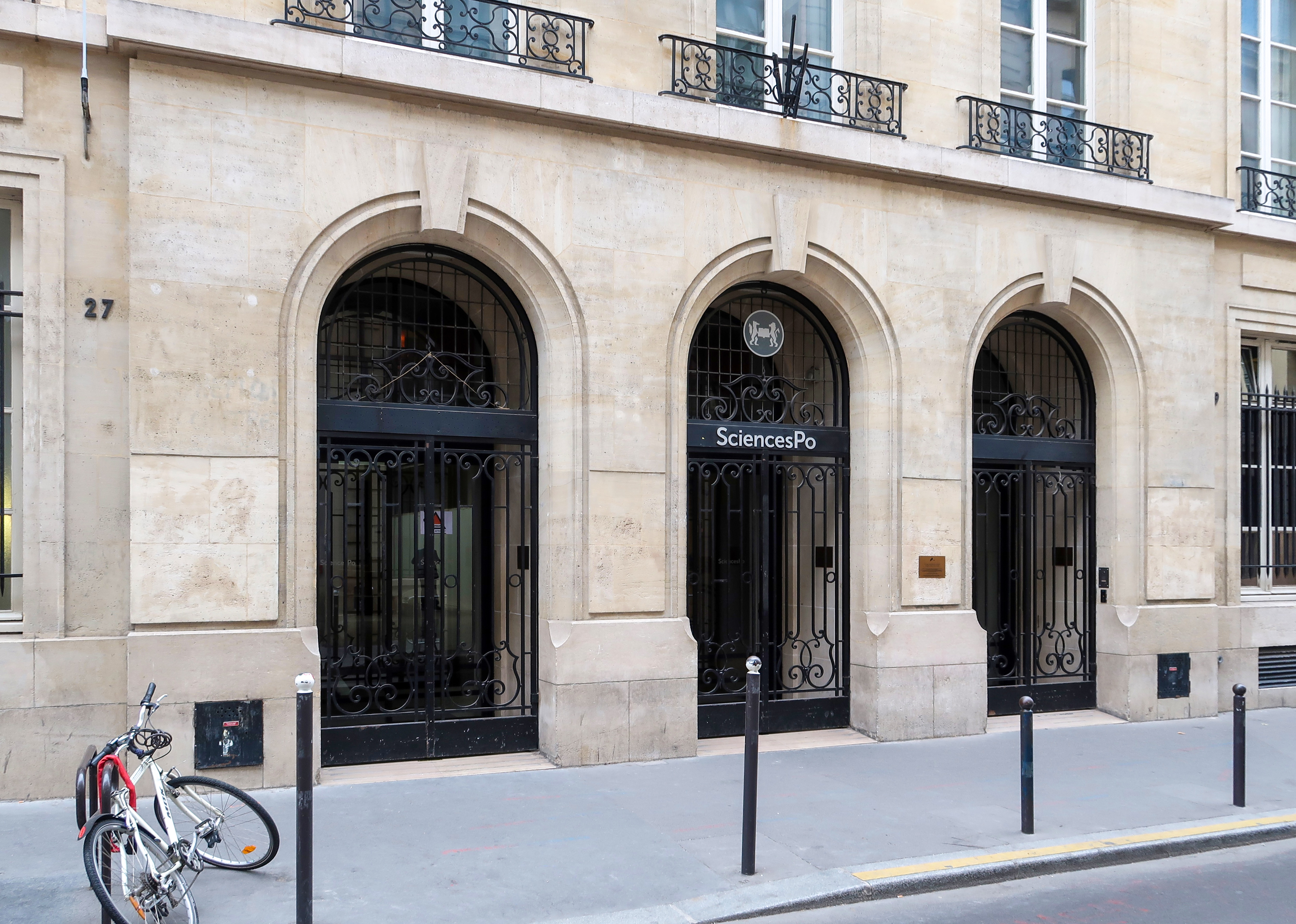
Sciences Po, officially the Paris Institute of Political Studies, stands as a public research university and elite grande école in France. Émile Boutmy established the institution in 1872 following the national trauma of France's defeat in the Franco-Prussian War. He argued that the country's failure stemmed from an inadequately trained political and administrative class, so he created a school to provide rigorous, non-clerical training in governance and society. This founding impulse still shapes the university today: a place where social sciences meet public service and intellectual rigor pairs with civic engagement.
The university operates across seven campuses in France, including the historic Paris location on Boulevard Saint-Germain and six decentralized sites in Dijon, Le Havre, Menton, Nancy, Poitiers, and Reims. Each regional campus often features a distinct thematic or geographic focus. At the graduate level, the institution houses several professional schools, most notably the Paris School of International Affairs (PSIA), which launched in 2009 to offer master's degrees in international governance and diplomacy. With approximately 3,280 staff members, Sciences Po balances a large operational scale with an intimate, tutorial-style teaching approach.
Its alumni network includes numerous French presidents, prime ministers, and global leaders in diplomacy and business. The university has cultivated strong international partnerships, including collaborations with Columbia University and UNESCO, reflecting its global outlook. As it looks to the future, Sciences Po is exploring new ventures like a potential campus in Brussels and launching innovative dual-degree programs to address pressing challenges such as climate change.
Mission
Sciences Po trains ethically minded and socially conscious individuals through a model that combines academic rigor with civic engagement. The university emphasizes international understanding and public service, aiming to prepare students for careers in government, diplomacy, business, and the non-profit sector. Central to this mission is the Civic Learning Programme, which integrates community service into the curriculum to ensure students apply their knowledge to real-world challenges.
History
Sciences Po was born in 1872 as a direct response to France's defeat in the Franco-Prussian War. Founder Émile Boutmy, a political scientist and journalist, believed the nation's downfall lay in the poor training of its political and administrative class. He envisioned a school combining the study of law, history, economics, and sociology to prepare future leaders for modern statecraft. The institution opened its doors in Paris with a small group of students and quickly established a reputation for academic rigor.
Over the decades, the school evolved from a private entity into a public institution while maintaining its selective ethos. In 1945, it was reorganized as a public establishment, and its undergraduate college expanded in the 1990s with the creation of decentralized campuses. The university continued to grow its international footprint, launching the Paris School of International Affairs in 2009 and forging partnerships with leading universities worldwide.
Recent years have brought significant challenges. In October 2026, the campus became the epicenter of unrest as students staged blockades to protest overcrowded classrooms and collapsing infrastructure. Clashes between protesters and police occurred, and reports indicated tensions regarding political neutrality after an incident involving an Israeli flag. Despite these controversies, the university continues to expand its academic offerings, including a new dual bachelor's degree with FGV EAESP and a joint master's degree with the Columbia Climate School focused on climate action.
Subdivisions
Paris School of International Affairs (PSIA)
Graduate school offering master's degrees in international governance, diplomacy, and related fields.
Undergraduate College
The main undergraduate division spanning seven campuses across France with distinct regional focuses.
Notable People
Émile Boutmy
Founder · 1872
Founded Sciences Po in response to the Franco-Prussian War to train a new generation of political and administrative elites.
Milestones
1872
Founded by Émile Boutmy after the Franco-Prussian War.
1945
Reorganized as a public establishment.
1990s
Establishment of the undergraduate college with decentralized campuses.
2009
Launch of the Paris School of International Affairs (PSIA).
2026
Announced a dual degree with Columbia Climate School and explored a Brussels campus.
Sources
Organization Info
- Founded
- 1872
- Headquarters
- Paris
- Country
- France
- Parent
- Sorbonne Paris Cité
- Type
- University
- Employees
- 3280
- Founder
- Émile Boutmy
Financials
- Employees
- 3280
Official Website
www.sciencespo.fr/
Join the community
fans discussing