 Spain
SpainAbout
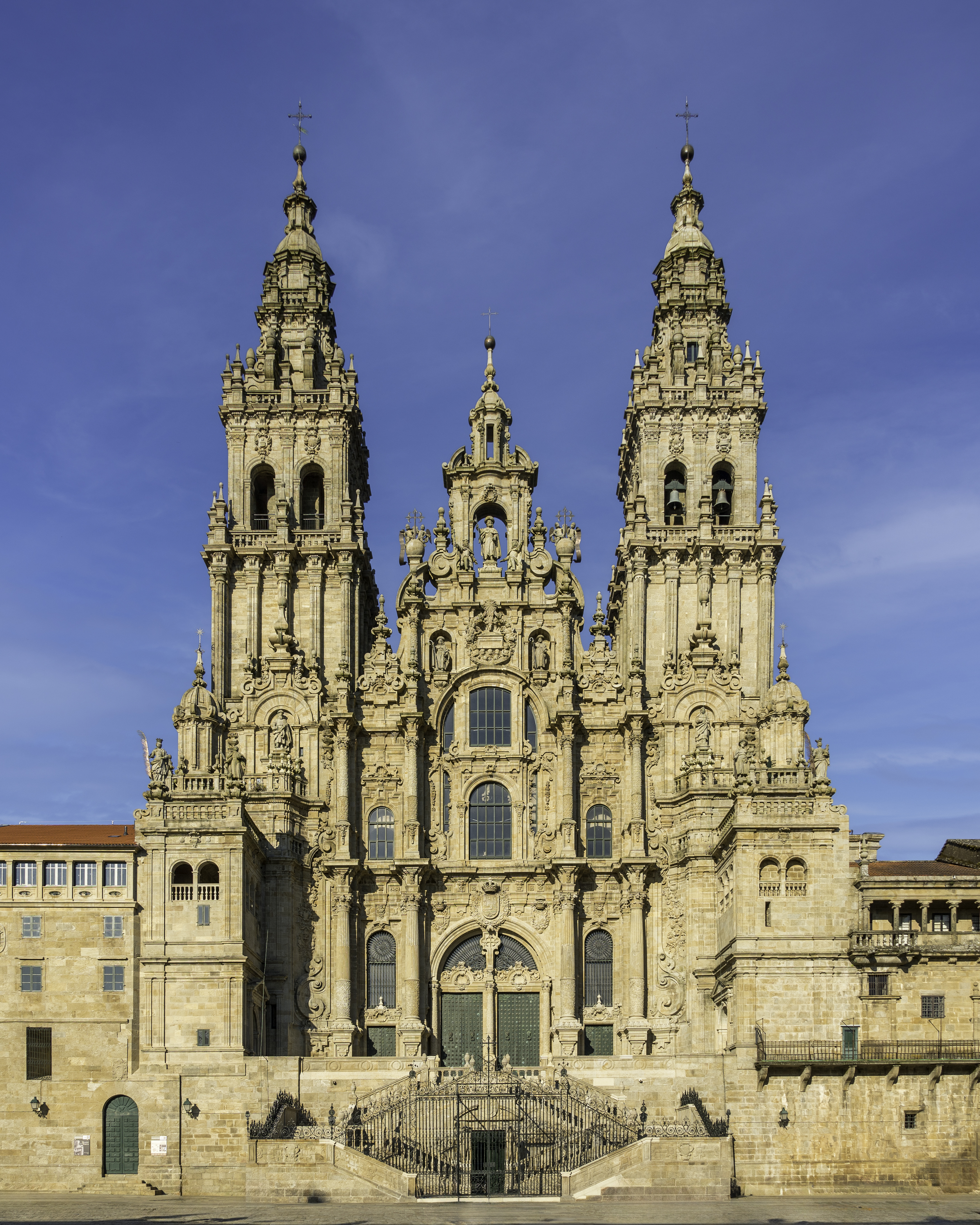
The Santiago de Compostela Archcathedral Basilica, known in Spanish and Galician as the Catedral Basílica de Santiago de Compostela, stands as the spiritual heart of Galicia and one of Christendom's most venerated shrines. It is the reputed burial place of Saint James the Great, one of Jesus Christ's apostles, making it one of the few churches in the world built over the tomb of an apostle, alongside St. Peter's Basilica in Rome. This sacred site has drawn pilgrims for over a thousand years, serving as the final destination of the Camino de Santiago, a vast network of pilgrimage routes that converge from across Europe.
Architecturally, the cathedral is a breathtaking collage of Romanesque, Gothic, Baroque, and Plateresque styles, reflecting centuries of construction and renovation. Its iconic Obradoiro façade, completed in the 18th century, is a masterpiece of Spanish Baroque, while the Portico of Glory, a Romanesque jewel from the 12th century, remains one of the most celebrated sculptural works of the medieval era. The cathedral is part of the Santiago de Compostela World Heritage Site, recognized by UNESCO in 1985 for its cultural and historical significance.
As the seat of the Metropolitan Archdiocese of Santiago de Compostela, the cathedral remains an active center of worship and a symbol of Galician identity. Its botafumeiro, a massive censer that swings dramatically across the transept during major liturgical celebrations, is a spectacle that draws visitors from around the world. The cathedral's blend of spiritual reverence, artistic grandeur, and living tradition makes it a cornerstone of Christian heritage and a must-see for any traveler to Spain.
Mission
The cathedral's mission is twofold: to serve as a living center of Catholic worship and to welcome and support pilgrims who arrive at the Tomb of Saint James. It celebrates daily masses, offers confessions, and administers the Pilgrim's Office, where pilgrims who have walked, cycled, or ridden on horseback receive the official Compostela certificate. The cathedral also acts as a guardian of its immense artistic and architectural heritage, ensuring that the Portico of Glory, the botafumeiro, and other treasures remain accessible to visitors and worshippers alike.
History
The story begins in the early 9th century, around 813 AD, when the tomb of Saint James the Great was reportedly discovered. A small church was erected on the site, and by 1003 Bishop San Pedro de Mezonzo had rebuilt the shrine to accommodate the growing number of pilgrims. The current structure's construction began in 1075 under King Alfonso VI of León and Archbishop Diego Gelmírez, who envisioned a grand cathedral worthy of the apostle's resting place.
In 1168, King Ferdinand II commissioned Master Mateo to complete the works. Mateo bridged the terrain's slope by building the Portico's Crypt and the Stone Choir, and his masterpiece, the Portico of Glory, became the cathedral's western entrance. The 12th century marked the heyday of the pilgrimage, with the cathedral at the center of a flourishing religious and cultural movement.
Over the following centuries, successive generations added layers of architectural splendor. The Gothic cloister and the Plateresque style of the Acibechería façade reflect evolving tastes, while the Baroque Obradoiro façade, completed in the 18th century, gave the cathedral its iconic face. The cathedral was declared part of the UNESCO World Heritage Site in 1985, ensuring its protection for future generations.
Subdivisions
Pilgrim's Office
Handles pilgrim credentials and issues the Compostela certificate to those who complete the Camino.
Liturgical Services
Manages daily masses, confessions, and special ceremonies including the botafumeiro swings.
Tourist Services
Provides visitor bookings, guided tours, and information on opening hours.
Notable People
Master Mateo
Architect and sculptor · 12th century
Commissioned by King Ferdinand II in 1168 to complete the cathedral, including the Portico of Glory.
Archbishop Diego Gelmírez
Archbishop of Santiago de Compostela · c. 1069-1140
Initiated the construction of the current cathedral in 1075 under King Alfonso VI.
Milestones
813 AD
Discovery of the tomb of Saint James; a small church is built.
1003
Shrine rebuilt by Bishop San Pedro de Mezonzo.
1075
Construction of the current cathedral begins under King Alfonso VI and Archbishop Diego Gelmírez.
1168
King Ferdinand II commissions Master Mateo to complete the works.
12th century
The Portico of Glory, a celebrated Romanesque sculptural work, is created.
1985
UNESCO recognizes the Santiago de Compostela World Heritage Site.
Sources
Organization Info
- Founded
- 0801-01-17
- Headquarters
- C/ Hórreo 1, 15701 Santiago de Compostela, A Coruña, Spain
- Country
- Spain
- Parent
- Metropolitan Archdiocese of Santiago de Compostela
- Type
- Religious
Official Website
www.catedraldesantiago.es
Join the community
fans discussing