 Italy
About
San Pietro in Vincoli stands on the Oppian Hill in Rome as a minor basilica and titular church dedicated to Saint Peter. The name translates directly to Saint Peter in Chains, referencing the biblical account where an angel freed the apostle from Herod's prison. Empress Licinia Eudoxia commissioned the original structure around 442 AD specifically to house chains believed to have bound the saint during his imprisonment in Jerusalem and later in Rome's Mamertine Prison.
Visitors today primarily seek out the church for its artistic treasures rather than just its relics. The interior features Michelangelo's powerful statue of Moses, completed around 1515. This work was intended for the massive tomb of Pope Julius II, a project that shrank significantly due to papal demands for other commissions like the Sistine Chapel ceiling. The resulting monument, installed in 1545, centers on the seated prophet with horns, a visual result of a mistranslation of the Hebrew word for rays of light.
The church maintains active religious functions alongside its role as a cultural landmark. It serves as a titular see for cardinals within the Catholic Church. Cardinal Donald Wuerl has held this title since 2010, succeeding Cardinal Pio Laghi. While the building draws tourists near the Colosseum and Cavour metro station, it remains a functioning parish where daily masses are celebrated and pilgrims come to venerate the chained relic preserved above the main altar.
Mission
The institution exists to preserve the sacred relics of Saint Peter's chains and to serve as a center for Catholic worship. As a minor basilica, it holds special liturgical status that allows for specific ceremonial privileges within the Roman Rite. The church also acts as a custodian for significant Renaissance art, ensuring that works like Michelangelo's Moses remain accessible for study and contemplation by visitors from around the world.
History
The foundation of the church dates to the mid-5th century when Empress Licinia Eudoxia built the first structure to hold the chains of Saint Peter. Tradition states these relics arrived from Jerusalem and miraculously fused with those from the apostle's final captivity in Rome. The initial dedication honored both Saints Peter and Paul, establishing the site as a pilgrimage destination almost immediately.
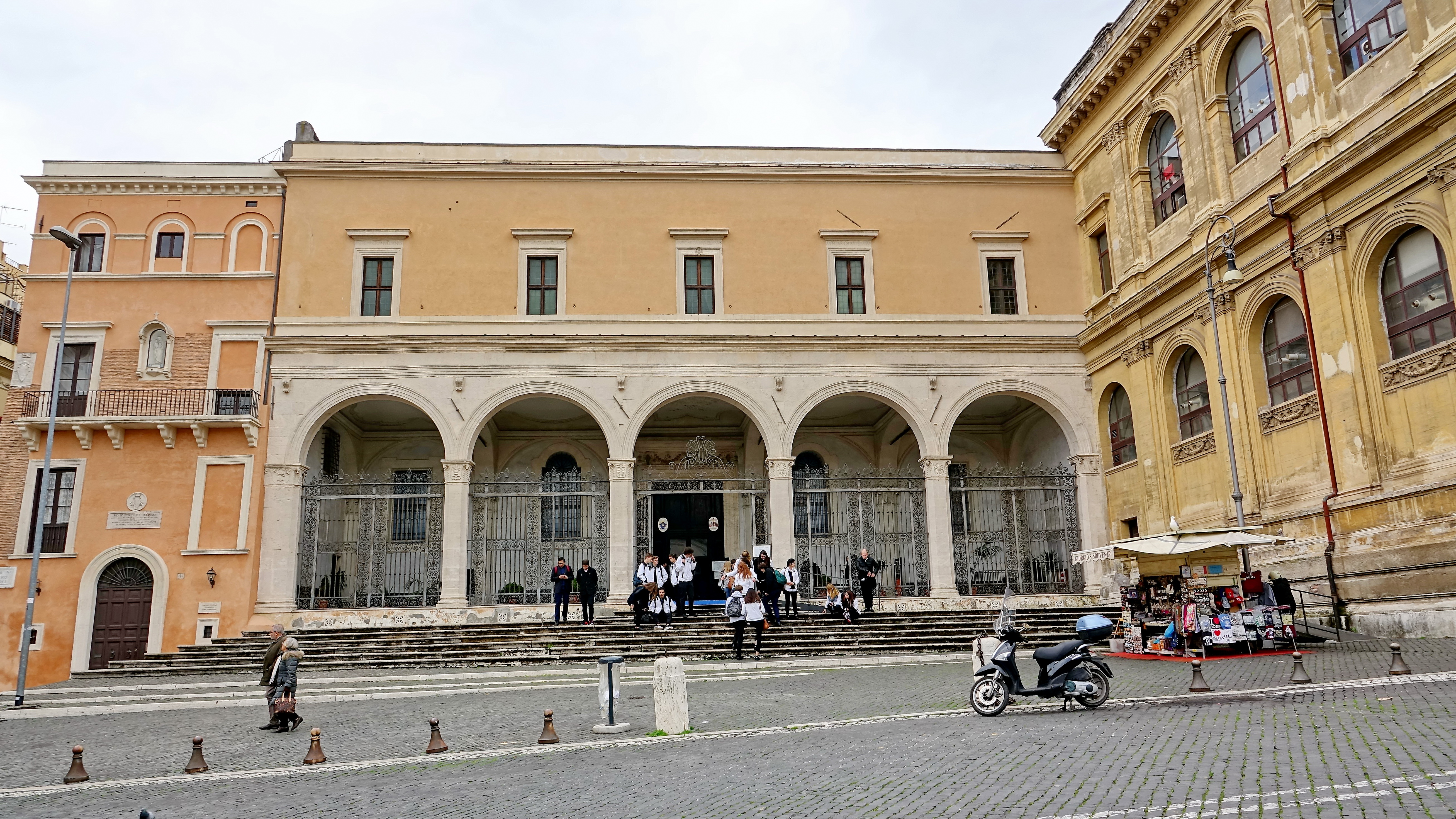
Significant changes occurred in 1475 under Pope Sixtus IV. He commissioned architect Meo del Caprina to restore the dilapidated building. This renovation preserved the three-nave plan of the original basilica but added a new Renaissance facade that dominates the square today. The interior retains its antique columns and early Christian layout despite the external update.
The most famous addition arrived in the early 16th century through the efforts of Pope Julius II. He hired Michelangelo to create a grand freestanding tomb. Political pressures and financial constraints forced the pope to scale back the design repeatedly. Michelangelo eventually completed the Moses statue around 1515, which now anchors the smaller tomb monument installed in the church in 1545. The statue's horns remain a subject of historical interest due to the translation error regarding the Hebrew text describing Moses' face.
Subdivisions
Main Nave
The central aisle featuring antique columns and early Christian architectural elements.
High Altar
Location housing the revered chains of Saint Peter.
Julius II Tomb
The chapel containing Michelangelo's unfinished sculpture group including Moses.
Notable People
Licinia Eudoxia
Founder · 5th century
Commissioned the original basilica to enshrine the chains of Saint Peter
Michelangelo Buonarroti
Artist · 1505–1515
Sculpted the iconic Moses statue for the reduced tomb of Pope Julius II
Pope Sixtus IV
Patron · 1475
Ordered the major restoration that gave the church its current Renaissance facade
Cardinal Donald Wuerl
Cardinal-Priest · 2010–present
Current titular head of the church following retirement as Archbishop of Washington
Pope Julius II
Patron · 1505–1513
Commissioned the ambitious tomb project that resulted in the Moses statue
Milestones
c. 442 AD
Empress Licinia Eudoxia commissions the original basilica
5th century
Chains of Saint Peter arrive in Rome and are enshrined
1475
Pope Sixtus IV orders major restoration led by Meo del Caprina
c. 1505–1515
Michelangelo sculpts the Moses statue for the tomb of Pope Julius II
1545
Reduced tomb monument installed in the church
2010
Cardinal Donald Wuerl appointed Cardinal-Priest
Sources
Organization Info
- Founded
- c. 442 AD
- Headquarters
- Piazza di San Pietro in Vincoli, 00184 Rome, Italy
- Country
- Italy
- Cardinal-Priest
- Cardinal Donald Wuerl
- Parent
- Diocese of Rome
- Type
- Religious
- Founder
- Licinia Eudoxia
- Architectural style
- Early Christian, Renaissance
- Notable artwork
- Moses by Michelangelo
Official Website
www.lateranensi.org/sanpietroinvincoli/
Join the community
fans discussing