 Spain
SpainAbout
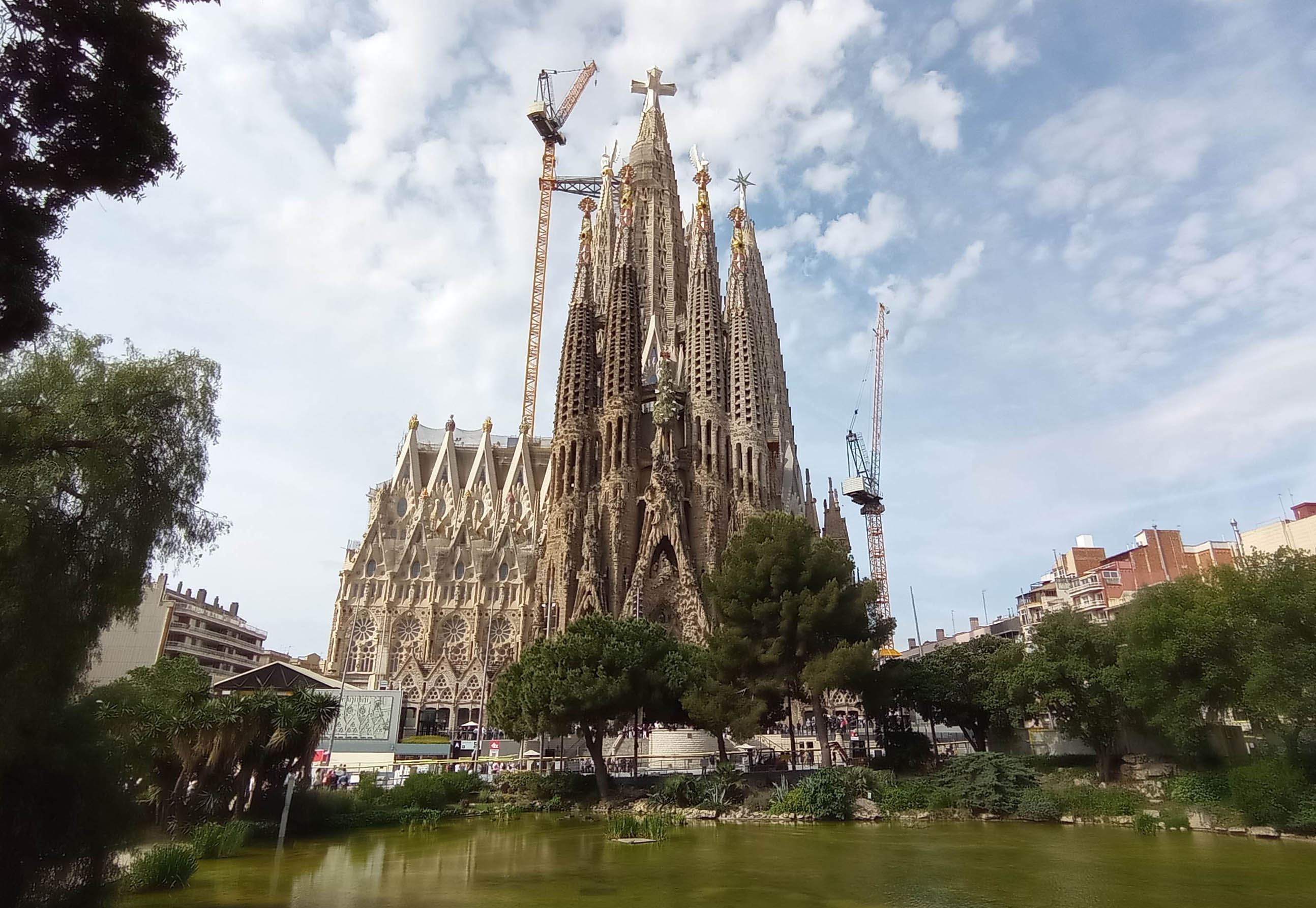
The Basílica i Temple Expiatori de la Sagrada Família, known simply as Sagrada Família, is a Roman Catholic minor basilica in Barcelona's Eixample district. It stands as the tallest church in the world, its central spire reaching 172.5 meters. The full Catalan name translates to "Expiatory Temple of the Holy Family," a title that reflects its penitential purpose: construction has always been funded by private donations and visitor ticket sales, never public money.
Antoni Gaudí took over the project in 1883, a year after the cornerstone was laid, and transformed the original neo-Gothic design into something entirely his own. He devoted over four decades to the church, living on the site in his final years. When he died in 1926, he left behind detailed models and drawings that have guided every subsequent architect. The basilica fuses Gothic and Art Nouveau forms with organic, nature-inspired elements, and its three grand façades depict the life of Christ from birth to resurrection. Locals often call it "the Bible carved in stone."
In 2005, the Nativity Façade and Crypt were declared a UNESCO World Heritage Site as part of the "Works of Antoni Gaudí." The church draws millions of visitors each year, making it one of Spain's most-visited landmarks and an enduring symbol of Catalan modernism.
Mission
The Sagrada Família exists as an expiatory temple, a place of worship and penance built through the offerings of the faithful. Its mission is to tell the story of the Holy Family and the life of Jesus Christ through architecture, sculpture, and light, while serving as a center of Catholic devotion in Barcelona. The basilica aims to inspire spiritual reflection and to stand as a testament to faith expressed through artistic genius.
History
The story begins with Josep Maria Bocabella, a devout bookseller who founded the Spiritual Association of Devotees of Saint Joseph. The association bought a plot in the then-outskirts of Barcelona and laid the cornerstone on 19 March 1882, the feast of Saint Joseph. Architect Francisco de Paula del Villar designed a conventional neo-Gothic church, but he resigned after a year due to disagreements. In 1883, a 31-year-old Antoni Gaudí took over and threw away the original plans.
Gaudí reimagined the church as a forest of branching columns and towering spires, drawing inspiration from nature and Catholic symbolism. He worked on it for 43 years, knowing he would not live to see it finished. In his last years he lived in a workshop on the site, sleeping on a cot among his models. On 7 June 1926, he was struck by a tram and died two days later, buried in the crypt of his unfinished masterpiece.
The Spanish Civil War brought disaster. In 1936, anarchists broke into the workshop and destroyed many of Gaudí's models and drawings. Reconstruction work in the 1940s and 1950s had to rely on surviving fragments and photographs. Construction continued slowly, funded entirely by donations and, later, ticket sales. In 2016, the basilica settled a long-standing dispute with Barcelona City Council over its lack of a building permit, agreeing to pay €36 million over ten years for urban improvements.
The final push came in the 2010s and 2020s. Engineers from Arup tackled structural challenges, and Henkel provided Loctite adhesives to bond stone and steel. The central Tower of Jesus Christ was topped with a four-armed cross in early 2026, and on 10 June 2026, exactly a century after Gaudí's death, the basilica was declared complete. Pope Leo XIV visited to celebrate a Solemn Mass and bless the tower, marking the end of 144 years of construction.
Notable People
Antoni Gaudí
Architect · 1883–1926
Designed and oversaw construction for over 40 years
Josep Maria Bocabella
Founder · 1882
Initiated the project through the Spiritual Association of Devotees of Saint Joseph
Francisco de Paula del Villar
Original architect · 1882–1883
Conceived the initial neo-Gothic design
Jordi Faulí
Architectural director · 2012–present
Led the completion of the Tower of Jesus Christ in 2026
Esteve Camps i Sala
President of the Junta Constructora · 2015–present
Oversaw the final construction phase and the centenary celebrations
Milestones
1882
Cornerstone laid on 19 March
1883
Antoni Gaudí takes over as architect
1926
Gaudí dies; construction continues under his assistants
1936
Spanish Civil War; workshop and models destroyed by anarchists
1952
Construction resumes after the war
2010
Pope Benedict XVI consecrates the basilica and proclaims it a minor basilica
2005
Nativity Façade and Crypt declared UNESCO World Heritage Site
2026
Tower of Jesus Christ completed; basilica declared complete on 10 June
Sources
Organization Info
- Founded
- March 19, 1882
- Headquarters
- Barcelona, Catalonia, Spain
- Country
- Spain
- President of the Junta Constructora
- Esteve Camps i Sala
- Parent
- Junta Constructora del Temple Expiatori de la Sagrada Família
- Type
- Religious
- Height
- 172.5 meters
- Architect
- Antoni Gaudí
- UNESCO World Heritage
- 2005 (Nativity Façade and Crypt)
- Completion
- June 10, 2026
Official Website
sagradafamilia.org/
Join the community
fans discussing